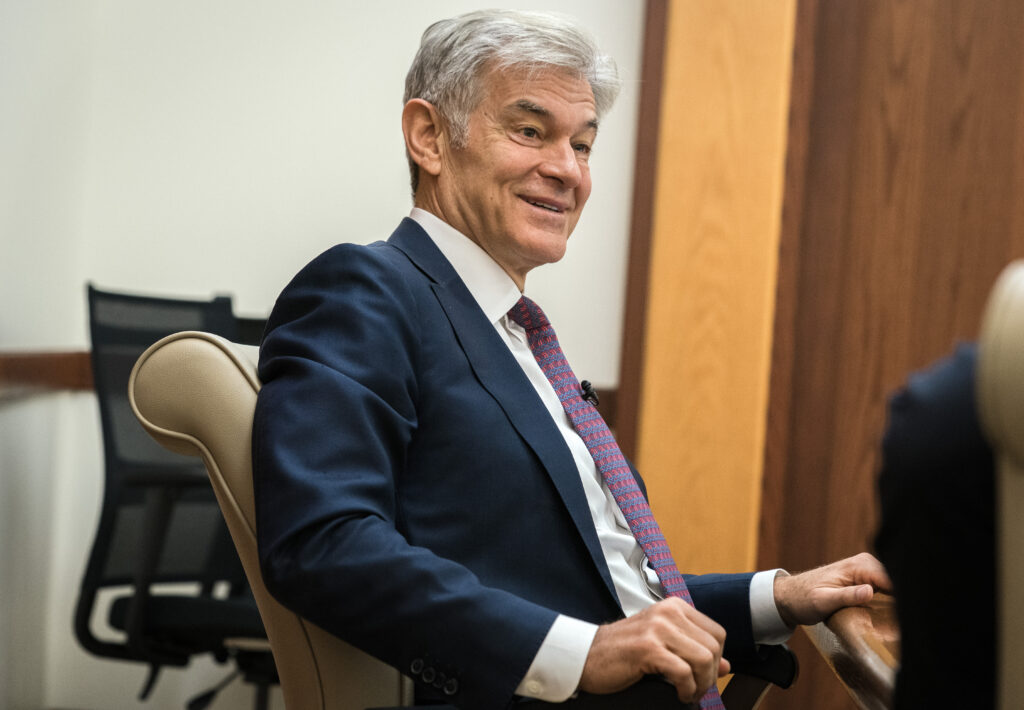
It’s rare to see a politician say something obviously true but politically difficult. So kudos to Mehmet Oz, the administrator of the agency that runs Medicare and Medicaid, for saying the country would benefit if healthy people delayed retirement by a year.
It’s easy to caricature his remarks as lacking empathy, but there’s plenty of evidence that staying in the workforce longer has an upside for the person who does it as much as society at large.
Retiring at 65 is an arbitrary convention, not a biological reality. Most people don’t follow it anyway. The average retirement age in the United States in 2024 was 62.6 for women and 64.6 for men. It has been trending upward slowly since the mid-1990s.
That makes sense given who is working today. When the Social Security Act was passed in 1935, 52 percent of employed workers were in agriculture, manufacturing or construction. Today, 63 percent are in management, professional, sales or office occupations. These are largely not physically taxing jobs, and healthy people can continue to do them into their late 60s with little issue.
The government shouldn’t set different retirement ages for different jobs based on how difficult they are. Retirement timing is a question of personal responsibility, and every individual is different.
That said, entitlement programs for retirees (and interest payments from the borrowing that they require) are the largest line items in the federal budget. And the country could benefit from trillions of dollars worth of economic activity if more Americans stayed in their careers longer. Oz isn’t speaking out of turn to discuss retirement as a public concern.
People are living healthier lives in old age as medicine has advanced and smoking has declined. Health problems factor into determining when to retire for only 29 percent of retirees. The most common reasons are “a desire to do other things” or reaching a “normal retirement age.”
Some people who retire earlier wind up realizing that retirement isn’t all it’s cracked up to be. Humans were not designed to live in idleness. Research shows that working longer can help prevent cognitive decline and is associated with lower depression and diabetes risk. One-third of retirees report still having labor income, showing that many want to keep working.
It’s not as though workers hate their jobs as they approach retirement. In fact, 72 percent of workers 55 and older say they are satisfied, the highest rate of any group.
Yet some government policies discourage seniors from working. The Social Security benefit formula is structured so that working past the age of 62 does little to increase future benefits, but the payroll tax rate is the same as for younger workers. Eliminating the payroll tax for people over 62 would remove that disincentive. The government would make up most of the loss in revenue by taxing more income for longer, and workplaces would benefit from retaining experienced employees with institutional memory.
Americans in poor health or physically taxing jobs, of course, can make a different calculation. Yet Oz, himself 65, isn’t talking to them. Millions of America’s near-retirees don’t fit those categories and would be better off working a little while longer.
It’s nice to see an official encouraging this, but it’d be even better if government stopped discouraging it with misguided policy.
The post Dr. Oz has a point about retirement appeared first on Washington Post.