President Trump on Friday issued his plan for revitalizing the American shipping industry, proposing new subsidies, levies on foreign-built ships, initiatives to train more American mariners and deregulation.
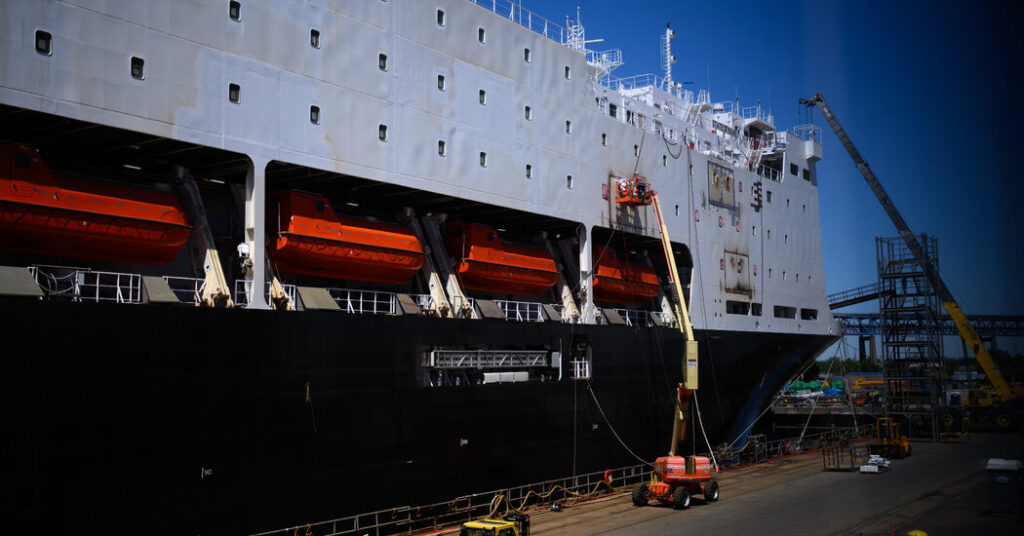
The United States makes only a tiny number of large commercial vessels a year, and relatively few big ships fly the American maritime flag. Most of the goods coming to the United States by sea come on vessels made in China, Japan and South Korea.
“This status quo poses significant security and supply chain dependency issues,” the White House said in announcing its Maritime Action Plan. “A self-sustaining domestic shipbuilding sector is critical for national and economic security.”
The plan seeks to increase the number of ships made in shipyards in the United States. American vessels cost some five times more than those made in Asia. As a result, shipping companies require significant subsidies to buy and operate American vessels. The plan envisions special loans, tax breaks and other support for shipbuilders and shipping companies.
To help raise the funds for these efforts, the White House recommends charging fees on foreign-built vessels when they dock at United States ports, saying such an initiative could raise as much as $1.5 trillion over 10 years. The Trump administration imposed fees on Chinese vessels last year but suspended them as part of its trade truce with China.
CMA CGM, a large French shipping company, told Mr. Trump last year that it would make major investments in the United States, but it has been slow to follow through. Hanwha, a South Korean company, plans to expand a shipyard in Philadelphia that it bought under the Biden administration.
Mr. Trump’s maritime action plan could help advance bipartisan legislation in Congress that also seeks to bolster American shipping.
Peter Eavis reports on the business of moving stuff around the world.
The post White House Outlines Trump Plan for Shipping Industry appeared first on New York Times.