This week delivered two surprisingly good economic reports, and the White House wasted no time in celebrating.
On Wednesday, employment growth in January came in at more than twice the rate economists had expected. And on Friday, inflation for that month was surprisingly soft, indicating that price pressures aren’t accelerating.
“President Trump has defeated Joe Biden’s inflation crisis,” said Kush Desai, a spokesman. “With inflation now low and stable, America’s economy is set to turbocharge even further through long-overdue interest rate cuts from the Fed.”
Those readings were undeniably positive. A falling unemployment rate and a robust crop of jobs could be a sign that the labor market is gaining strength, though those numbers are subject to revisions. And if inflation keeps falling from the 2.4 percent annual pace it set in January, it could allow the Federal Reserve to make the interest rate cuts that Mr. Trump has long demanded.
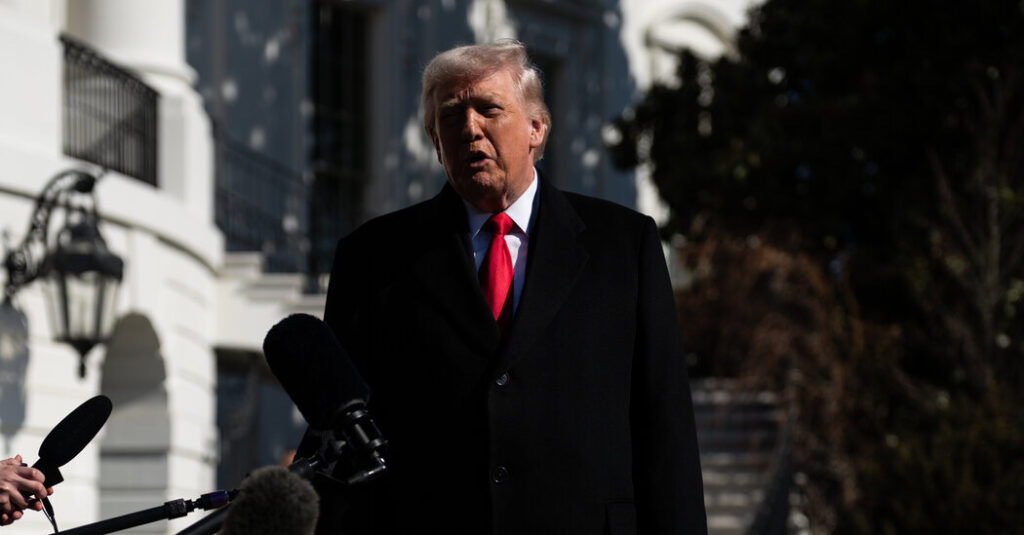
“Very good financial numbers, very low inflation,” Mr. Trump told reporters on Friday. “We had the worst inflation in the history of our country, and now we have very modest inflation, which is what you want to have.”
But the bigger picture is, in many ways, more uncertain.
After annual revisions to earlier data, the labor market added just 181,000 jobs last year, Mr. Trump’s first year back in office. That was the slowest pace since 2010, aside from the pandemic year of 2020. Job growth has also become highly concentrated: About two-thirds of the new jobs in January came from health care, and the economy would have lost jobs last year without the 390,000 new positions in the sector.
The other big tailwind is the trillions of dollars going into data centers for artificial intelligence, which accounted for 39 percent of America’s economic growth last year.
“It’s very imbalanced,” said Maxime Darmet, a senior economist with the insurance company Allianz Trade. “A few sectors are powering ahead and propping up the growth of this economy. Short term, this is not too great.”
In the coming years, the spread of A.I. could increase productivity and wages, and it is currently employing a lot of construction workers and engineers. And demand for health care is increasing as the baby boom generation retires.
But in the meantime, narrow growth means difficult prospects for anyone who is not in those sectors. And although the unemployment rate and layoffs remain low, so is demand for new workers: The job opening rate has dropped to the lowest level since 2017, also outside the pandemic. And new tax incentives in the spending bill passed by Republicans last year reward investment in machinery, rather than new workers.
“There’s a lot of companies figuring out whether they can substitute away from labor and into A.I.,” said Eugenio Aleman, the chief economist at Raymond James, an investment bank. “That is one of the reasons why employment is so weak today.”
It is also far from clear that inflation is on its way back down to 2 percent, the level that the Federal Reserve has targeted. Other than used cars, price increases for consumer goods were stubbornly high in January, and economists estimate that companies are still gradually passing cost increases to consumers to offset their tariff bills.
Michael Reid, a U.S. economist with the investment banking firm RBC Capital Markets, said that companies are still selling through all the inventory they built up before tariffs hit last year. Once they start having to buy things from overseas again, they may need to raise prices more sharply.
“It takes time in that pipeline,” Mr. Reid said. “There’s still some downward pressure, but we think soon you’re going to see the combination of that inventory restocking and more pronounced tariff pass-through.”
Jerome H. Powell, the Fed chair, said last month that he expected tariff-related price increases to top out “sometime in the middle quarters of the year.”
So far, wage growth has kept pace with inflation. Average hourly earnings are still increasing at around 3.7 percent annually, well ahead of the Consumer Price Index. But that masks differences across income levels: Those on the bottom rung of the wage ladder have experienced the slowest pay raises.
That divergence has resulted in a two-track economy.
While wealthier Americans, buoyed by a strong stock market, continue to spend freely, lower-income Americans are showing mounting signs of strain amid persistent inflation. The personal saving rate fell to 3.5 percent in November, its lowest level since October 2022. More households are falling behind on their debts, especially mortgages in low-income areas. Retail sales were unexpectedly lackluster in December.
That’s affecting the national consumer mood, especially for those who haven’t benefited from frothy financial markets. According to the University of Michigan’s measure, sentiment among people with no stock holdings is even lower than it was in 2022, as inflation peaked.
Americans feel deeply pessimistic about their ability to afford life’s big ticket items, according to a January poll by The New York Times and Siena College, and only 29 percent see the economy in positive terms. The downbeat assessment is translating into Mr. Trump’s poor approval ratings less than nine months before the midterm elections.
That sentiment could worsen in the coming year. Although Americans can expect higher than usual tax refunds as a result of legislation Mr. Trump signed last year, the refunds will be skewed toward higher earners. Work requirements will kick in for some people on Medicaid, and student lending policies will tighten up.
And after five years of above-average price increases, Americans are considerably more weary of even moderate inflation than they were at the outset. Mike Konczal, the director of policy and research at the Economic Security Project, said that the Trump administration hasn’t yet solved those problems.
“They’ve not won the battle of addressing where everyday people are, outside of the academy, very concerned about their health care and housing,” Mr. Konczal said. “And until they get actual answers on that, I don’t expect their numbers to improve on the economy.”
Tony Romm contributed reporting from Washington, D.C.
Lydia DePillis reports on the American economy for The Times. She has been a journalist since 2009, and can be reached at [email protected].
The post White House Claims Win Amid Strong Economic Data appeared first on New York Times.