Key takeaways
- The most extensive military campaign of President Donald Trump’s second term has been in Somalia, not higher-profile flashpoints like Iran or Venezuela. Since returning to office, he has dramatically escalated airstrikes there — at a pace exceeding previous administrations — while rarely mentioning the operation publicly.
- The surge in strikes is driven by expanded presidential authorities as well growing concern about ISIS’s Somali affiliate. Loosened rules on targeting have given military commanders wider latitude to target suspected militants.
- The campaign appears to be running with minimal public scrutiny and uncertain long-term impact. While strikes may degrade militant leaders, experts question whether airpower alone can stabilize Somalia or address the governance failures that fuel extremism.
On February 3, President Donald Trump posted a Fox News article about a US strike targeting ISIS leaders in Somalia, along with an inflammatory insult aimed at Congresswoman Ilhan Omar, who arrived in the US as a refugee from the country.
Trump taking a racist dig at Omar has become routine. But in national security circles, the mention of the strikes stood out as unusual.
The post, along with a similar one the day before, was the first time in a year that the president’s account had mentioned his military campaign in Somalia, despite bombing the country more than any other in the same period.
In both his terms as president, Trump has quietly overseen a massive escalation of airstrikes in Somalia with little public explanation. And while the president is not unique in ordering strikes there — the military has been enmeshed in the Horn of Africa country’s conflicts since the early 1990s — his campaign is simply on another level, as shown by data compiled by New America.
In 2025, the US carried out 125 airstrikes and one ground raid in Somalia, compared to 51 operations during Joe Biden’s whole presidency. Already, in 2026, the US has carried out 28 operations, more than any full year under a non-Trump president. Between 172 and 359 people have been killed in Trump’s second term strikes, though David Sterman, a counterterrorism analyst at New America, notes that US Africa Command (AFRICOM) has not been reporting casualty estimates from these strikes since April of last year, meaning that the real numbers are likely much higher, and it’s difficult to know how many were civilians.
By comparison, the high-profile US campaign against alleged drug trafficking boats in the Caribbean and Eastern Pacific since last fall has consisted of just 34 strikes.
Or, another point of comparison: The US carried out more strikes in Somalia last year than it did in Pakistan in 2010 — the height of the Obama administration’s drone war — when these tactics were a matter of major controversy and national debate.
Not only do Trump and senior officials rarely talk about the fact that they are waging an air war in Somalia that rivals the height of the Global War on Terror, the statements the president does make sometimes suggest an aversion to exactly this type of open-ended campaign. In fact, one of the rare times he’s brought up Somalia in a military context was to boast about not getting involved in the country.
“Only in recent decades did politicians somehow come to believe that our job is to police the far reaches of Kenya and Somalia, while America is under invasion from within,” Trump told a group of US military leaders at a gathering in Quantico last fall.
So, why is the US bombing Somalia so much, and why isn’t anyone talking about it?
There appear to be several factors in play: a genuine growing concern about Somalia’s role in a global resurgence of jihadist terrorism, a loosening of rules protecting civilians that allows for more strikes, and a post-9/11 war machine that can operate almost automatically without the president’s personal attention.
Somalia is emerging as a new nexus of global terrorism
Somalia has been in a state of civil conflict and humanitarian crisis since the early 1990s, and the US has been involved for almost that long. The deaths of 18 US Marines in the infamous “Black Hawk Down” incident in Mogadishu in 1993 was the worst loss of life for the US military since Vietnam at that time.
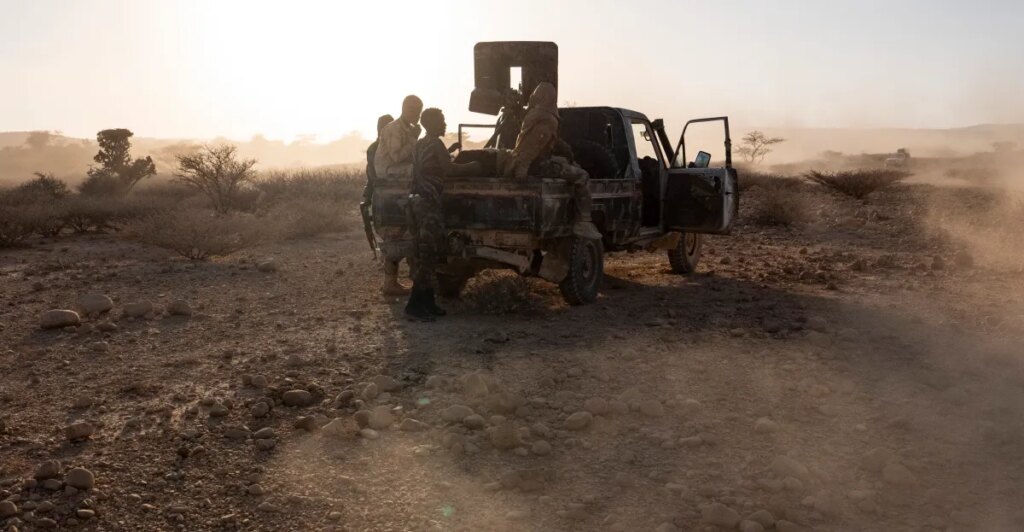
After 9/11, the US began to target militants in the country with airstrikes and special forces raids, particularly the newly emerged al-Qaida-linked movement known as Al-Shabab. At various points, al-Shabab has controlled large swaths of Somali territory, including parts of the capital, Mogadishu. Today, it is a more dispersed movement but is still active in much of the country and continues to carry out deadly attacks against the Somali government and foreign troops in the country.
The war against al-Shabab has continued with various levels of intensity across several administrations, but the biggest change since Trump returned to office, experts say, is that, in addition to al-Shabaab, the strikes reported by AFRICOMare increasingly targeting ISIS’s affiliate in the country. (ISIS’s Somali “province” was founded by al-Shabab defectors, and the groups are sworn enemies.) The Islamic State has carried out a number of high-profile global attacks recently, and experts believe the Somali affiliate is playing a key role in facilitating those plots.
Lt. Gen. John Brennan, the second-highest-ranking officer at AFRICOM, recently told Fox News that the stepped up anti-ISIS campaign in Somalia is in order to disrupt plots “against the United States homeland as well as Europe.”
Notably, Brennan also claimed that Abdalqadir Mumin, the leader of ISIS in Somalia, is in fact “the caliph — absolute leader — of the global ISIS network” and is directing ISIS’s global activities from his hideout in the Golis Mountains.
That assertion, which first emerged after Mumin was unsuccessfully targeted in a 2024 strike, is contested. Many terrorism experts do not believe Mumin is the global caliph. The group never announced he’d been given the title, and, as a non-Arab who doesn’t claim descent from the Prophet Mohammed, he would make an unusual choice.
Caliph or no, there is growing consensus among terrorism experts that the Somali affiliate, which has relatively few fighters on the ground in Somalia itself (as few as 200-300 according to UN estimates), has become one of global ISIS’s most significant global affiliates, playing a key role in fundraising, financing, and recruiting.
“Whether Mumin is the head or not, he’s extremely influential within the Islamic State’s global network, so he’s a high-value target, clearly. Removing him from the battlefield is a worthwhile objective; he’s a vital cog in the global enterprise,” said Colin Clarke, terrorism analyst and executive director of the Soufan Center.

The vast majority of the strikes against ISIS have been in northern Somalia in cooperation with the security forces of the semi-autonomous Puntland state. But the campaign against al-Shabab in southern Somalia continues apace, as well; a strike against the group took place just last week. Al-Shabab is more formidable with Somalia and has carried out high-profile attacks outside of it — mainly in East African countries that have sent troops to Somalia — but it has less of a global reach than ISIS. Some worry that could be changing. In 2024, US intelligence agencies learned of discussions about a weapons deal between al-Shabab and the Houthis, the Iran-backed militant group across the Red Sea in Yemen that Trump has previously targeted, though it’s unclear if anything came of those talks.
So, it’s not surprising that the US would pay attention to Somalia as part of an overall global campaign against jihadist terrorism. US officials have even evoked the Israeli phrase “mowing the grass” to describe their goal in Somalia: keep militant groups degraded to prevent them from becoming too much of a threat.
But this doesn’t fully explain the shift. Somalia is hardly the only country where these groups are a threat. The Afghan ISIS affiliate, ISIS-Khorasan, has carried out major recent attacks in that country and abroad. The US has not carried out a publicly reported military operation in the country since the drone strike that killed al-Qaeda leader Ayman al-Zawahiri in 2022.
Meanwhile, the epicenter of global terrorist violence, accounting for more than half of all deaths, is West Africa’s Sahel Region — particularly countries like Mali, Niger, and Burkina Faso, rather than East Africa. Mali is under literal siege from the local al-Qaeda affiliate, forcing the government to ration fuel. But with the exception of Trump’s Christmas Day bombing of Nigeria, which appears to have been a one-off, the US has not seemed particularly interested in West African jihadist groups.
So, why Somalia in particular?
Trump changed the rules for airstrikes
The simplest theory for why Trump doesn’t speak much about his administration’s most extensive military operation is that he’s not particularly involved with it. Under the authorities the administration has granted, the White House most likely doesn’t need to sign off on individual strikes.
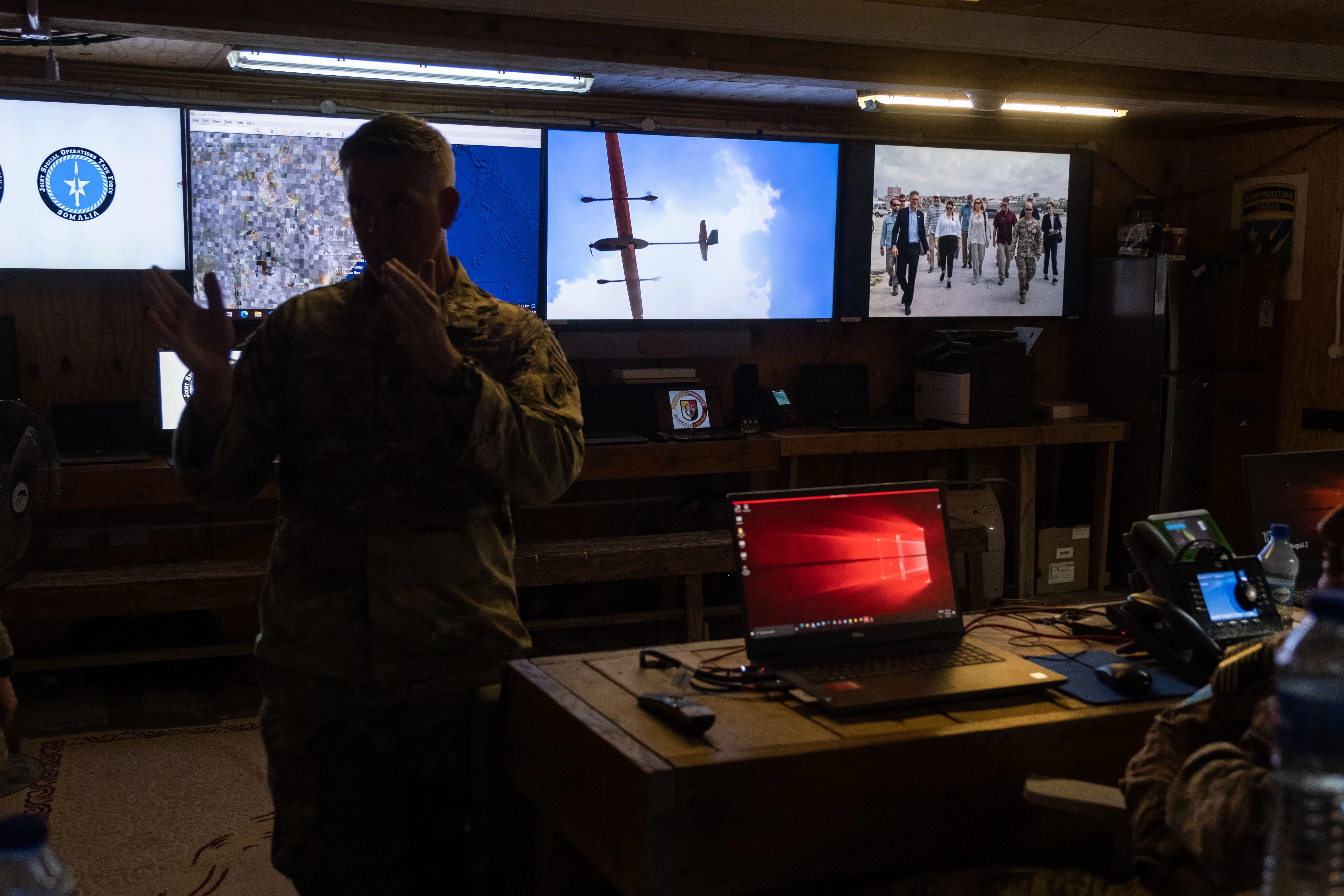
The Joint Operations Center in Mogadishu, Somalia, on August 2, 202font-family: -apple-system, BlinkMacSystemFont, “Segoe UI”, Roboto, Oxygen-Sans, Ubuntu, Cantarell, “Helvetica Neue”, sans-serif;”>3.
| Jonathan Torgovnik/Getty Images”
It’s less of an example of a Trump policy than him allowing one of the remaining vestiges of the post-9/11 war on terror to continue — with even less oversight than before. The lack of public attention on the operation has meant the administration is under little pressure to fully explain its goals or justify its costs.
As New America’s numbers show, the number of strikes in Somalia also grew dramatically in Trump’s first term. One big reason: In 2017, Trump relaxed rules meant to prevent civilian casualties, giving AFRICOM wider latitude to go after targets as it saw fit. And after returning to office a second time, Trump again relaxed these limits, which appears to have been the main factor leading to the uptick in operations in Somalia.
“It’s very clear that they’re operating under significantly expanded authorities for strikes again,” said Sterman, who tracks reports of strikes in Somalia for New America.
The most extensive public discussion of the shift from a Trump administration official came last July from Sebastian Gorka, the National Security Council’s Director for Counterterrorism, during an appearance at the Foundation for the Defense of Democracies in Washington.
“You may not be aware of it in the broader universe, but we are stacking [jihadis] like cord wood,” Gorka declared.
Gorka said that, shortly after taking office, he was told by intelligence and defense officials that “we’re not allowed to kill bad guys” under Biden’s targeting review rules. Gorka claims that on “day eight of the administration” he presented the president with evidence of an “ISIS jihadi running freely around a terror compound, a cave system in Northern Somalia,” who had been tracked for years. Trump quickly signed off on the order to kill the jihadi, after which Gorka watched on a screen as the man was turned into “red mist.”
This strike, in February, 2025, was one of the only times Trump has tweeted about the campaign, calling it a “message to ISIS and all others who would attack Americans is that ‘WE WILL FIND YOU, AND WE WILL KILL YOU!’”
Under the more relaxed targeting standards that have been in place since the summer, this consultation with Trump would not have even been necessary. The rationale for these strikes has also subtly changed. According to Sterman, strikes under previous administrations, including the first Trump term, had often been justified as “collective self-defense” operations, meaning the US was responding to an attack on either US personnel or its Somali allies. That language appears less often now. It’s also possible Biden may in fact have set the stage for this new offensive by preemptively signing off on the targetingof about a dozen Shabab leaders, meaning AFRICOM may feel more comfortable calling in the drones in the absence of a pressing threat.
The war on terror “on auto-pilot”
The new targeting standards help account for the scale of the bombing but not why it’s happening in Somalia, specifically, as opposed to other countries with Islamic militants that the US has targeted in the past.
One possible explanation is that it’s the most convenient target. There appears to be an element of path dependence in the way counterterrorism is carried out by the US today. Having withdrawn troops from what was once a major counterterrorism hub in Niger in 2024, the US has fewer resources for combating jihadists in the Sahel than it once did. There’s little appetite in either US party for a return to Afghanistan after Biden’s ugly withdrawal in 2021.
By contrast, anti-ISIS operations have continued in Syria, where the US still has a troop presence — though that could be ending soon — and in Somalia, where there’s a history of these operations and cooperation with local forces, as well as US troops stationed nearby in Djibouti, Kenya, and Somalia itself.
“It seems like it’s on autopilot,” said Tibor Nagy, a veteran US diplomat who served as under secretary of State for African Affairs during Trump’s first term. “It’s easier to keep doing something because there’s the institutional bureaucracy in place to keep supporting it.”
Asked about the reason for the uptick in strikes, a Department of Defense spokesperson speaking on background told Vox: “Our strategic approach to countering terrorism in Africa relies on trusted partnerships and collaboration grounded in and through shared security interests. The cadence in conducting airstrikes in Somalia reflects that strategy, enabled by the administration’s policy to empower commanders to protect the U.S. homeland and citizens abroad.”
Trump versus Somalia
Trump may not talk about the air campaign in Somalia, but he has been talking about Somalia itself quite a bit, particularly since US immigration officials began a contentious and violent crackdown in Minnesota — home of a large Somali immigrant community — ostensibly motivated by cases of social services fraud by individual Somali owned businesses.
In a recent high-profile speech at the World Economic Forum in Davos, Trump said he had always thought of Somalis as “low-IQ people” until seeing the scale of the fraud and called Somalia “not a country.” Vice President JD Vance has described the United States as having a “Somali problem.”
Relations between the US and Somali government have also been strained lately. US foreign aid cuts have devastated the country’s health care system and left children in much of the country without food aid. The US briefly suspended all food aid to Somalia last month over allegations that local officials had seized a World Food Program warehouse.
It’s tempting to wonder if Trump’s general enmity toward Somalia is related at all to his massive bombing campaign in the country, but that seems unlikely.
The air campaign is conducted in close coordination with the government of Somalia and Puntland authorities. If anything, what’s notable is that the surrounding politics haven’t disrupted the campaign.
“Somalia’s government does not treat political statements as a substitute for policy,” Somalia ambassador to the United States, Dahir Hassan Abdi, responded by email when asked about Trump’s comments. “The United States remains a critical partner in security cooperation, and Somalia remains focused on practical coordination that advances shared goals.”
But are the strikes doing anything?
Dahir, the Somalia ambassador, argued that US support has allowed its forces to put the jihadists on the back heel and restore a bit of stability.
“The degradation of terrorists’ ability to attack major cities and government forces have created the conditions for peace-loving residents of Mogadishu to freely participate in local elections on December 25, 2025, for the first time in five decades,” he said in an emailed statement from the embassy.
Those local elections, held last year, were billed as a kind of rehearsal for national elections — which are planned for this year — despite concerns about violence and instability.
But while it’s generally agreed that Shabab no longer poses the existential threat to the Somali state that it did in the past, it still controls a significant amount of territory outside the capital and, early last year, briefly captured government buildings just 30 kilometers from Mogadishu.
“The Somali government’s in a decent enough position that it’s not about to fall,” said Omar Mahmood, a senior analyst at the International Crisis Group, speaking by phone from Somalia. “But the question is always, how stable is the Somali government.” Mahmood noted with an upcoming contested election, an international peacekeeping mission underfunded, and the US withdrawing much of its non-military support, the concern is that some of these underlying gains could unravel. That would allow al-Shabab to advance.”
Air strikes don’t have a great record as a counterinsurgency tool in past conflicts, and Joshua Meservey, a senior fellow at the Hudson Institute and author of a book on al-Shabaab, was skeptical that they would make the key difference in this place. “The core problem in Somalia is that there is a lack of competent, legitimate local governance in the country,” he said. “If you do not have that, you will never successfully eradicate these groups.”
Former officials who spoke with Vox also expressed concerns that civilian casualties — about which we have little publicly available information — could turn more Somalis against the government and its US backers and potentially create more militants. None of these dynamics are particular to Trump. If anything, the Somalia campaign is an illustration that the militant groups were the primary focus of US national security for the 20 years after 9/11 have not gone away, even if we don’t talk about them as much, and that efforts to combat them are still slow-going and legally murky.
In that context, it makes sense Trump is reluctant to bring the operations up himself. The president surely approves of the killing of senior al-Shabab and ISIS leaders, but this is a leader who likes quick, decisive, and overwhelming victories. A now-decades-old operation whose success is difficult to define is not that. In the machine built by his predecessors, though, all that’s needed to maintain a simmering war thousands of miles away is his tacit consent.
The post Trump’s biggest war is one he almost never talks about appeared first on Vox.