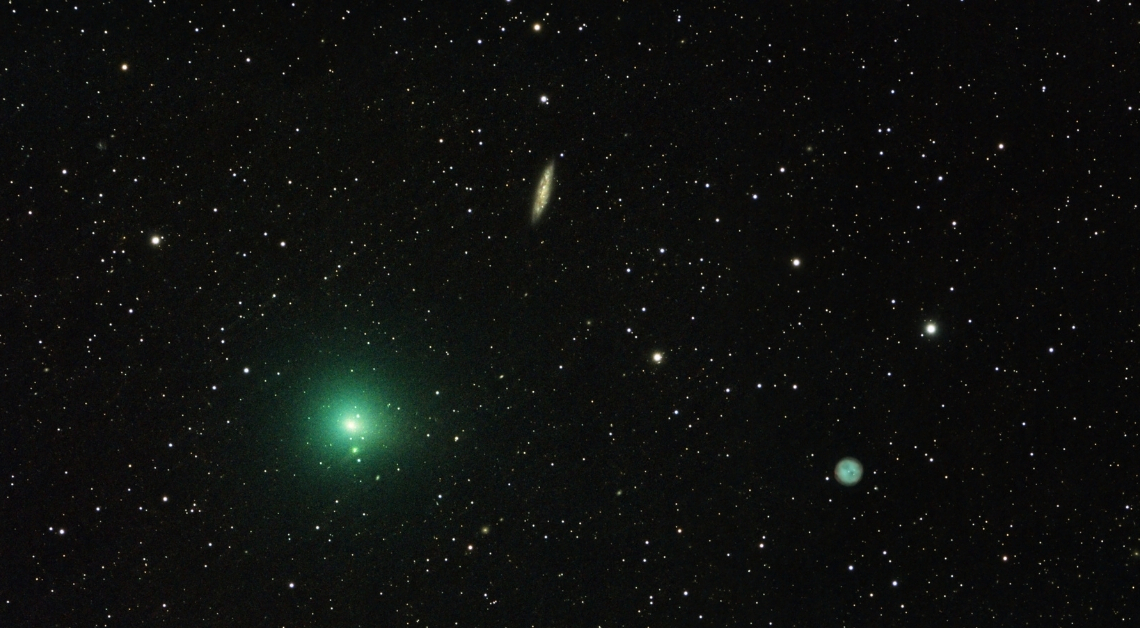
Comet 41P/Tuttle-Giacobini-Kresák is a bit of a weirdo as far as comets are concerned. Yet another weirdo in the recent string of them, with the king of the weird-o comets, 3I/ATLAS, having recently proven that it isn’t so much an alien artifact as it is just unusual.
As Comet 41P/Tuttle-Giacobini-Kresák barreled toward the sun, its rotation slowed from about 20 hours to 46 hours between March and May 2017. Then, according to astronomers, it appears to have stopped entirely…and then it flipped.
Comets seem to know we are watching and are performing tricks for our entertainment.
Scientists Can’t Figure Out Why This Comet Suddenly Reversed Spin Near the Sun
As The New York Times reports, the comet’s stupid pet tricks were served by NASA’s Swift and later confirmed with images from the Hubble Space Telescope. Astronomer David Jewitt of the University of California, Los Angeles, analyzed the Hubble data and found that by December 2017, the comet was spinning once every 14 hours, but in the opposite direction.
Comets are leftover building blocks from the early solar system that seemingly come to life as they melt as they approach the sun. They shoot off plumes of ice and gases that make them do all sorts of flips and tricks in space. Sometimes that ice-thawing process acts like a thruster, creating jets that can fire off the surface with enough force to alter the comet’s spin.
These rotational changes aren’t unheard of. But what stunned researchers about Comet 41P/Tuttle-Giacobini-Kresák’s rotation was its scale. Comet spins typically shift by minutes. This one changed by dozens of hours, essentially braking to zero before reversing course.
All this is leading researchers to believe that smaller comets are rarer than expected, with one theory suggesting that some may be spinning themselves apart. They’re accelerated by their own gassy jets until they fracture, effectively blowing themselves to bits because they’re spinning too fast.
Astronomers are going to keep an eye on 41P as it swings back toward the sun in 2028. Especially with new surveys coming back online via the Vera C. Rubin Observatory in Chile. Spinning themselves to death may just be how comets meet their demise. And if that’s the case, scientists want to make sure they observe as many of them as possible so they can see them spiral to their deaths.
The post This Comet Suddenly Started Spinning Backward Near the Sun, and Scientists Don’t Know Why appeared first on VICE.