States across the Western US are facing record low snowpack levels in the middle of the winter season. The snowpack crisis, which could mean a drier, more wildfire-prone summer, is coming as states are racing unsuccessfully against a deadline to agree on terms to share water in the Colorado River Basin, the source of water for 40 million people across seven states in the West.
“Barring a genuinely miraculous turnaround” in the remainder of the winter, says Daniel Swain, a climate scientist at the University of California Agriculture and Natural Resources, the low snowpack “has the potential to worsen both the ecological and political crisis on the Colorado Basin, and then also produce really adverse wildfire conditions in some parts of the West.”
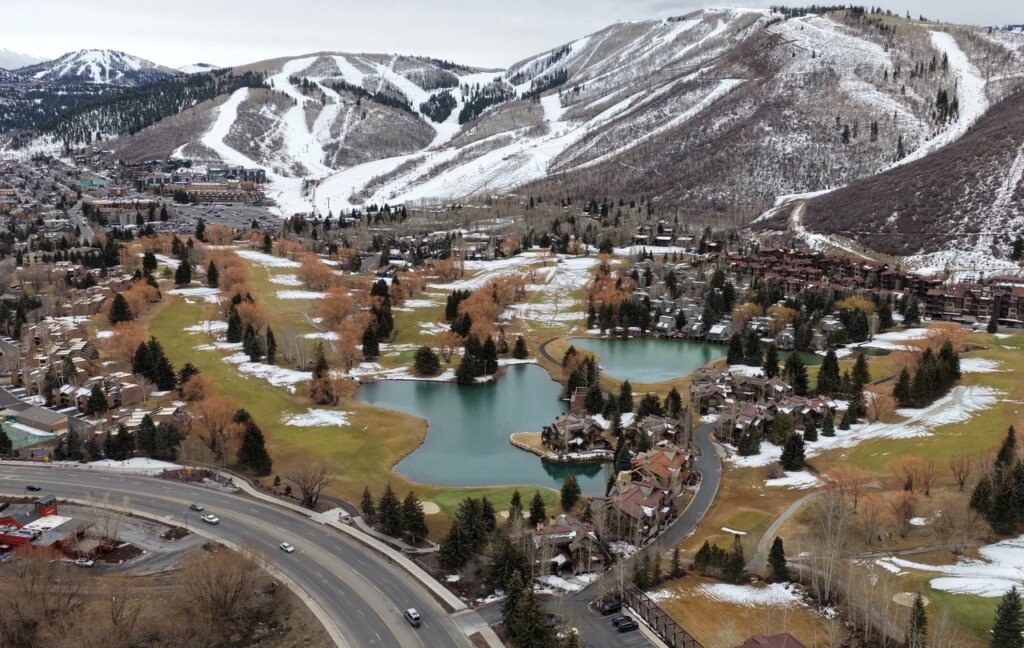
Data provided by the US Department of Agriculture show that as of February 12, snowpack was at less than half its normal level in areas across nine Western states—some of the lowest levels seen in decades. It’s common for a particular basin or small area of the West to have low snowpack at this time of year. What’s worrisome, Swain says, is how widespread the snow drought is, stretching in a swath from the bottom of Washington to much of Arizona and New Mexico, and touching as far east as Colorado.
“The numbers are really, really bad,” Swain says. “If this were November, they might be less meaningful. We’re not in November—we’re heading toward mid-February. The normal numbers are pretty high. To be at half of them means that, in absolute terms, the deficit is large.”
As much of the East Coast has frozen in the first weeks of the year, many Western states are experiencing some of their warmest winters on record: Parts of Colorado saw temperatures close to 80 degrees Fahrenheit at the start of this week. While precipitation has remained steady in many states—parts of Washington even saw disastrous flooding in December—it’s simply not cold enough in many areas for snow to fall or stay in snowpack.
A study released last year by researchers at Dartmouth found that climate change has led to a reduction in snowpack levels across the Northern Hemisphere over the past 40 years. A snowpack deficit has some worrisome implications for the West for the rest of the year. Forests with low snowpack dry out faster, and are less resilient against wildfire when hot season comes. (Wildfire-ravaged forests may also, in turn, be less prepared to keep snowpack around; some recent research has shown that in areas that have recently been burned, snow melts faster than other places.)
Much of the water supply for the West, including the crucial Colorado River Basin, is set during the winter. Snowpack that accumulates in the cold months melts in the spring; in years with healthy snowpack levels, that water makes its way into streams and reservoirs. Current conditions pose a threat to this dynamic.
“In some places, we don’t have a traditional drought—what we’ve got is a snow drought, where precipitation has been near or above average, but where record warmth has really been driving just a complete decimation of the existing snowpack,” says Swain. The warmth in other areas, he says, has “caused the precipitation that has fallen—which in some cases has been reasonably abundant—to fall as rain, even at seven and eight thousand feet elevation.”
Swain says it’s still early enough in the season that there could be some significant storms to help replenish snow levels in some areas. “The problem is that we’ve accumulated such a large deficit right now—even if we have near or somewhat above average snowfall for the next few weeks, that might just sort of keep pace with the usual accumulation for the rest of February, without really erasing the accumulated deficit,” he says.
The snowpack crisis is coming as the seven Western states that get their water supply from the Colorado River are scrambling to renegotiate the century-old rules around sharing water from the river. The original contract, signed in 1922, seriously overestimated the ability of the river to supply water for modern needs, especially as thirsty industries like agriculture began to expand, and as climate change supercharged droughts. The West’s critical reservoirs—including Lake Mead and Lake Powell—became increasingly stressed as the region tapped into its water reserves during more and more dry years.
“We have a set of agreements on the river that were developed in a time of more abundant runoff and the perception of even larger runoff,” says Jack Schmidt, the director of the Center for Colorado River Studies at Utah State University. “We have limped along with administering the river with a set of rules that were based on abundance.”
Even without the low snowpack levels, the Colorado River Basin was already facing a challenging water year. In September, Schmidt and other academics wrote a report calculating that if water use in the region remained the same in 2026, it would significantly outpace the natural flow in the basin and draw down water reserves in both Lake Mead and Lake Powell to critical levels. (The results of their calculations, Schmidt and his coauthors wrote at the time, were “grim.”) The low snowpack this year, Schmidt says, makes the situation “way worse” than what he and other authors had originally projected.
In 2007, the seven states in the Colorado Basin signed a set of interim guidelines, set to regulate water distribution and manage the water levels in the river in a time of increasing drought. Those guidelines sunset at the end of 2026. Those states already missed a key deadline for agreeing on a new framework for water rights, set by the federal government, in November; their next deadline is coming up this Saturday, on Valentine’s Day, at midnight.
Schmidt says it’s “absolutely” possible that the deliberations over the Colorado River could stretch into a dry, fire-prone summer. He emphasizes that the crisis in the West isn’t as immediate as it is in other areas of the world experiencing water issues, like Tehran—“none of us are saying that with this coming year, we’re about to have the tap shut off,” he says.
But he likens the long-term situation with the Colorado River as akin to someone running up a series of bad debts.
“We keep deficit spending, we keep writing checks for more than is our income, and we could muddle through in the earliest part of the twenty-first century because we had lots of money in the bank account,” he says. “But now the bank account is drained.”
The post Record Low Snow in the West Will Mean Less Water, More Fire, and Political Chaos appeared first on Wired.