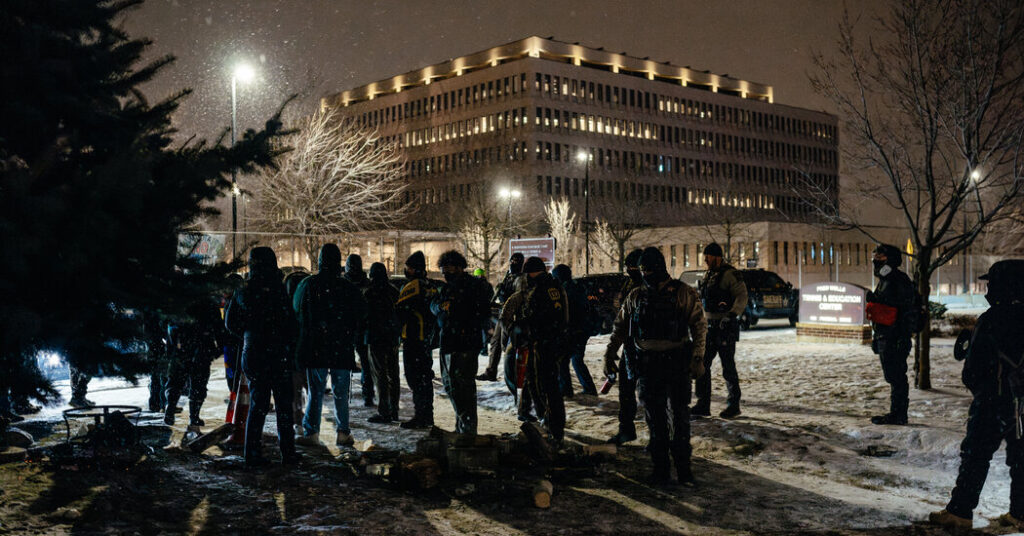
A federal judge on Thursday ordered the Trump administration to give detainees at an immigration facility near Minneapolis adequate access to lawyers, saying the government could have isolated thousands of immigrants from proper legal services.
In the lawsuit, filed in Federal District Court in Minnesota, lawyers for Advocates for Human Rights, a nonprofit, had argued that the detainees at the B.H. Whipple Federal Building have not been given access to lawyers for at least a month during the Trump administration’s immigration enforcement surge in the Twin Cities.
But lawyers for the federal government had argued that they could not arrange detainees to meet with lawyers in person because they did not have space to accommodate them in the Whipple facility. The government lawyers also said that the detainees were given access to phones to make calls for legal services.
Judge Nancy E. Brasel, a Trump appointee, said in her order on Thursday that it appeared “the government failed to plan for the constitutional rights of its civil detainees. The government suggests — with minimal explanation and even less evidence — that doing so would result in ‘chaos.’”
Granting the plaintiffs’ request for a temporary restraining order, the judge said the immigrants must receive access to phones for legal services within one hour of their detention and before being transferred out of the center. She also ordered the government to keep the detainees in Minnesota during the first three days of their detention so they have the chance to retain a local lawyer.
“The constitution does not permit the government to arrest thousands of individuals and then disregard their constitutional rights because it would be too challenging to honor those rights,” the judge wrote.
Michele Garnett McKenzie, the executive director of the Advocates for Human Rights, said the ruling “recognizes the fundamental importance of access to counsel in ensuring basic due process.”
“When the government deprives people of liberty, it cannot avoid its constitutional responsibilities because it finds them inconvenient,” she said in a statement. “It’s appalling that we required a court ruling to defend this fundamental right.”
The Department of Homeland Security countered in a statement about the ruling that “all detainees receive due process.” The agency did not say whether it would appeal.
The order comes as the Trump administration said on Thursday that it would end its aggressive immigration crackdown in Minnesota, which has resulted in tense clashes between protesters and law enforcement officers, the killing of two American citizens by federal agents and thousands of arrests. The operation also led to several lawsuits challenging the tactics and legality of sending about 3,000 immigration agents to Minneapolis and St. Paul, Minn.
In its complaint, the plaintiffs accused the government of not providing detainees with “constitutionally adequate or statutorily compliant access to counsel” since at least Jan. 11. The group added that federal agents at the building “have told attorneys for detainees that no visitation between detainees and attorneys is or has ever been permitted at Whipple.”
Lawyers for the government countered that the detained immigrants were “verbally informed that they can make calls, including to attorneys, family, friends or the consulate.” They added that the Whipple detention center was a short-term holding facility, and therefore, “it is not possible to provide facilities for in-person visitation by legal services providers at Whipple.”
Because Judge Brasel felt that the detention conditions at the Whipple building were “at the heart of this lawsuit,” she ordered lawyers for the government to visit the facility and to give the plaintiffs’ lawyers equal access to it as well.
On Tuesday, two lawyers for the plaintiffs who made the visit told the court that there were dozens of phones at the facility, but that the instructions to use them were confusing. They added that detainees told them they could not speak to a lawyer or make a phone call.
One of the lawyers, Hanne Sandison, said that some phone numbers for free legal services were listed incorrectly. The other lawyer, Kimberly Boche, said when they tried using one of the phones to call their own cellphone, the number that came up was from a detention center in Kentucky, instead of Whipple.
Sabrina Tavernise contributed reporting.
Christina Morales is a national reporter for The Times.
The post Judge Says Immigrant Detainees Near Minneapolis Must Have Proper Access to Lawyers appeared first on New York Times.