The Robert Frost line “Good fences make good neighbors,” from his 1914 poem “Mending Wall,” was almost certainly not meant to be taken at face value, despite attempts to co-opt it since. Often lost is the narrator’s mistrust toward that motto’s isolationist logic.
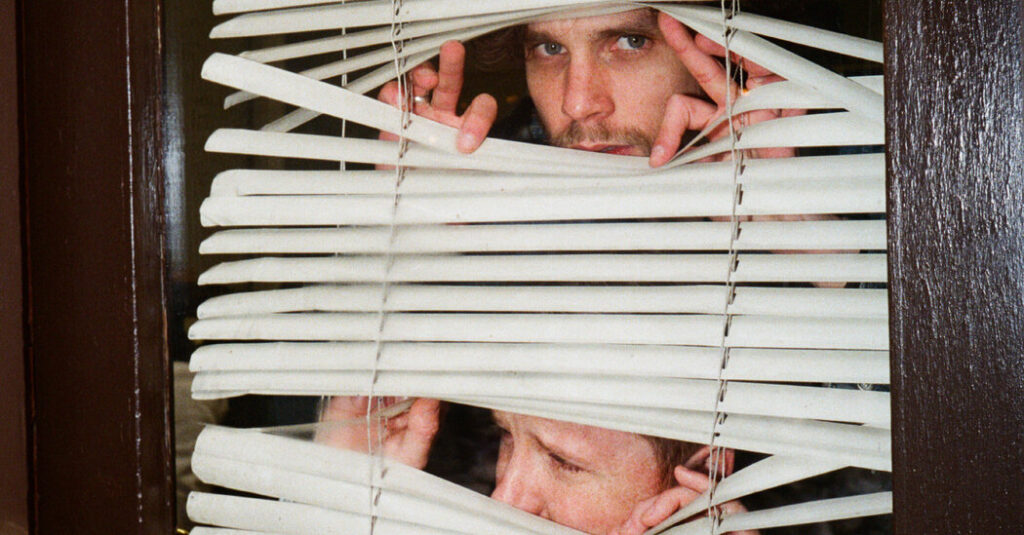
Still the narrator in the poem had it relatively easy. His neighbor had not threatened to throw a bucket of acid on his face. Or posted embarrassing videos of him online, or claimed to be a space alien in a “skin suit.”
Unlike the subjects of a new HBO docuseries, “Neighbors,” he did not live in 2026 America.
Directed by Harrison Fishman and Dylan Redford, the six-part series, which debuts on Friday, traces its origins to the Covid-19 lockdown, when furloughs, existential fear and way too much screen time drove a collective crisis of mistrust and bad faith.
At their core, the public skirmishes and shamings over vaccines and social distancing were inseparable from foundational American debates over boundaries and personal space. A dark subgenre of infotainment thrived online, the demon spawn of social-media rage bait, techno-solipsism and good old-fashioned rude behavior: the neighbor drama video. Fishman and Redford, longtime friends, became obsessed.
“Most of my quote-unquote entertainment was basically watching people fight online,” Redford, who is Robert Redford’s grandson, said in a joint video call with Fishman last week.
“I think we were both sort of overwhelmed by the intensity of that conflict,” he added. “And then these fascinating stories started coming out, like, ‘Well, you guys didn’t see what happened 10 seconds before that video,’ or, ‘What happened 10 seconds after totally changed the context of that viral Karen clip.’”
The creators’ desire to understand the fuller picture drove the documentary. Each half-hour episode focuses on different conflicts, but a few recurring themes emerge: guns; high-tech surveillance; online echo chambers; Florida; and yes, many fences, which cause at least as many problems as they solve.
The series, which is co-produced by the indie film house A24, has several members of the “Marty Supreme” creative team as executive producers (including Josh Safdie); unsurprisingly, perhaps, the show shares some of that movie’s blend of chaos and inexorable doom.
It is also very funny, and must walk a tricky line between description and condescension. Still the directors found disputes that mostly eschew easy narratives about country vs. city, MAGA vs. lib. Montana survivalists clash over differing views about land use. New Jersey dads fight because of their shared obsession with Halloween.
“By looking at these disputes, you really start understanding what people in our country care about the most, and what things they really want to protect,” Fishman said.
Redford added: “There’s no better way to understand someone’s ideology than how they view their land and their property. It’s a freeway to someone’s values.”
These are edited excerpts from the conversation.
Is there any relevant personal background here for why you were drawn to this subject? Did either of you have some crazy neighbor situation?
HARRISON FISHMAN We didn’t have a crazy situation. A big part of this started because my brother, Sam, had shown Dylan and I all of these neighbor dispute videos that he had been finding online. We got very excited about those, and then we made some fake ones — we just hired actors off Craigslist to basically pretend to be neighbors and film each other with consumer cameras. We tried to put them online to convince people that they were real, and no one really believed that they were real. So we decided maybe it would be cool to just film a real neighbor dispute in real time.
How did you set about finding these people? Many of them seem, let’s say, a little out there — and hard to find unless they’re already looking for attention.
FISHMAN The task of finding real neighbor disputes happening in real time is hard. We looked on Facebook groups, on TikTok and Instagram and those places where people post those videos. We did small claims court databases, where people are filing stuff against each other.
DYLAN REDFORD Local news articles.
FISHMAN Obviously every day we’re searching the words “neighbor dispute” on Google News, but then some of these situations don’t say, “neighbor dispute,” or they don’t say, “neighbor.” You almost have to read between the lines to figure out, “Could that qualify for our show?”
Was there a common motivation among the people who said yes to participating?
REDFORD Commonly people are looking around being like, “I’m not the crazy one, right?” I feel like because of the proximity, there’s this feeling of, “I’m not being understood and no one’s listening to me.” And also, consistently, all of their friends and family are like: “Shut up about your neighbor. We don’t care anymore. You need to let this go.” And to have someone come and be like, “Actually, we only want to talk about your neighbor” …
For a lot of these people, having a neighbor conflict just dominates your life. It’s really hard to describe how fully occupying it is because they’re so close, and you have no control over what they do, and it impacts you every single hour of the day. So I think we offer the subjects an opportunity to get their side of the story out. They really want to be heard.
Many of them seem to be looking for some kind of viral fame already, though. How prevalent that was in your search? Did you have to back people off who were too eager?
REDFORD Yeah. There were situations were they have an online business or they have a big online following, and they see this as an opportunity to market that. We were well aware of when those types of motivations were coming to the fold, and sometimes it felt like the only reason they were even doing it for that, that the conflict wasn’t legitimate. And then we wouldn’t cast them.
FISHMAN You also can’t avoid the online stuff in the show. We really leaned into it because it’s really how we communicate and interact.
REDFORD They did all the work for us. Their archive is right there. But a lot of what we have to parse through is: It’s their own archive that they’ve created with their own agenda and their own vision of themselves. So their online presence becomes almost always a part of the conflict in the story, because it plays a role in how they’re telling the story to themselves and to their audience.
In some episodes, we seem to see threats being made on camera. What kind of position does that leave you in? Are there concerns about legal liability?
REDFORD I can’t speak to the legal elements. I think it’s tough because the neighbors are constantly slinging things at each other, and part of the escalation is like, “How can I say the craziest thing to make the other person shut up?” It becomes about intimidation: How do you intimidate the other person to stop? Ultimately, what we’ve seen is that doesn’t work, and it oftentimes does make things worse.
FISHMAN Also, everybody on our show says really wild things about each other. And we have never felt that they were actually going to hurt each other in any actual way. We wouldn’t follow stories or film with people if we thought that they were truly going to hurt each other.
But presumably you had to have some conversations about it once in a while, as with the two Florida ladies with the guns, right?
FISHMAN Well, the gun stuff is funny, because the scariest thing about the guns is honestly when people bring them out. We’re just afraid one of them is accidentally going to go off.
It’s an interesting inversion of the Chekhov’s gun concept. As a viewer, you think: “Oh, no, there’s a gun. This isn’t going to end well.” But these are just people showing off.
FISHMAN In the beginning, we were like, “Hey, do you have a gun?” They’re like, “Yeah, I do.” As the season went on, we’re like, Everyone has a gun.
REDFORD Yeah. It’s not that interesting.
Any theories about why Florida over-indexes in your series?
FISHMAN My grandparents lived in Florida, and we both lived in Florida. That’s where we met. Florida’s such an incredible, amazing place.
REDFORD I think historically, Florida has been a place where people go to reinvent themselves. Geographically, it’s very far away from the rest of the country. People see it as a place of freedom to live a certain way or be a kind of person that they couldn’t be wherever they were previously. There are stakes to this view of how to live an American life in Florida that, I think, just juices everything up.
Austin Considine is an editor and writer covering television for the Culture section of The Times.
The post In ‘Neighbors,’ the Golden Rule Is ‘Get Off My Lawn’ appeared first on New York Times.