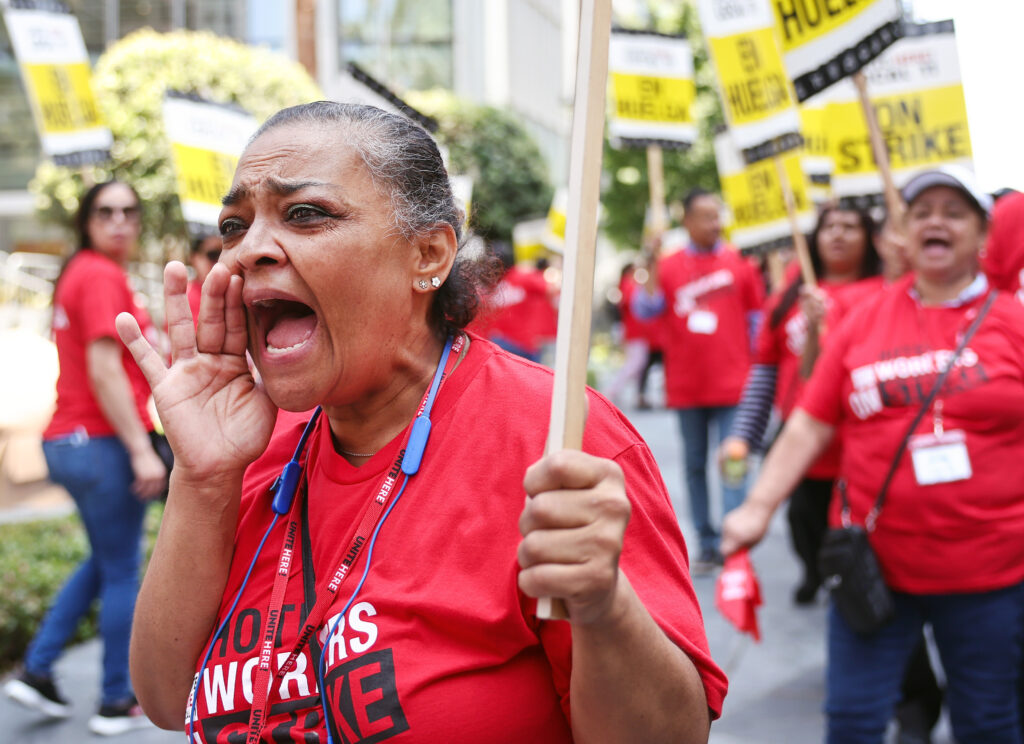
Protesting — whether picketing or participating in a boycott — is protected by the First Amendment. But when a group tries to coerce people into embracing its cause, it only shows how unpopular their movement really is. Consider the recent travails of bride-to-be Lauren Johnson.
She is planning to get married this summer in South Bend, Indiana, and listed a few hotels on her wedding website. One option for visiting guests was the DoubleTree by Hilton. She didn’t book any rooms or reserve a block there. The ceremony and reception will be held somewhere else. All she did was note that the hotel is nearby. Then the bullying began.
Unite Here Local 1, a hotel union based in Chicago, is boycotting the hotel. Members began by calling Johnson and her friends on their personal phones and at their workplaces to pressure them to boycott it as well. The union then sent mock wedding invitations to some of her guests. “Say ‘I don’t’ to this union boycotted hotel,” the fake invites said. Someone even stood outside Johnson’s workplace with a sign that read, “TELL LAUREN JOHNSON TO BOYCOTT DOUBLETREE HOTEL SOUTH BEND.”
She removed the hotel from her wedding website, but that wasn’t good enough for Unite Here. Boycott organizer Steven Wyatt sent Johnson a letter asking her to make the website public or give him the password so that he could make sure the DoubleTree recommendation was removed. Johnson says she has filed police reports and sent a cease-and-desist letter to the union. She said she knows of one other bride facing similar bullying. The Unite Here local did not respond to a request for comment.
The union says it’s boycotting the South Bend DoubleTree because a Hilton Garden Inn in downtown Chicago has yet to make a contract with it. The two hotels are owned by United Capital Corp., which owns nine other hotels across America.
Johnson’s wedding is under attack because a union is mad about the actions of a different hotel operating under a different brand name in a different state. The intimidation campaign is aimed at crippling a business until it capitulates to Unite Here’s demands. Doing so would likely raise lodging costs for guests.
When unions were a bigger force in the U.S. economy, the Hotel Employees and Restaurant Employees International Union, one of Unite Here’s predecessors, was controlled by organized crime. That connection was eventually severed by federal law enforcement, but the mob mentality appears to be alive and well.
The post Does your wedding have the union label? appeared first on Washington Post.