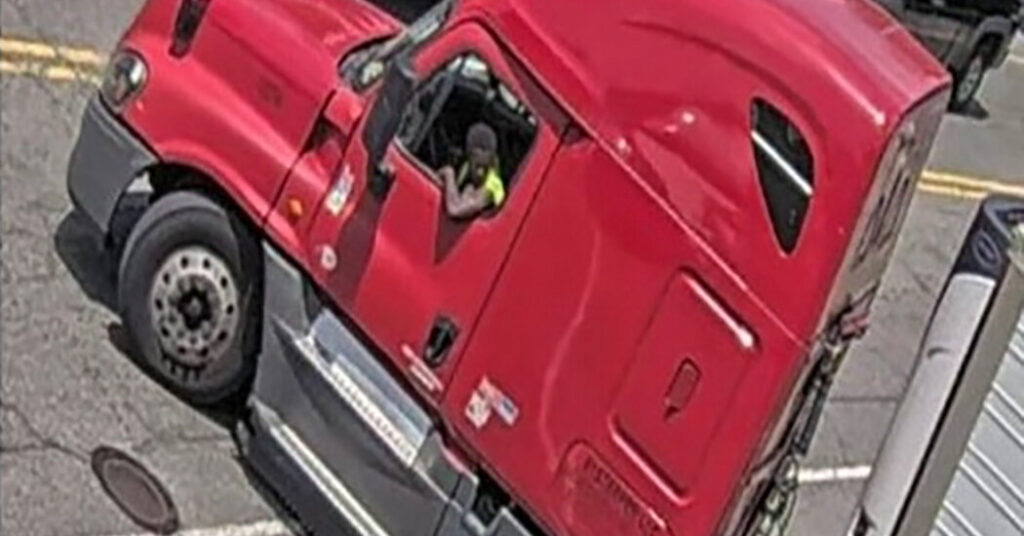
The shipment had been scheduled to be picked up by a longtime client, and a tractor-trailer with a red cab arrived to take the cargo. And when the truck rolled out of the warehouse on that July day, nothing seemed out of place.
But scammers had hacked the email account of a trucking firm, allowing them to intercept the costly shipment, prosecutors said last week — one more heist in a surge of stolen goods being redirected to the black market.
The truckload wasn’t expensive electronics. Crab was the cargo, and when it comes to such thefts, food and beverages are juicier targets, insurance experts say, because they’re easier to offload.
The haul from that warehouse, on July 15 in Worcester, Mass., was 33,750 pounds of frozen snow crab valued at about $325,000, the authorities said. Last week a New York man was arrested on federal charges that he played a central role in an organized scheme to steal cargo shipments and transport them across state lines, including the purloined crab.
Losses attributed to cargo thefts nationwide jumped to about $725 million in 2025, a 60 percent increase from 2024, according to CargoNet, a business focused on theft prevention and recovery for the insurance industry. But only a fraction of cargo theft is reported, experts say, and the National Insurance Crime Bureau and the F.B.I. estimate the total annual cost to the U.S. economy to be in the tens of billions.
The rising frequency and sophisticated methods of attacks on the supply chain have attracted the attention of the White House, where a meeting between trucking industry officials and the domestic policy council’s office is planned for next month.
Food and beverage thefts — heists of meat, seafood products and tree nuts — are the primary driver of this rise in cargo robberies, according to CargoNet.
In the crab case, instead of making the delivery to its legitimate destination in Jacksonville, Fla., Romoy Forbes, 31, a resident of Deer Park, N.Y., loaded the seafood onto his own truck and brought it to a store in Queens, the U.S. Attorney’s Office in Boston said.
That same month, the office said, he stole more than $400,000 worth of cologne in Ronkonkoma, N.Y. In June, he stole a shipment of blueberries in Winslow Junction, N.J., which he sold to a contact for about $4,000, prosecutors said. They said that he and his co-conspirators used the hacked email accounts to facilitate their crimes.
Mr. Forbes faces up to 10 years in prison on the interstate transportation charge and up to five years on the conspiracy charge, along with fines, if he is convicted. It was not clear whether Mr. Forbes had a lawyer.
In one case last year, two tractor-trailers picked up some 80,000 pounds of beef, valued at $350,000, from a slaughterhouse in northeastern Tennessee, and then vanished.
In December alone, there were thefts of beef in Texas (valued at $161,000), chocolate in New Jersey ($150,000) and blueberries and kiwis, also in New Jersey ($160,000), according to the Transportation Intermediaries Association, a trade group made up of 1,600 transportation companies.
Just last week, nearly $185,000 worth of protein powder was swiped in California, and about $50,000 worth of energy drinks in Nevada, it reported.
One of the biggest recent hauls was a truckload of processed lobster meat, valued at $400,000. It disappeared in December after being picked up from a warehouse in Taunton, Mass., never reaching the intended Costco Wholesale locations in Illinois and Minnesota.
The load was reported missing by Rexing Companies, a freight provider based in Indiana, which was lined up to transport it.
Dylan Rexing, its president and chief executive, said the driver who was hired to transport the lobster was impersonating another carrier. It was basically a case of high-tech identity theft melded with an old-fashioned robbery.
“It’s a paperwork scheme,” he said. “I think it happens every day.”
One day after Mr. Rexing reported the missing lobster shipment, he heard from a Rexing client that had lost four truckloads of protein snacks from the same facility on the same day. Each truck was carrying a shipment worth $250,000.
“It’s an arms race and, quite frankly, they’re good at what they do,” he said. “This is not a mom-and-pop shop, it’s organized crime.”
Mr. Rexing said that once criminals have created fake trucking and brokerage companies, they start completing legitimate jobs to establish a work history before targeting high-value loads within their customer network to steal.
Mr. Rexing said he believed the lobster was taken to a seafood market in New York City and sold at a heavy discount.
Food and beverage shipments are the top target for commodity theft, industry data shows. Food can be offloaded quickly, and it’s largely untraceable — fruit and frozen chicken don’t carry unique serial numbers or bar codes — and even if a shipment is recovered, it might have to be destroyed. It’s less likely to be found on a reputable store’s shelves after it’s unlinked from its supply chain. In contrast, TVs are harder to move surreptitiously.
The F.B.I. is still investigating the stolen lobster shipment, Mr. Rexing said. But shipments that remain missing beyond 48 hours are unlikely to be found, said Chris Burroughs, the president and chief executive of the Transportation Intermediaries Association.
“These guys are smart,” he said. “They target commodities that are hot in the marketplace.” He pointed to examples of a truckload of baby formula being stolen during the pandemic and, later, a truckload of eggs when there was an egg shortage.
His group is supporting legislation in Congress that would enable more collaboration across multiple federal agencies domestically and internationally to combat organized cargo theft. Another bill would shore up the Federal Motor Carrier Safety Administration’s licensing and registration processes for drivers and companies.
Mr. Burroughs and Mr. Rexing will join others from the industry next month at the White House to discuss solutions.
“This is a direct cost to the consumer,” Mr. Rexing said. “We can’t take that loss, our customer can’t take that loss, without passing that cost on.”
Adeel Hassan, a New York-based reporter for The Times, covers breaking news and other topics.
The post Crab Heist Puts Spotlight on Surge of Cargo Thefts appeared first on New York Times.