D.C. landlord Ali “Sam” Razjooyan for years has faced public scrutiny over his treatment of low-income tenants. He has been sued twice by the Office of the Attorney General. He has racked up more than 4,000 building code violations. Local news outlets have published investigations into his business practices, detailing how he has profited from D.C.’s housing assistance programs while leaving tenants in squalid, unsafe conditions.
Now, D.C. Attorney General Brian Schwalb is attempting to dismantle what remains of Razjooyan’s local real estate business, using a law most famously deployed against gang leaders and mob bosses.
The civil lawsuit Schwalb (D) filed Thursday is the first time a D.C. landlord has been sued under the Racketeer Influenced and Corrupt Organizations (RICO) Act, he said. It claims that Razjooyan and two of his family members operated a “vast, illegal real estate empire” that put hundreds of tenants in danger, worsened the city’s affordable housing crisis and defrauded D.C.’s housing assistance program while raking in millions of dollars. The suit aims to kick the Razjooyans out of the D.C. rental housing market and seeks millions in damages, civil penalties and restitution to the tenants allegedly harmed by their practices.
Sam Razjooyan said in a text message that he was not available to immediately comment on the suit but planned to in the coming days. His mother and brother, both named in the lawsuit, did not return phone calls seeking comment Thursday.
“This case is different,” Schwalb said at a news conference Thursday. “Instead of going after each of the Razjooyan properties one at a time, we’re targeting the very foundation of the Razjooyans’ vast operation: the web of fraud and deception that is at the core of their business model.”
The Razjooyan case, Schwalb said, is the “most egregious” example of people exploiting a business opportunity in the D.C. housing market — one where landlords buy up properties and attempt to rent them exclusively to voucher holders in an effort to receive higher and guaranteed payments from the D.C. government.
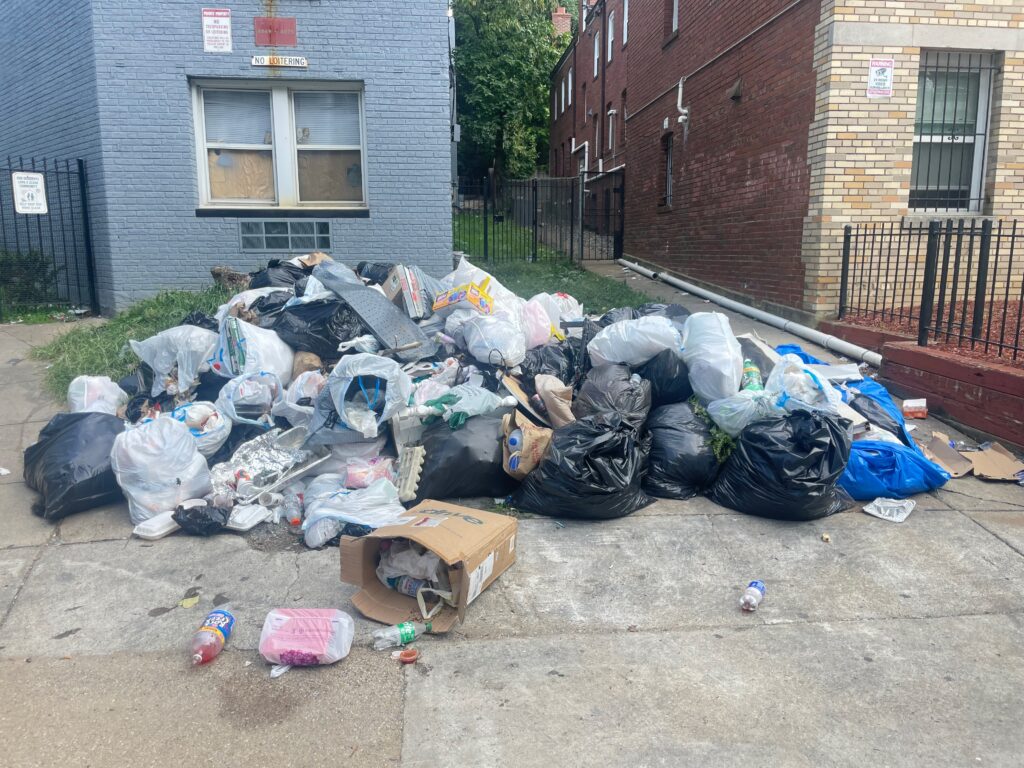
The complaint, filed in D.C. Superior Court, offers the fullest accounting yet of the Razjooyans’ alleged scheme. Razjooyan worked with his brother and mother to purchase and renovate 70 D.C. buildings over the course of a decade, collecting more than $16 million in payments from D.C.’s housing voucher program while tenants languished in squalid conditions, the lawsuit says. While the low-income renters in their buildings dealt with rodent infestations, mountains of trash, mold, flooding and other dangerous problems, Schwalb’s office alleges, the Razjooyans were perpetuating their real estate business by falsely claiming to lenders and the D.C. government that their properties were in safe condition. About 90 percent of the buildings they owned were in Wards 7 and 8, which include many of the city’s poorest neighborhoods, the suit says.
Razjooyan followed a pattern, the attorney general alleges. He first identified a “distressed property,” then told lenders that with their funding, he could “turn it into a cash cow” by filling it with tenants who use D.C. housing subsidies to pay their rent, according to the lawsuit. That promise of guaranteed, government-backed rent payments — plus his vows to invest in renovations — allowed him to secure loans that were greater than the property’s real worth, the lawsuit says.
Razjooyan’s promises to lenders were often false, the suit claims. He did not fill up the buildings with tenants and did not make substantive renovations; instead, he hired companies he controlled to perform shoddy and illegal construction on the properties, whose conditions deteriorated quickly afterward, Schwalb alleges. Most of the money from lenders went not toward true property improvements and instead toward bank accounts controlled by the Razjooyans and the acquisition of new buildings to perpetuate the “scheme,” the suit says.
In several cases identified by the lawsuit, Razjooyan and his associates exaggerated the number of occupied units in their buildings as they sought to refinance their properties. In one case, they claimed a building was raking in double the rent it was actually generating, according to the lawsuit. Furthermore, at least 10 of the units they claimed to have in loan documents were fake; they had installed 10 doors with apartment numbers and welcome mats that had no actual apartments behind them. Instead, the doors opened to concrete walls, the suit said.
Ernest Wilkerson, tenant association president at Minnesota Commons in Northeast Washington, recalled in an interview with The Washington Post how it went at his property. When he first moved in — before Razjooyan purchased the building — “everything was nice,” he said. “It was just like any other apartment complex.”
Then, Razjooyan bought the property, and it became a “full-on construction site,” Wilkerson said.
Wilkerson, a 57-year-old heavy-equipment operator, said the shoddy construction turned two- or three-bedroom apartments into one-bedroom apartments. Maintenance pretty much ceased altogether, he said. The hallways were never mopped. Trash piled up throughout the complex. The attorney general’s office said in a 2024 lawsuit that the property was dilapidated: Ground floor doors and windows were either broken or missing, and only one of 11 buildings had a door with a working lock.
Wilkerson said the tenants at Minnesota Commons are still dealing with the fallout from the shoddy construction and years of poor maintenance.
“We have a lot of older, mostly women” at the property, Wilkerson said. “To see them live in these conditions — and some of them have been there 30 years — to see them live in these conditions is heartbreaking to me.”
In some cases, Schwalb alleges, the conditions have been potentially deadly. A different Northeast Washington building controlled by the Razjooyans caught on fire, probably due to faulty wiring, the lawsuit says. Tenants were evacuated from a Southeast Washington building last year because their utilities needed to be shut off to avert a gas explosion, the lawsuit said.
After repeated media attention and lawsuits, Razjooyan’s reputation suffered, and many lenders did not want to work with him, the lawsuit says — but he tried to continue acquiring properties by using straw purchasers who bought buildings on his behalf.
Still, the suit says, the Razjooyans’ business has crumbled. Interest rates were rising by 2023, making real estate deals more challenging to finance. At least 21 of their properties are in bankruptcy, and 13 are in court-ordered receiverships where a third-party has been appointed to manage the building instead of the Razjooyans. “Nearly all the rest are teetering on the edge,” the lawsuit reads. “With no end game, the house of cards has begun to fall.”
Now, the lawsuit says, “all of this must stop.”
Tenants at properties currently or formerly controlled by the Razjooyans are still affected to this day, attorneys say. This winter, one woman with a 3-month-old baby had no heat in her unit — even in the record-breaking cold temperatures of the past month, according to the attorney general’s office. In another case, a family recently moved out of their unit and into a shelter because of the extent of their mice infestation, attorneys said.
Megan Browder, who leads systemic advocacy at Legal Aid DC, which for years has represented tenants at some of Razjooyan’s buildings, said one of the affected properties was recently condemned by D.C.’s Department of Buildings, meaning no one can live there. She said the lingering challenges show the need for a more systemic solution — perhaps council legislation or action from the mayor — to stop bad landlords sooner.
“All parts of the city really have to come together and find a solution because for the property to get to that point, it’s been years where something has been going awry,” she said.
To start, the attorney general is seeking a preliminary injunction to address housing violations at the six properties where they believe the Razjooyans are still firmly in control, and to prevent the Razjooyans from purchasing more D.C. buildings as litigation continues. Any criminal charges against the Razjooyans would be determined by federal prosecutors in the office of the U.S. attorney for D.C.
The post Using a law deployed against mob bosses, D.C. files suit against a landlord appeared first on Washington Post.