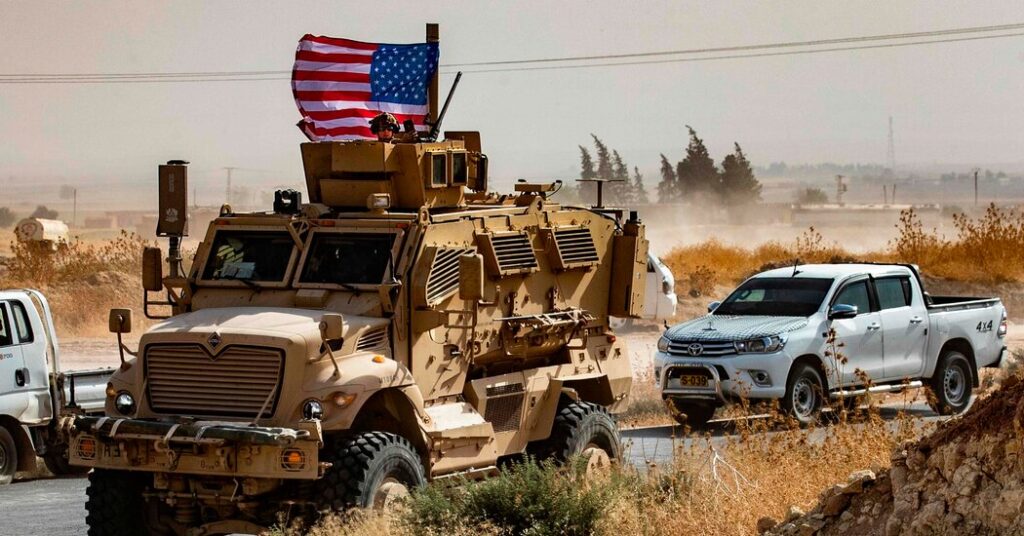
After more than a decade of fighting elements of the Islamic State, U.S. troops have left a small base in southeastern Syria as the military shrinks its presence in the country.
U.S. Central Command, which oversees military forces in the Middle East and Central Asia, announced that the troops had completed an “orderly departure” from the Al-Tanf garrison on Wednesday.
Some of the troops from Al-Tanf are expected to be repositioned at a Jordanian military base across the border, according to a senior U.S. official.
Adm. Brad Cooper, the leader of Central Command, said in a statement on Thursday that U.S. troops would “remain poised to respond to any ISIS threats that arise in the region.”
“Maintaining pressure on ISIS is essential to protecting the U.S. homeland and strengthening regional security,” he added.
About 1,000 U.S. troops remain in Syria, according to a U.S. official who spoke on the condition of anonymity because he was not authorized to speak publicly about the American presence in the country.
Al-Tanf served as a small outpost strategically positioned along the highway linking Baghdad to Damascus, near the intersection of the borders of Iraq, Jordan and Syria. It was used by U.S. troops to train Syrian fighters opposed to the government of Bashar al-Assad, and came under repeated attacks by Iranian drones and Islamic State fighters.
While the number of troops in Syria has been slowly dwindling, American airstrikes against Islamic State fighters have continued.
According to Central Command, U.S. forces attacked “more than 100 targets” and captured or killed more than 50 ISIS fighters just in the past two months.
Since 2014, thousands of soldiers, sailors, airmen and Marines had rotated through the garrison at Al-Tanf as infantry, artillery and special operations troops.
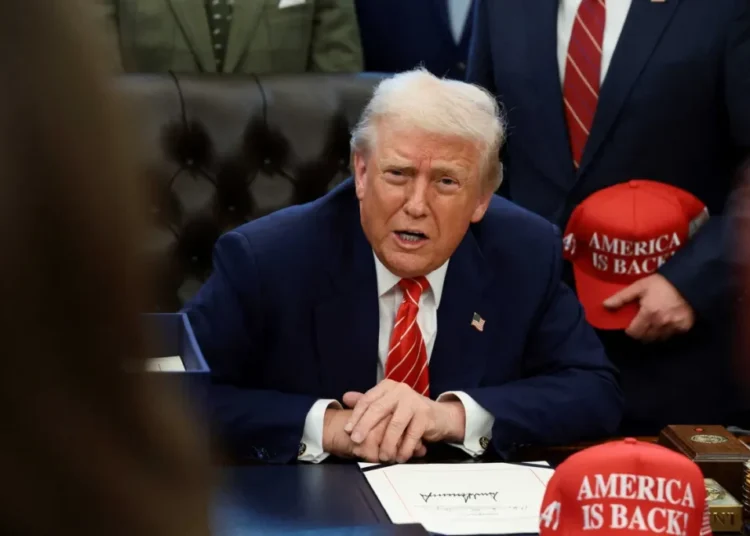
Their departure comes as the Pentagon is refocusing its attention on the Western Hemisphere as part of President Trump’s new national defense strategy, which was issued last month.
The Syrian government, led by President Ahmed al-Shara, said on Thursday that its forces had begun deploying near the base along Syria’s borders with Iraq and Jordan, and that more would be sent to the area in the coming days.
“Through coordination between the Syrian and American sides, units of the Syrian Arab Army have taken over Al-Tanf base and secured the base and its surroundings,” the Syrian Ministry of Defense wrote in statement on social media.
The Syrian government agreed to join the U.S.-led global coalition to defeat the Islamic State last year as part of Mr. al-Shara’s bid to forge closer ties to the United States. The Trump administration subsequently supported a military offensive by the Syrian government in northeastern Syria, where it sought last month to wrangle control from a U.S.-backed Kurdish militia.
The U.S.-led campaign against the Islamic State, called Operation Inherent Resolve, began in 2014 as the group’s fighters started conquering swaths of Iraq and Syria after the departure of most American combat troops in Iraq.
In response, the Obama administration ordered the Pentagon and U.S. Central Command to launch a concerted effort to retake cities like Mosul and Raqqa. Thousands of captured Islamic State fighters and their families remain in prison camps across Syria.
Inherent Resolve is run as a multinational task force out of Baghdad, and the garrison at Al-Tanf was an important location where operational troops could launch ground strikes against remaining Islamic State forces in the region.
According to Central Command, the Islamic State was defeated territorially in 2019, and in April 2025 the Defense Department announced it would begin consolidating the locations in Syria where U.S. troops had been deployed.
Eric Schmitt contributed reporting from Washington. Christina Goldbaum and Reham Mourshed contributed reporting from Damascus, Syria.
John Ismay is a reporter covering the Pentagon for The Times. He served as an explosive ordnance disposal officer in the U.S. Navy.
The post U.S. Forces Leave Base in Syria Used in Fight Against ISIS appeared first on New York Times.