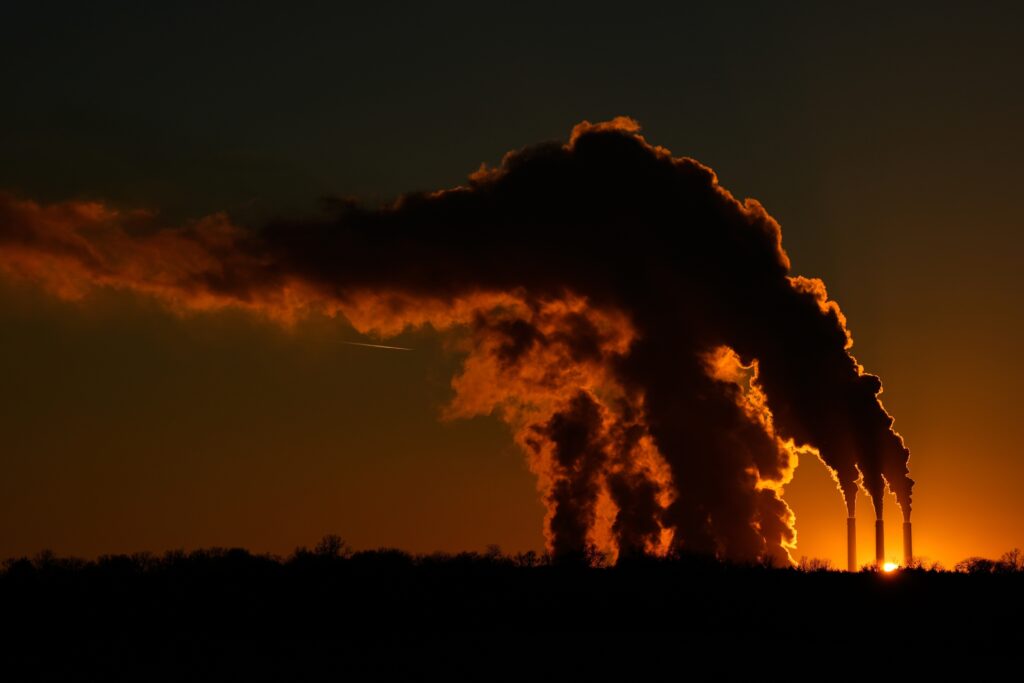
President Donald Trump ordered the Pentagon to purchase more coal-based electricity, drawing the U.S. military into his campaign to subsidize a heavily polluting fossil fuel that is struggling to compete in the marketplace.
Trump announced the move at a White House event Wednesday where he also said his administration would spend taxpayer money to upgrade coal plants in four states.
Experts warn that the administration’s efforts to revive coal threaten to raise electricity prices for all ratepayers and to drive significant air and water pollution from particulate matter and toxic chemicals, as well as carbon emissions.
“We’re going to be buying a lot of coal through the military,” Trump said. “It’s going to be less expensive and actually much more effective than what we have been using for many, many years.”
The executive order Trump signed Wednesday, which does not specify how much the Pentagon will spend, directs defense officials to preference coal in long-term energy contracts. It states that “coal is essential to our national and economic security” and that it is “imperative” for the Pentagon to “prioritize the preservation and strategic utilization of coal-based energy assets.”
The Trump administration is also working to prop up coal and other carbon-intensive industries by dismantling federal rules that restrict greenhouse gas emissions. The White House is expected to announce this week that it is rescinding the federal government’s finding that those emissions are driving global warming, which underpins U.S. climate regulation.
The order invokes the energy “emergency” declared by the White House early last year, as well as an executive order from April directed at strengthening the U.S. power grid. White House officials have argued that the national power crunch — driven in large part by the proliferation of data centers — has created a national security emergency.
In addition to the Pentagon directive, Trump also said Wednesday that his administration will use funds from the Department of Energy to pay for upgrades at coal plants in Kentucky, North Carolina, Ohio and West Virginia “to keep them online and keep those plants open.” Trump did not say how much money will flow to that project, but it will be drawn from an existing fund of $625 million the administration announced in September to help the coal industry.
The administration’s unprecedented actionsto force power companies and consumers to subsidize coal plants that were otherwise headed toward retirement have unleashed a fierce backlash from state attorneys general, utility industry officials and ratepayer advocates in several states.
Energy Secretary Chris Wright has repeatedly invoked little-used emergency powers to cancel the planned retirement of five large coal facilities. The orders, which are being challenged in court by at least 15 states, effectively command power companies to scrap closure plans and invest whatever is required to keep the plants operating. Those costs are generally passed along to utility ratepayers through higher bills.
The result, according to Ari Peskoe, an energy scholar at Harvard University, has been to “raise energy bills while providing negligible benefits to consumers.”
“Each of the five plants were slated to retire because they are expensive to operate and there are cheaper sources of power available to meet consumers’ needs,” Peskoe said. “Plant owners aren’t just flipping a switch to turn the plants back on — they are spending millions on maintenance, renewing expired coal contracts and rehiring workers.”
The owners of a Colorado coal plant the administration has ordered to remain open have argued that the Trump administration is illegally forcing them to keep operating. Two Colorado utilities, Tri-State Generation and Transmission Association and Platte River Power Authority, said in a federal regulatory filing last month that the directive amounts to an unconstitutional taking of private property. “The costs of compliance fall directly on their members and customers, who must now pay,” said the filing, which disputes the Energy Department’s finding that the plant is crucial to avert an energy shortage in the Western U.S.
Fifteen states are seeking to block the Trump administration’s orders to keep coal plants open by suing to overturn its declaration early last year of an “energy emergency,” which the Energy Department is using to justify the directives.
The cost to ratepayers of keeping the plants open is considerable. The owner of the J.H. Campbell complex, a western Michigan coal power generating plant ordered to remain open by the administration, has said it is costing $615,000 per day. An analysis by the research group Grid Strategies found that if the administration were to expand its directive to the dozens of coal plants scheduled for retirement by the end of 2028, the cost would exceed $3 billion annually.
The cost of the White House directive to the Pentagon to buy coal is unclear, as the administration did not immediately offer data on the Defense Department’s existing energy contracts and how much more it would be authorized to spend to increase its coal electricity use. But it will come at a price, said Rob Gramlich, president of Grid Strategies.
“Taxpayers will have to pay for whatever DOD is buying,” he said.
The post Trump orders Pentagon to buy coal power as the polluting fuel struggles to survive appeared first on Washington Post.