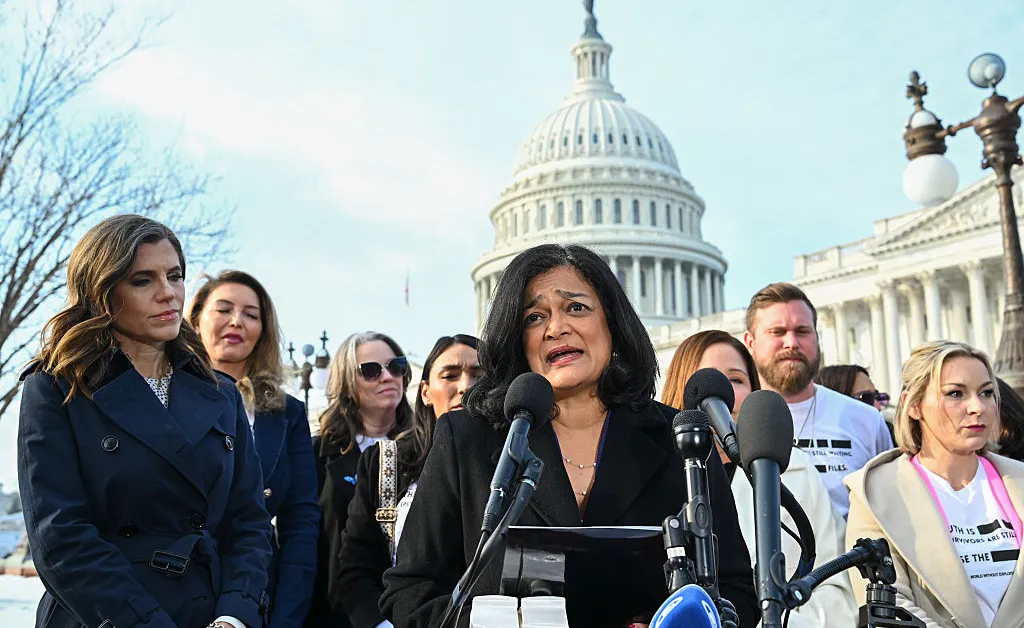
Lawmakers have accused the Department of Justice (DOJ) of tracking their queries into files related to the late sex offender Jeffrey Epstein after photos appeared to show the search history of a member of Congress included in documents held by Attorney General Pam Bondi.
[time-brightcove not-tgx=”true”]
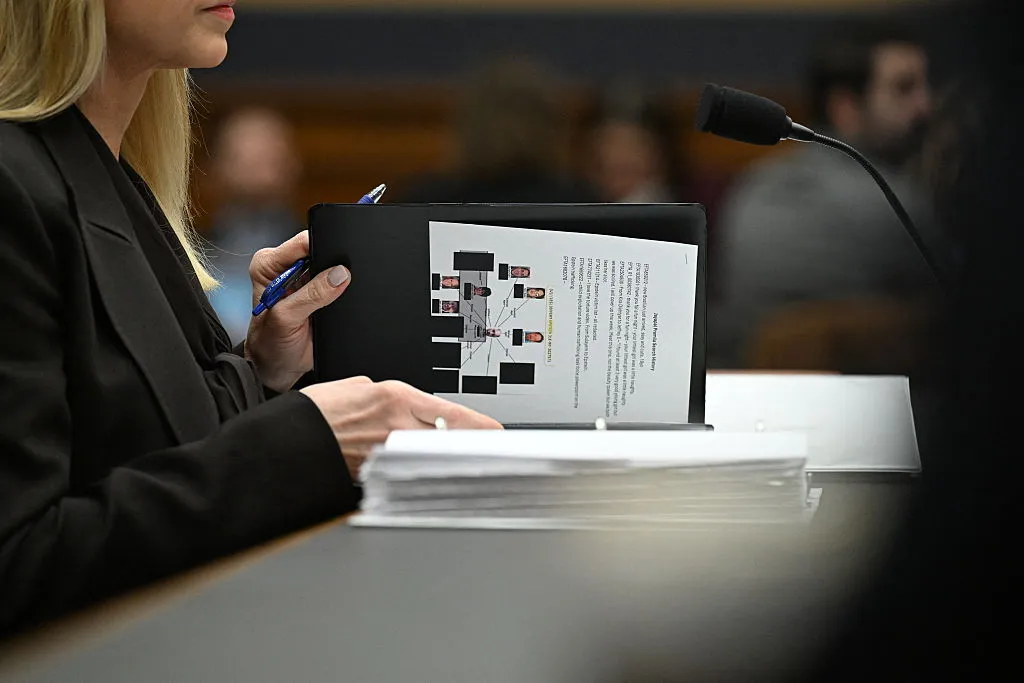
Photos captured by Reuters and Agence France-Presse depict a sheet of paper in Bondi’s binder and her hand while she was testifying before the House Judiciary Committee that reads “Jayapal Pramila Search History,” in reference to the Democratic representative of Washington. The document then appears to list several of the files the DOJ has released related to Epstein, and brief summaries of their contents.
“It is totally inappropriate and against the separations of powers for the DOJ to surveil us as we search the Epstein files,” Jayapal posted on X on Wednesday evening. “Bondi showed up today with a burn book that held a printed search history of exactly what emails I searched. That is outrageous and I intend to pursue this and stop this spying on members.”
Lawmakers began reviewing unredacted documents from the so-called Epstein files this week after the DOJ granted permission for the records to be viewed on computers inside a secure room at the Justice Department. Jayapal confirmed in an NPR interview that the searches listed on the sheet Bondi was pictured holding corresponded to ones she had made at the DOJ.
“I do think that there is bipartisan agreement that we should be able to review those files without the Department of Justice surveilling us,” the Congresswoman said, noting that she had spoken to Speaker of the House Mike Johnson on Wednesday night. Jayapal also accused Bondi of intentionally allowing for searches to be made ahead of the hearing in an effort to prepare for questioning by House lawmakers.
At Wednesday’s hearing, Bondi faced criticism and probing questions from both Republicans and Democrats over the DOJ’s handling of the Epstein files’ release that at several points devolved into shouting matches. Lawmakers pressed the Attorney General about the delay in making the records public—despite a law that required all government documents related to the disgraced financier to be released by Dec. 19—as well as pushing her to address the redaction of the names of some individuals alleged to be tied to Epstein and the failure to shield private information and photos of a number of victims in the released documents.
Read more: Pam Bondi Declines to Directly Apologize to Epstein Victims During Capitol Hill Testimony
Republican Rep. Nancy Mace of South Carolina, who has been outspoken in pushing for transparency and accountability in the Epstein case, also alleged that the DOJ is monitoring lawmakers’ searches into the files.
“Yes. I will confirm. DOJ is tracking the Epstein documents Members of Congress search for, open, and review,” Mace posted on X Wednesday evening. “I was able to navigate the system today and I won’t disclose how or the nature of how; but confirmed the DOJ is tagging ALL DOCUMENTS Members of Congress search, open and review.”
Mace told NPR that “there is someone or two people from the DOJ monitoring you as you sit on those computers” and that lawmakers are given their “own identification” upon being logged into the computers by a “tech person” at the department. “They are tracking all of the documents that members of Congress open, and they’re tracking everything that you do in that room,” she said.
Read more: Trump Administration Removes Some Redactions From Epstein Files After Outcry From Lawmakers
Rep. Jamie Raskin of Maryland, the top Democrat on the House Judiciary Committee, similarly described lawmakers being watched while viewing what he called the “slightly-less-redacted” files, saying in a statement that the department required them to “sit at one of four DOJ-owned computers, use a clunky and convoluted software system provided by DOJ, and search for and read documents while DOJ staffers look over our shoulders.”
“Bondi and her team are spying on Members of Congress conducting oversight in yet another blatant attempt to intrude into Congress’s oversight processes,” said Raskin, who engaged in multiple heated exchanges with Bondi during Wednesday’s hearing. He called for an immediate end to the tracking of lawmakers’ searches and the public release of all files related to Epstein with “all the survivors’ information, and only the survivors’ information, properly redacted.”
“I will also be asking the DOJ Inspector General to open an inquiry into this outrageous abuse of power,” Raskin added.
The DOJ did not immediately respond to TIME’s request for comment.
The post ‘Stop This Spying’: Members of Congress Accuse the DOJ of Surveilling Lawmakers’ Epstein Files Searches appeared first on TIME.