Even before Congress passed a broad tax cut last July, legislators in Colorado had made sure that one of its key provisions, a new deduction for overtime pay, would not apply to the state’s income tax. In Delaware, lawmakers moved last year to prevent new federal tax breaks for businesses from hitting the state’s coffers. And in Washington, the City Council voted to exclude several of the new federal tax cuts from the district’s tax code.
In statehouses across the country, policymakers are grappling with the changes Republicans made last year to the federal income tax. The law created or revived a slew of expensive tax breaks for both business and individuals, including versions of President Trump’s campaign promises to not tax tips or overtime pay.
Many of those changes cut taxes by reducing the amount of income subject to taxation in the first place. Most states use federal definitions of income as the starting point for their own income taxes, and so the federal tax breaks can also reduce the amount of money states can tax.
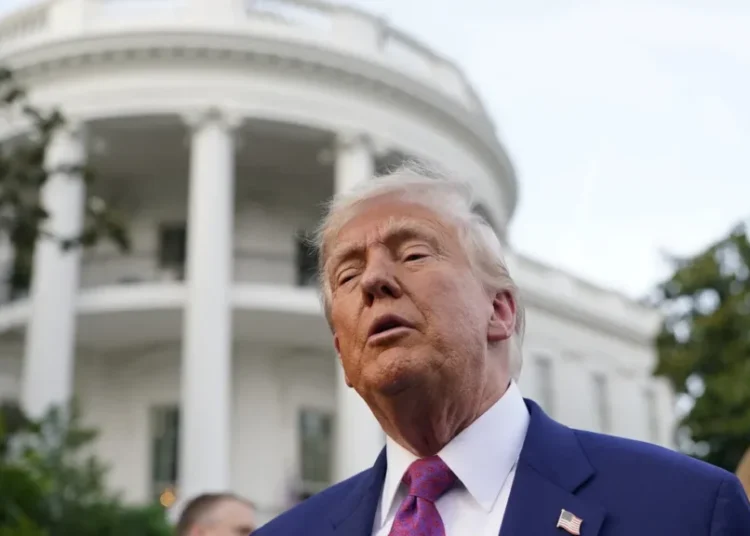
That means the tax law passed in Congress is hitting state revenues, prompting some states to proactively exclude the new federal tax cuts from their tax codes. Typically, tweaks like this fly under the radar, even if they can result in people owing slightly more in state taxes. But as the Trump administration and Republicans bet on a tax “refund boom” to lift their electoral prospects, the technocratic relationship between state and federal income taxes is fueling a political firefight in Washington.
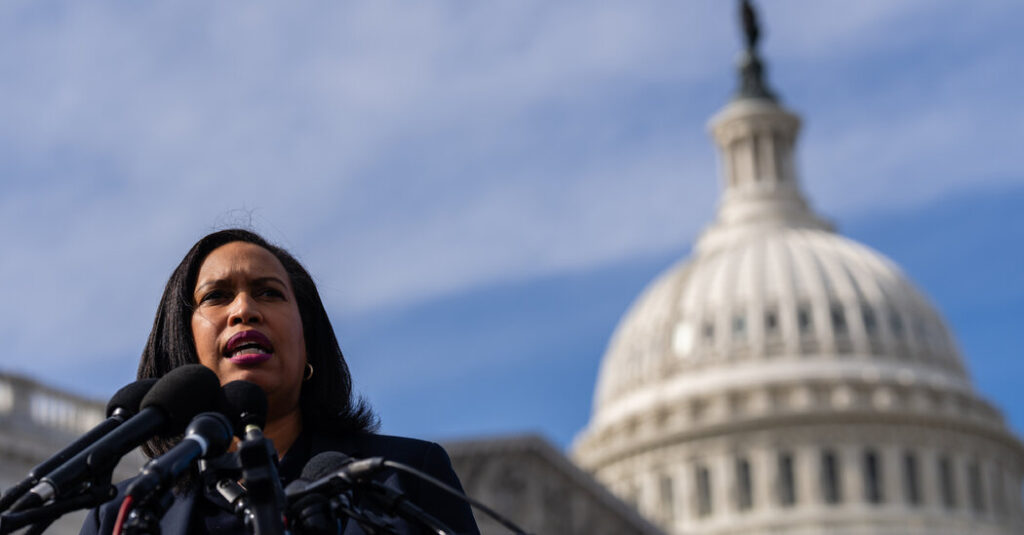
Republicans in the House, cheered on by the White House, passed a resolution last week forcing the District of Columbia to adopt the federal tax cuts, despite warnings from Mayor Muriel E. Bowser and other local officials that a sudden change to the city’s tax code would upend filing season in the capital. Republicans, who have not been shy about using Congress’s ability to tamper with D.C.’s policies, said they wanted to make sure their federal tax cuts would also show up in the district’s income tax.
“The D.C. council would rather punish their own residents, their own people, than recognize the achievements of President Trump’s legislation,” said Representative Brandon Gill, a Texas Republican who sponsored the D.C. legislation. On Wednesday, the Senate took a procedural step toward passing the measure.
In a letter to congressional leaders, Washington’s chief financial officer, Glen Lee, said that the legislation would require the city to suspend its filing season, potentially for months, as it overhauls all of the forms and software systems used to accept tax returns. With the savings from decoupling from the federal tax breaks, D.C. legislators had planned to expand tax credits for working-class residents.
Democrats in Congress harshly criticized the G.O.P. move to nullify the D.C. policy choices. Senator Ron Wyden of Oregon, the top Democrat on the Finance Committee, said Republicans wanted to “trample on the rights and priorities of people they don’t even represent.”
Eight states don’t have an income tax, but for those that do, syncing up with the federal tax code comes with its advantages. Not only is it easier for people to follow consistent state and federal tax rules, it can also allow states to more easily recoup money when the Internal Revenue Service finds that someone owes more in federal taxes.
Still, the landscape is generally a patchwork of local and federal rules. A few states hew very closely to the federal tax code, while most do so more selectively. Depending on the state, federal policy changes are either automatically imported into the state tax codes, or the state legislature has to affirmatively vote to align their tax systems, a decision that does not always cut cleanly across party lines.
“This is a traditional, core area of state authority,” said Carl Davis, the research director at the Institute on Taxation and Economic Policy, a liberal think tank. “There are zero states that fully adopt the federal tax rules in their own codes. When state lawmakers are doing their job well, they sit down and give each item careful consideration about whether it makes sense in their own code or not.”
South Carolina is one of the states that follows the federal definition of taxable income, which means that its income tax would ordinarily account for the new deductions for overtime pay, tips and auto-loan interest, among others. But Republican lawmakers in the state have so far held off on conforming to the latest federal changes, instead pursuing a tax-cutting agenda of their own.
Bruce Bannister, a Republican and the chairman of the Ways and Means committee in the South Carolina House, is pushing legislation that would switch the state to a broader definition of income and then tax it at a lower rate. The change would mean that many of Mr. Trump’s new tax cuts, passed as part of the One Big Beautiful Bill Act, would not factor into the state’s income tax, unless lawmakers choose otherwise.
“We want to get away from being directly coupled,” Mr. Bannister said in an interview. “The income tax reform bill we passed really had nothing to do with the Big Beautiful Bill. We didn’t know what that was.”
Many states already use this broader definition of income, called adjusted gross income, as the starting point for their income taxes. So the new federal deductions for individuals pushed by Mr. Trump, in general, already do not flow through to their state income taxes. But the new tax breaks for businesses still can, and lawmakers in some largely Democratic states are moving to decouple from those business provisions.
In Delaware, lawmakers called a special session late last year to pass legislation barring companies from using new, federal tax standards for deducting the cost of investments. On their federal returns, companies can now immediately write off the full cost of new investments, but in Delaware they will have to deduct those costs in pieces, over time.
“For the longest time our tax code has been pretty much a mirror image of what happens at the federal level, but if we had picked up these tax cuts for large corporations we were looking at upward of $400 million in projected losses,” Kerri Evelyn Harris, a Democrat and the majority leader in Delaware’s House, said. “We determined we could not stall.”
States were already facing new budget pressures under the Trump administration. The new tax law also included cuts to Medicaid and food stamps, potentially raising costs for states, and the Trump administration has rescinded funding for federal projects in blue states. In New York, lawmakers are hoping to keep their state tax code free of some of the federal business tax breaks Congress passed last year.
State Senator Andrew Gounardes, a Democrat and the chairman of the New York Senate’s Budget and Revenue Committee, said the state could save more than $2 billion in just one year by doing so, money that the state could use for a variety of other purposes.
“It gives us options, and having that extra boost of revenue allows us to not have to sweat those choices as much,” he said. “States are thinking very hard about how do they create the infrastructure to self-govern without having to rely solely and wholly on the federal government.”
Andrew Duehren covers tax policy for The Times from Washington.
The post States Say No Thanks to Trump Tax Cuts, Drawing Republican Fire appeared first on New York Times.