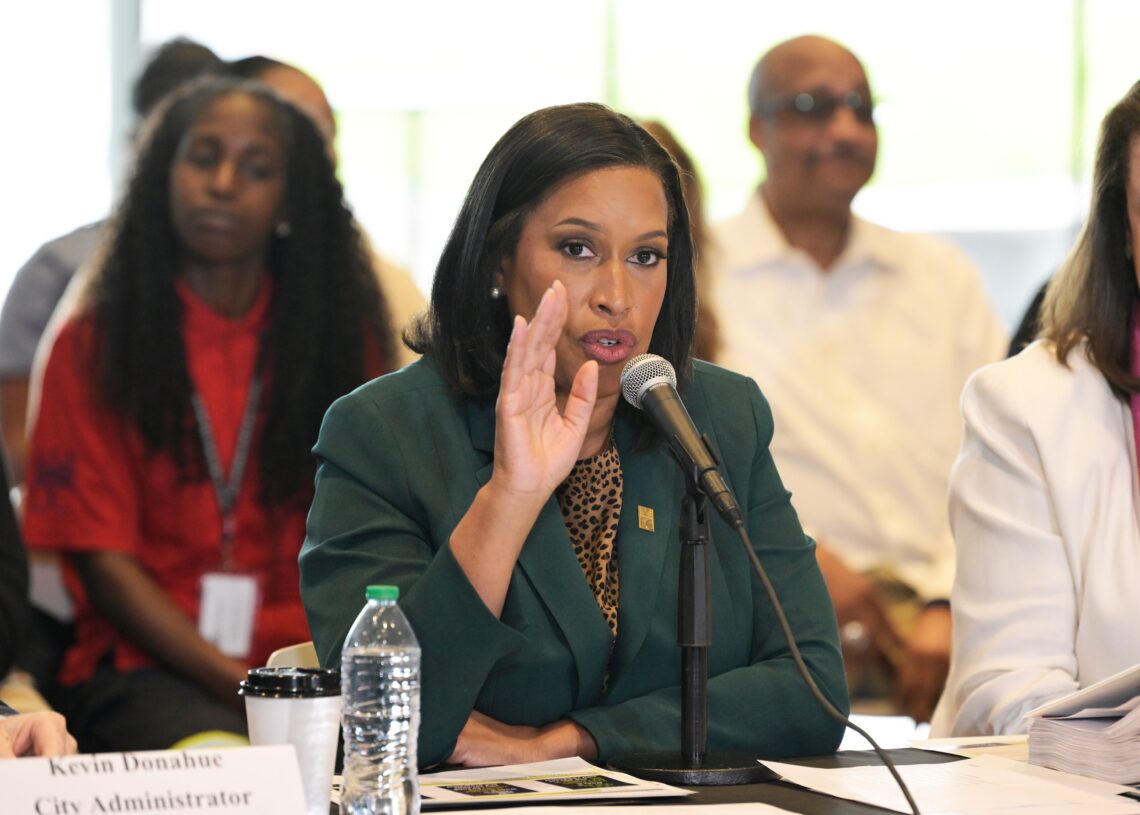
D.C. Mayor Muriel E. Bowser (D) and her top deputies painted a bleak picture of the challenges ahead in the city’s upcoming budget season, warning council members in a meeting Tuesday that soaring costs in health care and child care subsidy programs — impacting thousands of Washingtonians — must be reined in.
The latter program could see a cap that would limit how many families are eligible for help with child care in D.C., which has some of the highest costs in the nation. Meanwhile, health care programs for lower-income residents are slated for narrower eligibility and stricter rules over the next couple of years.
Bowser’s $20 billion-plus budget proposal, expected in early April, will mark the third-term mayor’s last before she leaves office, offering her a final opportunity to chart a course for city policy. But she also must contend with a fiscal reality that she told lawmakers required prudence. To keep all programs and services running at the same levels as they are today would require up to $1.1 billion more in revenue than officials say is available to spend.
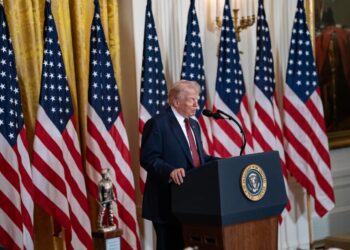
The District’s financial outlook could get grimmer if the Senate passes a resolution this week blocking the city from opting out of President Donald Trump’s federal tax cuts in the One Big Beautiful Bill Act. That potential congressional action could leave Bowser and lawmakers another $157 million less in revenue to work with in the fiscal year 2027 budget and roughly $600 million less through 2029. The Senate is expected to vote Wednesday.
“To be able to continue what we’re doing this year next year would require us to be able to increase revenue by $1.1 billion. That is not the world in which we live in,” said City Administrator Kevin Donahue. “This is a really hard budget. When we talk with advocates, and some of you, the premise is always, what more can we do?”
Instead, Donahue said, their starting point this year is how to mitigate existing steep cuts in the city’s financial plan — but with fewer available resources.
That challenge is sure to lead to tense debates between the Bowser administration and the D.C. Council: A group of D.C. lawmakers on Monday pleaded with Bowser to strengthen and enhance health and human services programs, which have over the past couple years absorbed many of the biggest cuts. They also make up the largest portion of the budget, said Wayne Turnage, deputy mayor of health and human services, adding that about 40 percent of D.C. residents have health care insurance backed by D.C. government programs.
“The safety net is at risk of being dismantled and in desperate need of corrective action,” Brianne K. Nadeau (D-Ward 1), Christina Henderson (I-At Large), Charles Allen (D-Ward 6) and Janeese Lewis George (D-Ward 4) wrote to the mayor.
Turnage and other top officials identified several programs facing significant cost pressures that the Bowser administration is focusing on curtailing, likely to touch the lives of tens of thousands of residents.
The demand for District’s popular child care subsidy, which reduces or eliminates child care costs for working families depending on income, is growing faster than city funds can keep up with. Enrollment has skyrocketed, creating a $32 million deficit, said Antoinette Mitchell, the state superintendent of education.
About 7,380 children and nearly 300 child care providers — or 63 percent of all providers in D.C. — are served through the program, according to Mitchell. The number of families eligible for the program increased by 29 percent in 2025. At the same time, child care subsidies are more expensive at higher-quality facilities, which the city ranks in tiers, and more facilities have met the highest-quality standard in recent years, also increasing costs.
Mitchell said those factors are forcing the administration to consider big changes to the program. The potential adjustments include capping the number of families who can be served, creating a waiting list; adjusting income eligibility limits; and eliminating the higher subsidy payments to providers based on quality, instead creating a baseline payment.
“It’s really important that we make some changes because time is working against us,” Mitchell said.
Council member Robert C. White Jr. (D-At Large) pressed Bowser on whether they may be able to fill that $32 million gap, while pushing the administration to look outside of the health care and human services areas for cuts where possible.
“I think you’re right to say, ‘Can we fill the $32 million hole?’ Yes, we can — but we would have to take [the funding] from somewhere else,” Bowser said. “And in my likely proposal, it would come from somewhere in Wayne [Turnage’s] programs. It just would. The same question you ask about child care, it would impact something else that you care about, that we all care about.”
“It’s a conversation about trade-offs,” White said, acknowledging the tough choices ahead, as many lawmakers did Tuesday.
Turnage detailed many of the looming changes to health care programs including Medicaid and the Healthcare Alliance, both of which sustained major cuts and changes to eligibility last year.
Starting in October 2027, the Healthcare Alliance program, which offers insurance to people regardless of immigration status, will be eliminated, impacting 24,000 people. Health care advocates have urged the administration to reverse that plan, fearing life-threatening consequences that could come with not having health insurance. Alongside eligibility changes to Medicaid, the city began making major shifts to the Alliance program in last year’s budget and financial plan, including reducing benefits available to people and adding new requirements for enrollment or reenrollment. Those have reduced costs, Turnage said, and the mayor argued they would put the programs on a more sustainable path.
The eligibility changes, income limits and other new requirements have also led to a significant drop-off in enrollment or re-enrollment, which has also reduced costs, Turnage said. “We think this is probably the chilling effect of the ICE activity leading to stepped up deportations,” he said, referring to Immigration and Customs Enforcement.
D.C. lawmakers had tried to mitigate the blows to lower-income Washingtonians’ health care and child care through a work-around last fall. They passed legislation pledging to use excess tax revenue that came in higher than anticipated in September to put toward funding key programs that sustained cuts. Their “contingency list” included more than $50 million in boosts to programs that had been cut, including, as a top priority, giving an extra $5.5 million to the child care subsidy program, and $21 million to restore certain benefits that were cut from the Alliance program, such as vision and dental care benefits.
But Bowser said Tuesday that in light of the budget challenges ahead for 2027, she still has not yet authorized any of the money to be spent on the program boosts, causing some lawmakers to bristle.
Council member Christina Henderson (I-At Large) said some constituents had pending dental surgeries or needed new hearing aids and were waiting to see what the city would do with their benefits. Henderson said she was open to a discussion, but that a decision needed to be made sooner rather than later.
Council member Zachary Parker (D-Parker) questioned if Bowser was simply planning to ignore what the council passed into law.
“The translation is, it’s the law, and we voted on it. And the CFO [chief financial officer] made the funding available,” Parker said.
“The translation is, I haven’t authorized the spending,” Bowser responded, urging lawmakers to “reconsider” their priority list. “I just think it would be prudent.” She also suggested they could use the contingency list to cover the whole child care deficit, while telling Henderson she feared that temporarily boosting people’s health care benefits, only to cut them again in October, would give people “whiplash.”
D.C. Council Chairman Phil Mendelson (D) told reporters after the breakfast that he was not eager to “reconsider” what lawmakers already passed — but did believe they needed to have a discussion. He said they and the public had to be clear-eyed about the financial pressures ahead, adding he was not open to increasing taxes.
“I think it sometimes is hard to accept the truth of these budget pressures, but they are significant, and I think it’s important,” he said. “The answer is not so simple as, ‘Oh, we’ll just increase taxes,’ because to increase taxes by $1 billion would be very, very, very significant, something that the District has never done.”
The post Bowser prepares D.C. Council for fiscal pain, tough policy trade-offs appeared first on Washington Post.