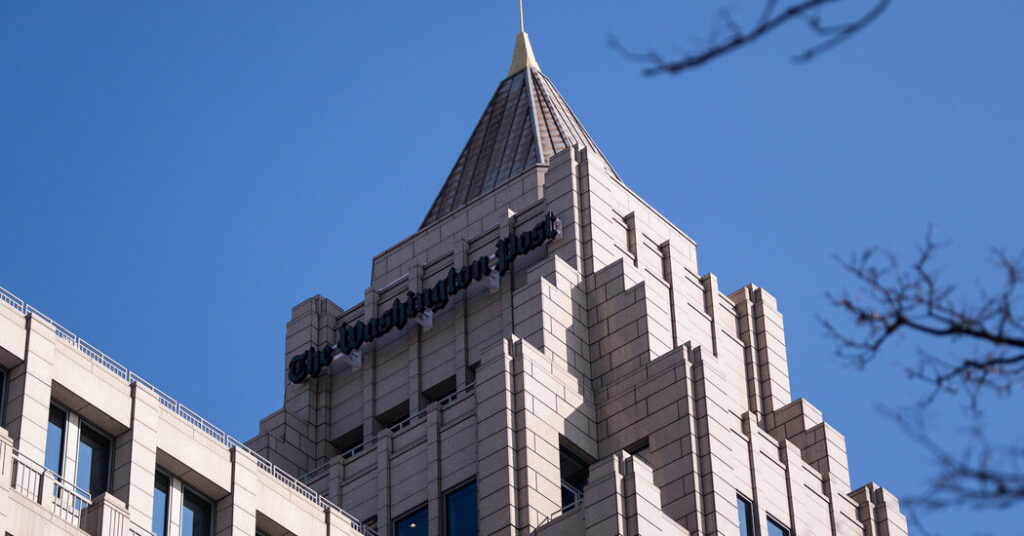
The Virginia State Bar has told a press freedom organization that it is up to a judge to decide whether a federal prosecutor mishandled an application for a warrant last month to search the home of a Washington Post reporter as part of a leak investigation.
The group, Freedom of the Press Foundation, had filed a disciplinary complaint with the bar against the prosecutor, Gordon D. Kromberg. It cited his failure to alert the magistrate judge, who approved the search warrant, about the Privacy Protection Act of 1980, which limits searches for journalistic work product.
But in an unsigned letter viewed by The New York Times, the state bar said the judge, William B. Porter of the Eastern District of Virginia, had to evaluate the omission.
“We appreciate all information submitted to this office,” it said. “Whether a search warrant was obtained through misrepresentation of the law falls within the authority of the court to determine.”
The Justice Department declined to comment.
Seth Stern, the foundation’s advocacy chief, criticized the decision not to evaluate whether Mr. Kromberg violated a rule of professional conduct that requires lawyers to disclose adverse legal authority, or laws and court precedents that could harm or contradict their clients’ position. While he said judges should also use their authority to punish and deter such conduct, he argued that the ethics rule would not exist if it was solely for judges to decide.
“This is the latest example of attorney disciplinary offices finding any excuse to not confront the rampant misconduct by prosecutors and other lawyers inside the Trump administration,” Mr. Stern said, adding: “Disciplinary offices need to rise to the moment and stop protecting the people they’re supposed to regulate.”
Normally, for a search to be lawful, there must be probable cause to believe that evidence of a crime is at the place to be searched. But the 1980 law adds a second requirement if the search is for journalistic work product. Such a search, it says, “shall be unlawful” unless there is also probable cause that the reporter committed a criminal offense related to the material.
Several specialists in legal ethics have said that if Mr. Kromberg knew about the 1980 law, he was obliged by Virginia’s rules of professional conduct to disclose the existence of adverse authority in the materials he submitted to Judge Porter so the judge could evaluate how it applied.
The Privacy Protection Act adds several legal complexities to the search of the home of the Washington Post reporter, Hannah Natanson, which would not be raised by an ordinary search warrant application. The search was part of an investigation into Aurelio Perez-Lugones, a government contractor accused of disclosing classified information to her.
One legal issue is whether Ms. Natanson’s actions met the criteria to trigger an exception to the Privacy Protection Act’s ban on searches for reporter work product. The law permits such searches in circumstances in which the reporter is personally suspected of committing certain crimes related to the material the government is pursuing.
That issue includes both a factual and a constitutional part. The most basic legal question is whether the facts the government knew about Ms. Natanson before the search met the threshold for probable cause to believe that she violated the Espionage Act, which bars the unauthorized retention and dissemination of national security secrets.
The more complex legal question is whether it is constitutional to criminalize ordinary news-gathering activity by applying the Espionage Act to reporters doing their jobs. The Justice Department has never charged a traditional reporter under that law for investigative journalism, in part because of the major and untested First Amendment issues it would raise.
A separate legal issue raised by the search and the Privacy Protection Act centers on what the government could lawfully do with a reporter’s electronic devices after seizing them. The question is whether officials could review her journalistic work product revealing confidential sources who have nothing to do with classified information or Mr. Perez-Lugones.
Ms. Natanson, who covers the federal bureaucracy, wrote last December that 1,169 officials across the executive branch had contacted her during the first year of President Trump’s second term.
First Amendment scholars said that the search of Ms. Natanson’s home was unprecedented. The one previous known instance in which the Justice Department sought a search warrant for reporting material as part of a classified leak investigation involved reading a Fox News reporter’s emails in his Google account.
In 2010, the Justice Department’s application materials flagged the Privacy Protection Act for the judge. In an affidavit, an F.B.I. agent presented facts about the Fox News reporter and argued that they amounted to probable cause to believe he had committed a crime as his source’s “co-conspirator and/or aider and abettor.” The agent contended that this meant the proposed search would comply with the 1980 law.
When the search and application came to light in 2013, it was treated as a scandal across party lines. Attorney General Eric H. Holder Jr. issued a rule barring investigators from portraying reporters as criminals to circumvent the Privacy Protection Act’s ban unless they intended to bring charges. Last year, Attorney General Pam Bondi rescinded that rule.
Charlie Savage writes about national security and legal policy for The Times.
The post Bar Punts on Ethics Complaint Over Application to Search Reporter’s Home appeared first on New York Times.