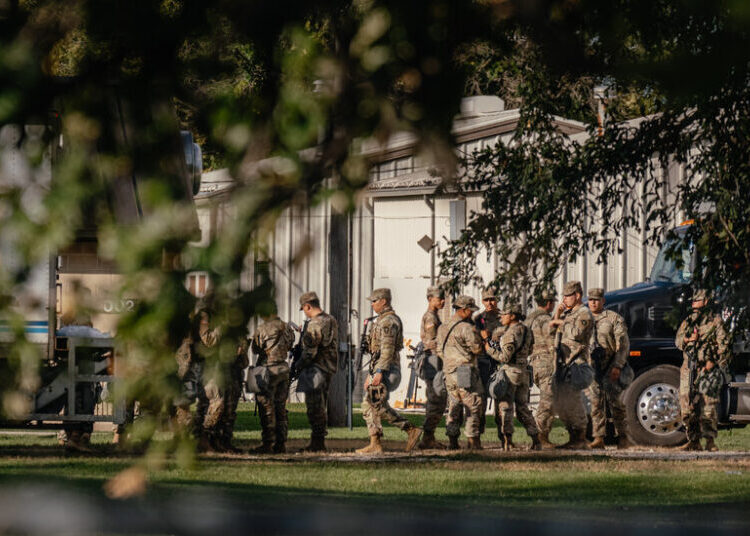
When President Trump said in December that Somalia was “not even a country,” the U.S. military was in the midst of one of its most aggressive bombing campaigns that the East African nation has seen.
Since Mr. Trump took office last year, the Pentagon’s U.S. Africa Command has hit militant targets in Somalia around 150 times, far more than any other country. Weeks after Mr. Trump’s insult, Israel became the first nation to formally recognize Somaliland, a breakaway region that has sought independence from Somalia for decades.
Taken together, Israel’s decision, which has drawn swift criticism from China, France, Britain, Denmark and Russia, as well as the African Union, and Washington’s aggressive military campaign in Somalia, are signs that the Horn of Africa is emerging as a critical theater for global rivalries.
An overriding concern for countries involved in the region is access to the Red Sea and the Gulf of Aden, among the most important waterways in the world, especially for Houthi rebels operating in Yemen. Analysts said that the driving force behind Israel’s recognition of Somaliland now was its conflict with the Houthis, which has ties to Iran.
An increased Israeli footprint in Somaliland could help deter weapons smuggling by the Houthis into Yemen, said Asher Lubotzky, an Israel foreign policy expert at the University of Houston. “What Israel did is not because of any regional alliances or logic, but more of a very specific interest in tackling Iran and the Houthis,” he said.
Prime Minister Benjamin Netanyahu of Israel said that the agreement with Somaliland was in the spirit of the Abraham Accords, a series of deals that since 2020 has established relations between Israel and countries including Bahrain, Morocco and the United Arab Emirates.
Israel has been looking to expand support for the Accords to other countries with Muslim majorities.
The United States has defended Israel’s right to conduct diplomatic business as a sovereign state and said its stance on recognizing Somaliland remained unchanged, though Mr. Trump has promised to “study” the issue.
Several analysts argue that there is no straight line to U.S. recognition, in part because Washington’s highest priority in Somalia appears to be its bombing campaign against the militant groups Al Shabab and the Islamic State.
In January, U.S. Africa Command struck what it said were Islamic State and Al Qaeda targets in Somalia almost daily, and on each occasion it made a point of saying the attacks were conducted in coordination with the Somali government.
“We do not want to imperil our ability to carry out these strikes against Somalia terrorism,” said Cameron Hudson, an Africa expert at the Center for Strategic and International Studies, a think-tank in Washington, summarizing an argument he said has been made by senior U.S. security officials. That strategy could be compromised if Washington were to recognize Somaliland.
Trump Administration: Live Updates
Updated
- Trump Administration Erases the Government’s Power to Fight Climate Change
- Judge Temporarily Blocks Hegseth from Punishing Kelly for Video
- Minnesota leaders praise residents for standing up to ‘bullies’ during Trump crackdown.
How long the United States will successfully walk the tightrope is unclear. In the meantime, an increasing number of global rivalries and ambitions are playing out in the region.
For decades, the Horn of Africa was a minor concern for countries outside the region. Somalia’s president, Siad Barre, fell in 1991, triggering a civil war, and until 2012 the country had no functioning central government. Since then, the country’s governments have struggled to secure control and have been backed by an African Union peacekeeping force and the United Nations.
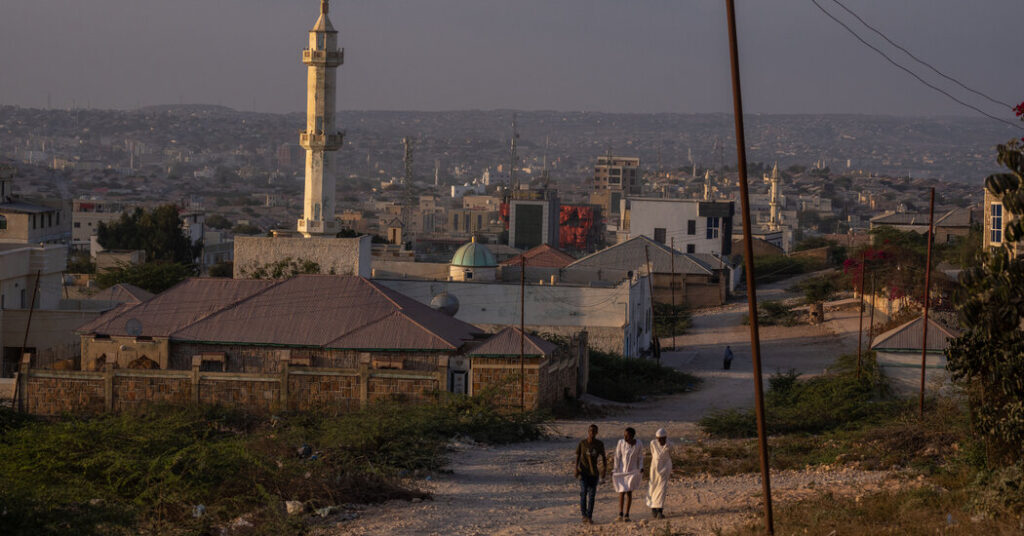
It is now a federal republic with a series of semiautonomous regions. Somaliland broke away from Mogadishu in 1991 after an independence war, during which Hargeisa, the capital of Somaliland, and other cities were bombed by the Barre regime. It has since established itself as a democracy, even if it is not recognized as an independent state.
But powerful Gulf States are now playing a significant role on the Horn.
Saudi Arabia and the United Arab Emirates, oil rich neighbors who have increasingly become rivals over Yemen and Sudan, have each poured money into Somalia in recent years. The Emirates has also invested heavily in Somaliland, developing a port in the city of Berbera, on the Gulf of Aden.
“The entire Horn of Africa has been captured by the geopolitical reconfigurations taking place in the Middle East,” said Ngala Chome, a regional policy analyst based in Kenya.
Last month, Somalia canceled all contracts with the U.A.E., citing concerns about sovereignty.
“The rivalry between Saudi and U.A.E. is now intermittently intertwined with the rivalry between Somaliland and Somalia,” said Omar Mahmood, a Somalia analyst for the International Crisis Group thinktank.
Many other countries also have competing interests in the region. China has criticized Hargeisa’s decision to maintain ties with Taiwan. Ethiopia signed a deal in 2024 to build a naval facility on Somaliland’s coastline in exchange for recognition, setting off a diplomatic standoff that was defused after Turkey stepped in to mediate.
Israel and Somaliland have moved quickly to consolidate their relationship. Israel’s foreign minister, Gideon Saar, visited Hargeisa in January. Mohamed Hagi, Somaliland’s minister of state for foreign affairs, called the Israeli recognition a “breakthrough,” and said Somaliland would soon join the Abraham Accords.
Reciprocal embassies will be opened soon and Israeli business leaders are already discussing investment possibilities with the Somaliland government, Mr. Hagi said, though he downplayed the prospect of an Israeli military base around Berbera.
In a bid to leverage Israel’s recognition, Somaliland’s president, Abdirahman Mohamed Abdullahi, attended the World Economic Forum in Davos, Switzerland, where he was photographed with Mr. Trump’s son Eric and President Isaac Herzog of Israel.
For now, the government in Mogadishu remains preoccupied by the need to manage its relations with its neighbors and, above all, containing violent insurgents. Somalia is set to hold elections this year. President Hassan Sheikh Mohamud has said he would seek a third term in office.
Somalia has so far adopted a measured approach to Israel’s recognition, stressing the importance of its international alliances, and also what it sees as threats to its sovereignty.
Somalia’s minister of state for foreign affairs, Ali Omar, said a recognition of Somaliland sets a dangerous precedent on a continent where many governments fear secessionist movements.
“At a time when Somalia is confronting some of the world’s most dangerous terrorist networks, undermining the country’s cohesion would be counterproductive,” he said in an interview. “Our focus remains on reinforcing international understanding that Somalia’s unity is essential to regional and global security.”
Brian Otieno contributed reporting
Matthew Mpoke Bigg is a London-based reporter on the Live team at The Times, which covers breaking and developing news.
The post As U.S. Bombs Somalia, Israel Shakes Status Quo on Horn of Africa appeared first on New York Times.