In their Feb. 9 online op-ed, “Universities are sending Trump a dangerous message,” Arne Duncan and David Pressman claimed that university leaders are responding to President Donald Trump with “timidity,” “silence” and “appeasement.” They argued there is “little effort” to coordinate a unified response to Trump’s attacks on academic independence.
In fact, the “solidarity” they call for already exists.
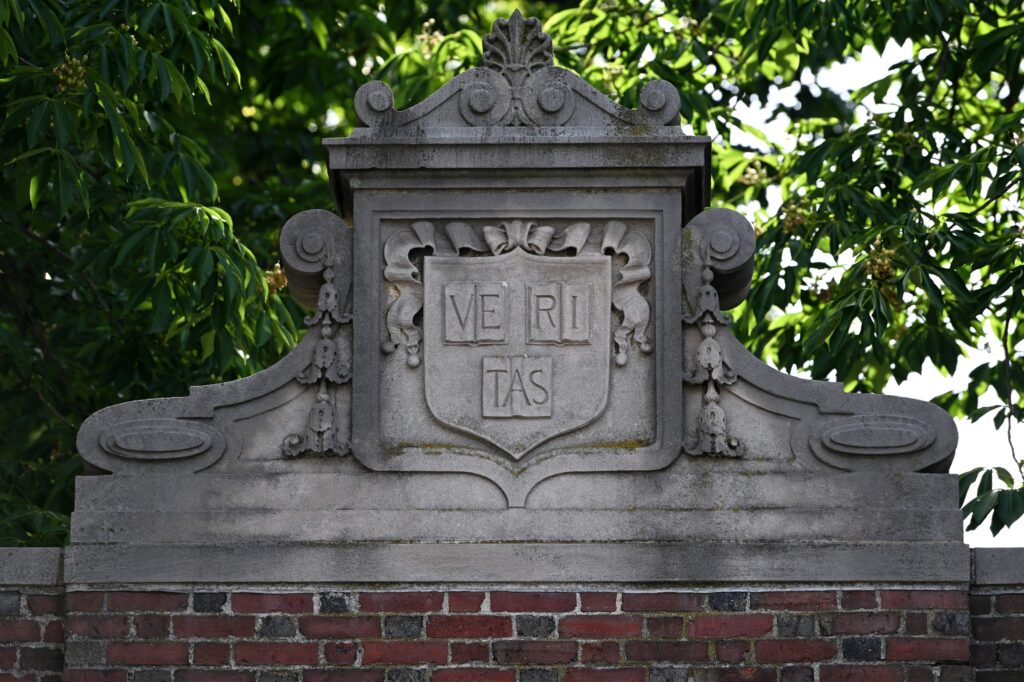
Powerful collective action by universities over the past year provides a model for how to stand up to the Trump administration, as has been widely reported on, and is worthy of celebration, not attack. Last spring, at Yale, we held a series of forums, in partnership with the American Association of Colleges and Universities and the American Academy of Arts and Sciences, that helped catalyze a chorus of unified voices across schools. Universities are rebounding thanks to their spirited defense and collective action. For example, at Harvard, donations reached a record-breaking $629 million last year. International student enrollment has hit record highs, bucking national trends. And trust in the institution has surged across all demographics, including Republicans, according to Morning Consult data.
While their critics tilt at windmills and outdated myths, university leaders stand together in defending American higher education from outside attacks — whether from the far right or far left. Universities, our nation’s most globally competitive sector, are outsmarting Trump with unified leadership.
Jeffrey Sonnenfeld, New Haven
Lynn Pasquerella, Washington
Donna Shalala, Miami
Freeman Hrabowski, Baltimore
Philip J. Hanlon, Hanover, New Hampshire
Jeffrey Sonnenfeld is president of the Yale Chief Executive Leadership Institute. Lynn Pasquerella is president of the American Association of Colleges and Universities and a former president of Mount Holyoke College. Donna Shalala is a former secretary of health and human services, former president of the University of Miami and former chancellor of the University of Wisconsin. Freeman Hrabowski is a former president of the University of Maryland at Baltimore County. Philip Hanlon is former president of Dartmouth College.
We share Arne Duncan and David Pressman’s dismay at the Trump administration’s assault on higher education. But their solution — “mutual commitments to support institutions targeted for retaliation” — is too vague to be useful and is unlikely to “alter the administration’s cost-benefit calculus.”
For these reasons, perhaps, previous proposals for collective action have gone nowhere. Last spring, faculty senates across the Big Ten recommended formation of a NATO-like alliance, “Mutual Academic Defense Compact,” to coordinate responses and, in some versions, pool legal defense funds. Not a single president signed on.
Similar proposals — for statewide compacts, public and land grant university alliances, a national liberal arts college pact and a nationwide compact — have met the same fate.
University revenue comes from tuition, philanthropy and research grants, which are intended for and often legally restricted to use by the institution to which they have been directed.
Even if universities could share resources with peers, they could do little to offset canceled research grants and nothing to stop visa denials, punitive investigations or threats to tax-exempt status.
Mutual defense compacts sound bold but cannot substitute for what many universities are already doing: coordinating advocacy, publicly defending higher education’s civic value and sometimes fighting in court.
David Wippman, Bethesda
Glenn Altschuler, Ithaca
David Wippman is president emeritus of Hamilton College. Glenn Altschuler is a former vice president of Cornell University.
I would add three important considerations to Arne Duncan and David Pressman’s op-ed. First, pay attention to the role of university boards, to whom presidents report and by whom they have been selected. Boards have major authority in issues and decisions related to their institutions entering into deals with the government. Second, the question of mission cannot be taken for granted. Anything like consensus on the ultimate purpose for which a university exists, the measure by which its decisions should be made and priorities assessed, may generally be absent even within a single institution. That is true, too, among alumni, donors and all who are concerned with universities’ contribution to the larger social order, whether out of attachment to an ideal or to some special interest. Third, for emphasis, leadership is not the avoidance of risk.
Hanna Gray, Chicago
The writer is a former president of the University of Chicago and Yale.
Stand for human rights
As the Feb. 6 editorial “What Trump does on China matters more than what he says” put it: “engaging with a communist dictator in pursuit of U.S. interests does not require ignoring American values.” When President Donald Trump confers with Chinese leader Xi Jinping in April, he can ill-afford to sidestep human rights.
As the editorial pointed out, “preemptively dropping demands on human rights” should be out of the question.
Trump’s “excellent” telephone chat with Xi last week does not suggest that the president is cozying up to Beijing. In South Korea in October, Trump called on Xi to release imprisoned Hong Kong newsman Jimmy Lai, who has British citizenship. It was unsuccessful: Lai was sentenced Monday to 20 years in prison, despite his fading health and the appalling ordeal he has been through for more than five years.
Meanwhile, three other prominent Chinese dissidents, Chow Hang-tung, Lee Cheuk-yan and Albert Ho, are on trial in Hong Kong. The U.S. and Britain, along with the rest of the world, must stand up for China’s beleaguered political prisoners.
Brian Stuckey, Denver
The post Academic independence must be protected. Here’s how. appeared first on Washington Post.