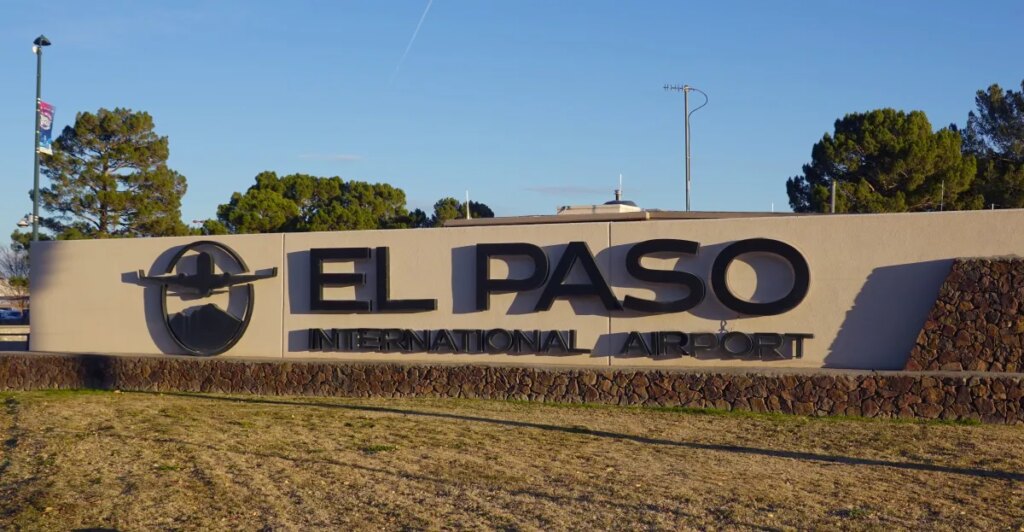
The El Paso International Airport will apparently not be closed for 10 days, despite an earlier announcement that set off an overnight panic. But the reasons why the closure was announced in the first place are still not quite clear, nor is whether this was a fluke or the prelude to a national security crisis.
What happened in El Paso?
On Tuesday night, the Federal Aviation Authority announced the closure of the airspace over El Paso, Texas, and a pause to all operations at the city’s airport starting at 11:30 pm.
According to the initial announcement, which took local and state authorities by surprise, the closure was to have lasted until February 20. But in a tweet on Wednesday morning, the FAA announced that the “temporary closure” had been lifted and that there was “no threat to commercial aviation.”
Early reports on what went wrong seemed to agree that drones were a part of the explanation, but exactly what role they played was a matter of confusion.
Transportation Secretary Sean Duffy tweeted on Wednesday that “the FAA and DOW [Department of War] acted swiftly to address a cartel drone incursion.”
However, Rep. Veronica Escobar, a Democrat who represents the El Paso area in Congress, told reporters on Wednesday morning that an incursion by Mexican drones was “not the information that we in Congress have been told” and that the current explanations were still muddled.
“There’s no threat. There was not a threat, which is why the F.A.A. lifted this restriction so quickly,” she said, according to the New York Times. “The information coming from the administration does not add up.”
Even if there was a drone incursion, this is not something that would normally prompt such a drastic response. US Northern Command has reported around 1,000 drones crossing the US-Mexico border per month.
CNN reported that the closure was due to “US military activity related to drug cartels,” including “unmanned aircraft operations and laser countermeasure testing,” citing an administration official.
But another source also told the New York Times that it was “a test of new counter-drone technology by the military at Fort Bliss, a nearby Army base.” Ft. Bliss is home to a major drone base.
The Texas Tribune suggested a different angle: The military botched its communication with other agencies, triggering the shutdown. Citing an industry source, it reported that he Department of Defense had “been operating unmanned aircrafts, or drones, against drug cartel operations from a base near El Paso’s airport without sharing information with the FAA.”
None of this quite explains why the closure was supposed to last for 10 days, which would be by far the longest security interruption to a major city’s air service since 9/11.
The backdrop for the incident: Trump’s threats against Mexican cartels
The mysterious incident comes at a time of heightened speculation that the US will take direct military action against Mexican drug cartels. It’s an idea that President Trump has repeatedly suggested since his first term, but that he threatened again in the wake of January’s Venezuela raid. Direct US military action on Mexican soil is strongly opposed by the Mexican government.
Last summer, Trump signed an order directing the US military to take action against several drug cartels. The US military regularly conducts surveillance flights along the US-Mexico border without entering Mexican airspace. The CIA has reportedly stepped up secret drone flights over Mexico itself.
There was previously speculation that some sort of action was about to begin in mid-January, when the FAA warned aircraft flying over the eastern Pacific to “exercise caution” due to US military facilities.
If this is not, in fact, the prelude to a new military operation, but simply the result of miscommunication between the Pentagon and the FAA, it will call to mind the January 29 crash in Washington, DC, between an Army Black Hawk helicopter on a training mission and an American Airlines jet that killed 67 people. A National Transportation Safety Board investigation that concluded last month blamed that incident “deep, underlying systemic failures” in regulation and communications.
The post What we know about the mysterious closure and reopening of the El Paso airport appeared first on Vox.