Officials at the Federal Reserve do not want the labor market to weaken further, meaning that fresh signs of unemployment rising across the country would likely compel the central bank to restart interest rate cuts.
Economists do not expect that to materialize in January’s data, however, suggesting the Fed has scope to once again stand pat when it meets next month.
The latest jobs report, which will be released on Wednesday, is forecast to show the unemployment rate steadying at 4.4 percent.
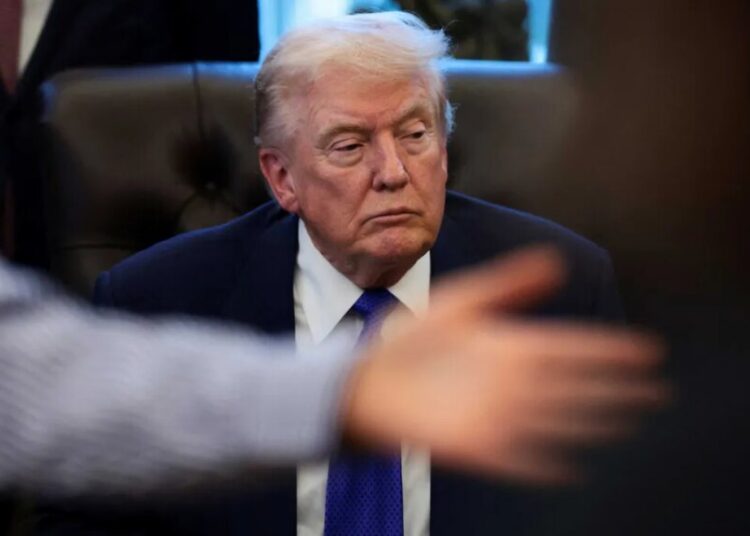
The unemployment rate has become a focal point for the Fed as it assesses the health of the labor market in the wake of immigration restrictions imposed by President Trump. The crackdown, which has led to a sharp slowdown of migration into the country, has decreased the supply of new workers available for hire. The number of new jobs the economy needs to keep the unemployment rate stable has dropped as a result, with research suggesting it could turn negative by this year. In 2024, the so-called monthly break-even rate was estimated to be well above 100,000 positions.
The Fed is trying to safeguard the labor market while also ensuring that rates are high enough for inflation to fall back to the central bank’s target of 2 percent. Price pressures have mounted as Mr. Trump’s tariffs have taken effect, although the overall impact has been more muted than initially expected. Officials at the Fed broadly expect the peak impact from those levies to hit in the first quarter of this year before inflation begins to decelerate again.
January’s Consumer Price Index report, set to be released on Friday, will give policymakers insight into whether that forecast is bearing out. Economists currently expect annual inflation to tick down to 2.5 percent after a 0.3 percent increase in monthly prices. “Core” inflation, which strips out volatile food and energy items, is expected to stay sticky at 2.5 percent, only slightly lower than the previous 2.6 percent annual pace.
In a sign, however, that labor-related price pressures remain muted, the employment cost index, a quarterly measure from the Labor Department that tracks changes in wages and benefits, unexpectedly slowed in the final three months of 2025.
Economists at Evercore ISI said that data, which came out on Tuesday, confirmed their view that the “economy is cooling under the hood, even though we face up to another six months of elevated tariff pass-through.”
Beyond the impact of tariffs, the Fed is also contending with the prospects of stronger growth in the coming quarters as Americans receive larger refunds as a result of Mr. Trump’s new tax cuts. The ongoing boom in artificial intelligence investments is also expected to fuel economic growth.
Still, the most recent data tracking job openings, which was released last week, showed the number of available positions plunging to the lowest level since December 2017.
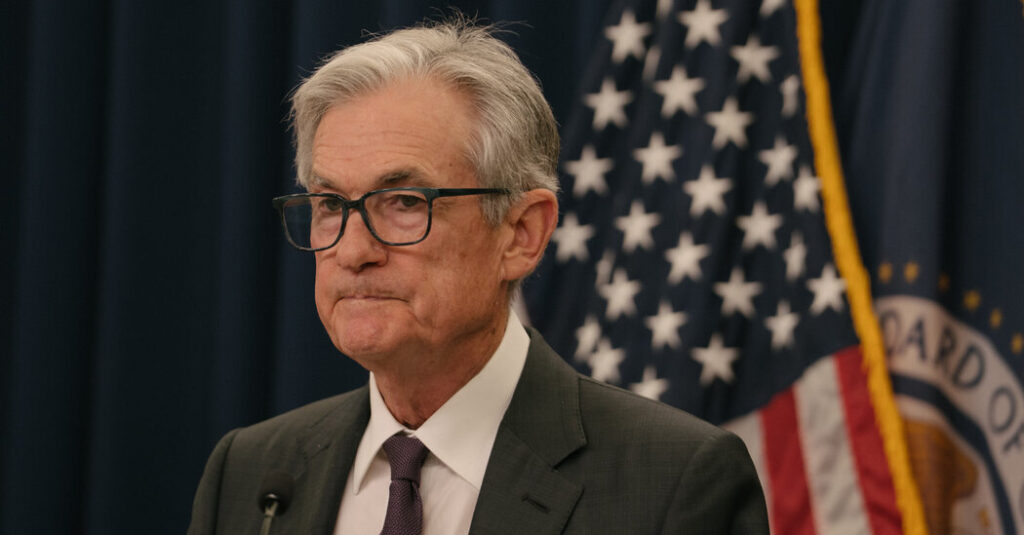
At the Fed’s meeting just last month, Jerome H. Powell, the chair, struck a more upbeat tone about the economic outlook. He described the labor market as “stabilizing” after a period of weakness last year and noted that consumer spending and business fixed investment remained strong, even as Americans had grown less confident about the economy.
“The economy has once again surprised us with its strength, not for the first time,” Mr. Powell said.
That shift helped to justify the central bank’s decision at that meeting to pause rate cuts after a series of reductions last year. Between September and December, the Fed lowered rates by an aggregate three-quarters of a percentage point to a range of 3.5 percent to 3.75 percent.
By the December meeting, the Fed’s policy decisions had become increasingly fraught, reflecting a fissure between policymakers over how to weigh concerns about the labor market versus inflation. Those divisions have lessened, but even January’s vote to hold rates steady was not unanimous.
Stephen I. Miran, who has dissented at every meeting since he joined the Fed in September, voted in favor of a quarter-point cut. He was joined by Christopher J. Waller, a governor who was a finalist to replace Mr. Powell as chair when his term is up in May. A few days after that meeting, Mr. Trump tapped Kevin M. Warsh, a former Fed governor, for the job.
In explaining his dissent, Mr. Waller said that revisions to the jobs data would likely show no growth in employment last year.
“Zero. Zip. Nada,” Mr. Waller said in a statement. “This does not remotely look like a healthy labor market.”
Further cuts appear to hinge on the labor market breaking out of its current “low hire, low fire” state and layoffs beginning to pickup in a more broad-based way, or inflation significantly slowing. Mr. Powell last month stopped short of signaling any timeline for future moves, reiterating that the central bank is “well positioned” for the moment and to address any economic challenges. He did, however, downplay the possibility of a rate increase this year.
“We don’t take things off the table, but it isn’t anybody’s base case right now,” Mr. Powell said.
Financial markets reflecting expectations of the Fed’s policy decisions currently point to the central bank next cutting rates in June, which will be the first meeting led by Mr. Warsh if he is confirmed by the Senate. Traders eventually expect rates to fall toward 3 percent by year-end, a level that many officials see as “neutral,” or neither stimulative nor restrictive to growth. Mr. Trump, who said his support of Mr. Walsh was contingent on his pushing for lower borrowing costs, has argued for rates to be closer to 1 percent.
“If you’re somewhat in the neutral camp and inflation is above target, then it’s harder for them to make the case to cut,” Priya Misra, a portfolio manager at J.P. Morgan Asset Management, said of the Fed. “They need a clear emergency message from the labor market.”
Ms. Misra, who expects the Fed to eventually restart cuts in the latter half of the year, conceded that the labor market was in a vulnerable position.
“It feels unsustainable that we can be in a low-hire, low-fire state for much longer,” she said. “At some point, what will happen as companies continue to hire less and less, the unemployment rate will start to rise.”
Colby Smith covers the Federal Reserve and the U.S. economy for The Times.
The post Unemployment Rate in Focus as Fed Considers When to Restart Rate Cuts appeared first on New York Times.