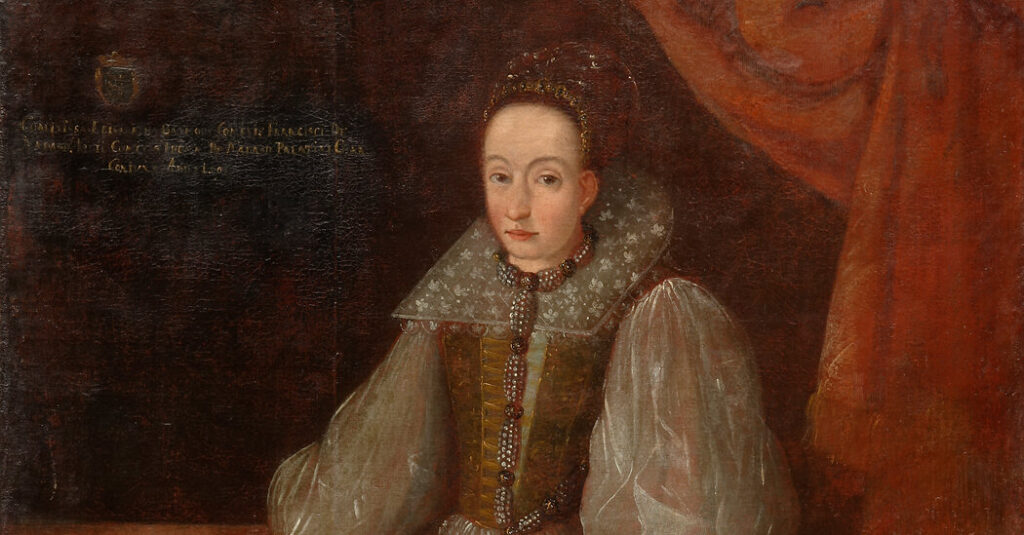
THE BLOOD COUNTESS: Murder, Betrayal, and the Making of a Monster, by Shelley Puhak
There once was an aging Hungarian noblewoman so desperate to cling to her beauty that she had young maidens tortured and murdered in order to bathe in their virgin blood. After her servant-executioners testified against her, she was walled up in the tower of her castle, visible only as a spectral figure in the barred window.
So unforgettably lurid are the details of this story that its subject, Countess Elizabeth Bathory (1560-1614), became an enduring object of fascination. In the 1960s, the Guinness Book of World Records named her the “most prolific murderer,” responsible for 610 deaths. But as Shelley Puhak argues in “The Blood Countess,” her new account of Bathory’s life and times, there’s ample reason to believe that the legend of her depravity was concocted by her enemies in order to shred her reputation and remove her from public life. The monstrous noblewoman, the elaborate torture methods, the incessant killing of innocents in a vain bid to preserve her looks: Puhak suggests that most, if not all, of it is best understood as the product of an aggressive disinformation campaign.
Puhak is a poet and the author of “The Dark Queens,” a rousing account of two sixth-century Merovingian sisters-in-law who wielded enormous power while alive only to be maligned after their deaths. “The Blood Countess” is a similarly hybrid work of true crime and feminist history. Puhak draws from archival research to lay out how received wisdom has been warped over the centuries by exaggerations, shoddy scholarship and outright fabrications. Her book takes the tale of one woman and turns it into a portrait of an era.
Bathory’s sprawling family was one of Europe’s oldest. It included advisers to the Hapsburg Empire as well as rebels against their rule. Puhak starts her story at the end of 1603, “a long, terrible year” that began when the countess’s eldest son died; then, her estates were invaded by the Turks. In November, Bathory’s warrior husband, Count Francis Nadasdy, suddenly became ill. When he died on Jan. 4, 1604, Bathory wasted no time in planning a lavish, days-long funeral, even though it meant she had to borrow some money. With her husband’s death, she took over as lord-lieutenant of two counties, a position that came with political responsibilities, including tax collection and law enforcement. She had to project as well as assert her power.
All of this would have been challenging enough for a grieving widow with young children during placid times. But the situation in Hungary was especially parlous. The previous decades had included an Ottoman invasion, rival claims to the throne and a civil war that left the kingdom divided between the Hapsburg-controlled Royal Hungary in the west and Transylvania in the east. Not to mention religious upheaval occasioned by the Protestant Reformation, less than a century old. The Hapsburgs were Catholic; Francis, Lutheran; Elizabeth, Calvinist. Lutherans and Calvinists split into factions, vying for power. Puhak says that it was within this fevered “atmosphere of suspicion and denunciation” that rumors about Bathory started to take hold.
Bathory made a number of enemies simply by being a Calvinist woman who owned plenty of land. Writing in Latin, Lutheran pastors exchanged letters referring to one of the women in Bathory’s employ as a “carnifex,” or butcher, which some translators have rendered as “that executioner woman” or “that torturer woman.”
But Puhak points out that if the pastors believed this woman was guilty of such horrific crimes, surely their punishment would have involved more than excluding her from communion for three months. Nor is there any record indicating that they reported her to a secular authority. What’s more likely, Puhak says, is that “carnifex” was used to denote someone who was eating meat during Lent, and that Bathory was called a “tyrant” for “tolerating one of her servants ignoring the Lenten fast.”
Much of the book is written in this vein — salacious testimony that sounds pretty damning before Puhak patiently offers another plausible interpretation. She says that some problems stem from errors translating 16th-century Hungarian idioms and grammar; others from scholarship that elides the necessary historical context. Bathory, like other aristocrats, hosted a finishing school for girls on her estate. Puhak argues (mostly persuasively) that descriptions of torture methods closely resemble the often brutal medical treatments of the time, such as whipping people with nettles for rheumatism or typhus.
In addition to Lutheran pastors, Bathory had to contend with wily characters like George Thurzo, who sought to burnish his credentials as a Hapsburg loyalist by betraying his fellow aristocrats. (The Hapsburgs, hungry for land and money to replenish their depleted coffers, routinely extorted the nobility with threats of criminal charges.) It was Thurzo who led a raid on Bathory’s manor house in 1610 and would later claim (not credibly, Puhak says) that he surprised her in the middle of a hideous torture session.
Puhak is a skillful guide through the thicket of political turmoil, weaponized accusations and palace intrigues. Several of Bathory’s servants blurted out coerced confessions. Bathory, for her part, always maintained her innocence and was under house arrest while she demanded — and never got — her day in court.
Despite its gothic title, “The Blood Countess” is less about the countess herself than about the circumstances that gave rise to her vilification. Some of the rivalries are so convoluted that despite Puhak’s storytelling verve it can be hard to keep track of who did what to whom, and why. No wonder the tale of a sadistic noblewoman persisted through the ages, while the murky historical record never made inroads into the popular imagination. The legend is sordid, grisly and above all memorable. It’s also, Puhak writes, “much less terrifying than the truth.”
THE BLOOD COUNTESS: Murder, Betrayal, and the Making of a Monster | By Shelley Puhak | Bloomsbury | 293 pp. | $32.99
Jennifer Szalai is the nonfiction book critic for The Times.
The post History’s Most Prolific Female Killer, or a Victim of Disinformation? appeared first on New York Times.