Friday’s jobs report won’t include numbers only for January. It will also incorporate major revisions that are expected to show that job growth was significantly weaker in 2024 and 2025 than initially believed.
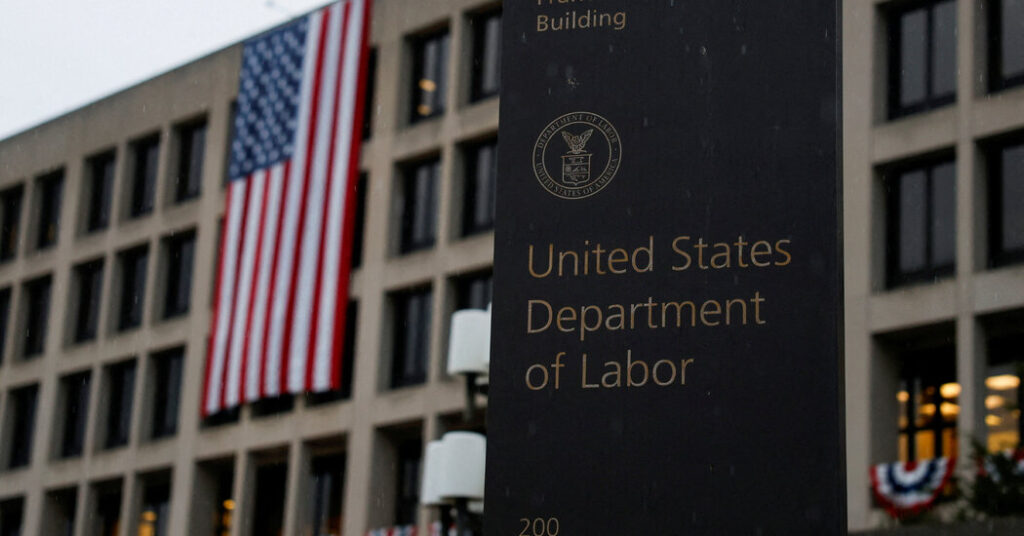
The revisions are part of a longstanding annual process in which the Bureau of Labor Statistics reconciles its monthly estimates of job growth, which are derived from surveys, with less timely but more reliable data from state governments.
In the past, the so-called benchmark revisions have typically been small and attracted relatively little attention. But last year’s adjustment was the largest in years, reducing estimated job growth by nearly 600,000. This year’s version could be even bigger: A preliminary estimate, released in September, showed that employers added more than 900,000 fewer jobs in late 2024 and early 2025 than indicated by the monthly data. If the final figure is similar, it would be the biggest revision since 2009 in percentage terms.
The consecutive large revisions have led some economists to question the reliability of the survey-based monthly estimates. In December, Jerome H. Powell, the Federal Reserve chair, said economists at the central bank estimated that the Bureau of Labor Statistics has been overstating employment gains by about 60,000 jobs per month — a figure that, if accurate, would suggest that employers were cutting payrolls for much of last year.
The revisions have become a political issue. President Trump pointed to the previous big adjustment when he fired Erika McEntarfer, the head of the statistical agency, last summer, saying it showed she was incompetent and biased against him.
Experts across the ideological spectrum rejected those accusations, noting that there was no consistent political pattern in the revisions. Rather, they said, the large revisions highlighted the challenge of accurately measuring the economy during a period of falling survey response rates and changing employment patterns. Those challenges have been exacerbated by budget cuts and staff turnover, problems that predated Mr. Trump but have grown worse since he returned to office.
One possible — though partial — explanation for the recent downward revisions relates to the way government statistics account for jobs created by newly started companies and destroyed by ones that go out of business. Such employers aren’t included in the monthly jobs survey, so the Bureau of Labor Statistics estimates their impact based on historical patterns, using a statistical method known as the “birth-death model.”
That approach can’t always keep up with changes in the economy, however. During the coronavirus pandemic, Americans started new businesses in record numbers. More recently, job gains at new businesses have slowed. But it can take time for such shifts to show up in economic models.
The Bureau of Labor Statistics last year announced that it would change the birth-death model to be more responsive to shifts in the labor market. That should lead to smaller revisions in the future. But it could also make the initial monthly estimates more volatile and harder to interpret.
That trade-off is worth it, said Steve Englander, an economist at Standard Chartered, who has been a frequent critic of the government’s employment data.
“It won’t be perfect, but right now they’re not even in the ballgame,” he said.
Such doubts about the government’s data have led some economists in recent months to give renewed attention to alternative estimates from private sources such as ADP, the payroll processor. But those sources are less comprehensive than the official statistics, and often rely on government data to calibrate their models.
Private data isn’t immune from revisions of its own. ADP last week updated its job estimates to align them with government data, a process similar to the B.L.S.’s annual benchmarking procedure. The revision reduced ADP’s estimate of private-sector job growth in 2025 by more than a third, and made substantial changes to the company’s figures as far back as 2020.
Ben Casselman is the chief economics correspondent for The Times. He has reported on the economy for nearly 20 years.
The post Big Revisions Could Alter Jobs Picture appeared first on New York Times.