With news that The Pogues’ drummer Andrew “The Clobberer” Ranken passed on February 11, 2026, it seems only right to take note of the band’s incredible instrumental tracks. Ranken’s drumming features prominently here, as does composition by banjo player Jem Finer. And an appreciation of The Pogues is always an appreciation of the late Shane MacGowan.
“Wild Cats of Kilkenny”
“Wild Cats of Kilkenny” appeared on The Pogues’ 1985 album Rum Sodomy & the Lash. For their second LP, the band was still keeping close to their traditional Irish compositions, as reflected in the instrumental tracks. “Wild Cats” also pulls from a 19th century fable about two cats from County Kilkenny who fought each other until only their tails remained. Originally the term Kilkenny cats was a simile for a conflict which would ultimately destroy both parties. In later years, however, the cats were reclaimed as a symbol of tenacious fighting spirit.
The Pogues presented the Kilkenny cats as two warring musical phrases, an almost dueling banjos type situation. Two themes come together, separate, then battle once again throughout the track. Meanwhile, the fight is interspersed with vocals emulating feline shrieking. It’s a bloody battle hashed out amid pounding drums, fickle banjo, and a spritely tin whistle.
“Metropolis”
Composed by banjo player Jem Finer, “Metropolis” appeared on The Pogues’ 1988 album If I Should Fall from Grace with God. It’s sandwiched between “Fairytale of New York” the folk ballad “Thousands Are Sailing” on the tracklist, but it’s really more of an anomaly on the album. Instead of the straight traditional Irish instrumental influences, The Pogues added a swinging jazz element. It’s a big city tune for a small town band, bringing local pub sound to a swanky mid-century nightclub.
“Metropolis” is a chaotic blend of brash trumpet blaring Mission Impossible themes, clashing cymbals, and underneath it all that familiar tin whistle keeping it grounded.
“Sketches of Spain”
“Sketches of Spain” also appeared on If I Should Fall from Grace with God as the B-side to “Fiesta”. Another Jem Finer composition, it incorporates elements of modal jazz and Spanish folk into their existing Irish folk-punk style. Trumpets blare like car horns through deft musical phrases, while the accordion punches up a sort of Latin polka feeling. The title is possibly a reference to the 1960 Miles Davis album of flamenco and traditional Spanish folk renditions. Overall, it’s definitely a different turn for The Pogues, but their experimentation always seemed to pay off.
“Gridlock”
“Gridlock” appeared on The Pogues’ 1989 album Peace and Love, written by Jem Finer and drummer Andrew Ranken. It opens the album with cool, jazz-rock drumming courtesy of Ranken, transitioning smoothly into thrumming bass and plucky guitar. As an album opener, it set the stage for The Pogues’ latest experimentation, leaning heavily on rock and jazz influences. Critics noted their departure from their traditional beginnings, with some claiming Peace and Love wasn’t as good as Rum Sodomy & the Lash and If I Should Fall from Grace with God. But the band’s fourth album really showed that they were willing to step outside their familiar box despite public opinion. They were willing to experiment, and, often, they did it extremely well.
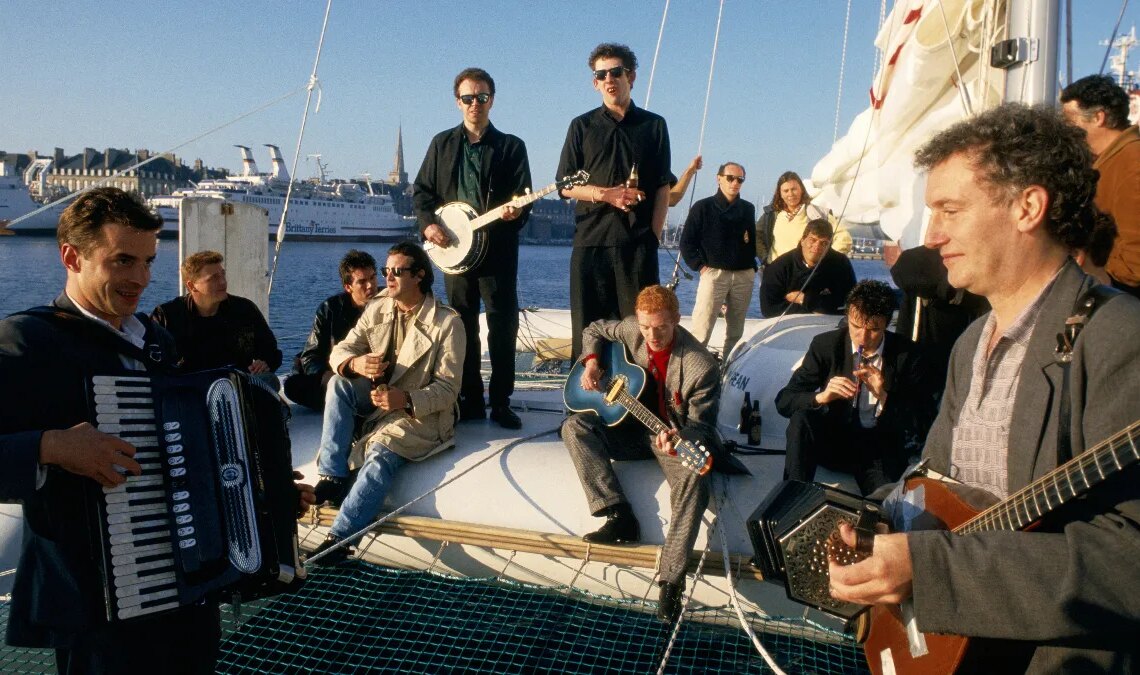
Photo by Frederic REGLAIN/Gamma-Rapho via Getty Images
The post 4 of the Best Instrumental Tracks by The Pogues appeared first on VICE.