A man tasked by the D.C. government with quelling street conflicts as a “violence interrupter” has been charged with first-degree murder in the 2023 killing of a former college basketball star from Baltimore who was shot inside a nightclub.
The 43-year-old suspect, Frank Johnson, is the second man arrested in the homicide of 31-year-old Blake Bozeman inside the Cru Lounge in Northeast Washington, along one of the city’s nightlife corridors. The other suspect also worked as a violence interrupter at the time of the shooting.
Bozeman’s killing shook his large network of relatives, friends and community members, who remembered the father of three and newlywed as a standout point guard at Morgan State University. Childhood friend Ryan Wright said the case poses an unsettling question: Why are two people who were paid with taxpayer funds to stop violence now accused of committing it?
Wright, a 33-year-old Northeast Washington resident, who met Bozeman at a Bowie, Md., basketball recreation center when they were 12 and is the godfather of his children, called it an “alarming” paradox.
“It leaves you grasping for answers,” he said.
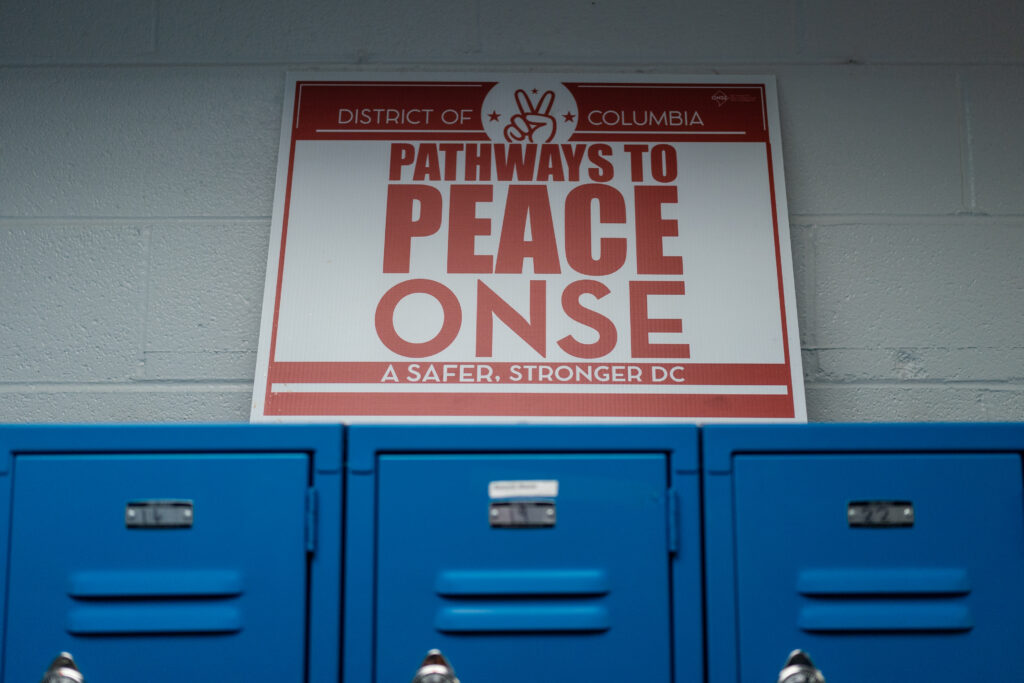
Johnson’s arrest raises questions about the D.C. government’s policies for its violence intervention program, in which workers are dispatched to neighborhoods where gun violence is frequent to persuade potential shooters to put down their firearms.
The Washington Post found in an investigation published last week that poor oversight by the D.C. Office of Neighborhood Safety and Engagement (ONSE), which runs the violence intervention program, allowed one organization called Life Deeds, which had roughly $3.6 million in grants, to misuse thousands of dollars in taxpayer funds in 2024 in ways that a top city official said undermined the program. Agency officials said they had since made significant oversight reforms.
Johnson previously worked for Life Deeds, according to documents The Post obtained through a records request. He was terminated from Life Deeds in December 2023, three months after the fatal shooting of Bozeman, after he was charged with an unrelated felony gun possession offense. Johnson was convicted — only to be rehired as a violence interrupter last year for a different organization receiving D.C. government grant funds. Now, he has been fired again following the murder charge, according to the Rev. Judie Shepherd-Gore, the executive director of InnerCity Collaborative Community Development Corporation, where Johnson had worked as a violence interrupter since last year.
Johnson’s case illustrates the fraught judgment calls at play in a program in which many violence interrupters are ex-felons aiming to turn their lives around by curtailing the type of violence they once perpetuated. But it’s far less common that workers are arrested for felonies while they are on the job.
Kwelli Sneed, executive director of ONSE, defended Johnson’s hiring as a violence interrupter for a second time after the 2023 arrest, but added that the office continues to “work to improve the hiring standards for employees of violence intervention organizations to ensure communities and clients of VI organizations are safe.”
“An individual who has been convicted of a gun charge is not necessarily disqualified from working as a violence interrupter as we value lived experience and the credibility that may grant a VI in working with those most at-risk of gun violence,” Sneed said in a statement.
She noted that at the time he was hired by InnerCity Collaborative, Johnson had served his time and was on probation, and that “based on a review of his charges and history, was approved to be a VI.”
David Akulian, an attorney for Johnson, declined to comment. Johnson was ordered detained by a D.C. Superior Court judge last week.
Bozeman, who worked as a real estate agent, was shot and killed on the night of Sept. 23, 2023, in the crowded nightclub. Authorities have not described a motive, leaving those who knew him with questions. “It never really made sense to us,” Wright said. “Why?”
In an arrest affidavit filed in D.C. Superior Court, police allege that a gunman — whom police now say was Johnson — fired nine times into the bar’s dimly lit second-floor dance floor, striking Bozeman twice and wounding three others. About 50 patrons scattered as gunfire continued, according to the affidavit.
A little over two months later, Johnson was serving as a violence interrupter in LeDroit Park when he was arrested in the neighborhood during an unrelated police stop. Police found two firearms under the driver’s seat in a BMW X6 belonging to Johnson, according to an affidavit. Johnson, who has a record for felony aggravated assault and carjacking, was not licensed to carry the firearms, one of which had an obliterated serial number. He was charged with felony unlawful possession of a firearm, a repeat offense for him.
At the time police searched Johnson’s car, they found a “certificate of appreciation” from ONSE to Johnson, as well as a certificate of graduation from the Peace Academy, which trains violence interrupters. Johnson began working for Life Deeds at least by Oct. 1, 2023 — just a week after Bozeman’s killing, according to his employment contract with Life Deeds, obtained through a records request.
Johnson was convicted of the gun offense in March 2024 and sentenced to 18 months in prison and three years of supervised release.
In the meantime, D.C. police arrested Cotey Wynn and another man in March 2025, and charged each with first-degree murder in the Bozeman case. Court documents say police have since determined that the second man had been misidentified and dropped the charges against him.
Police now allege that Wynn directed Johnson to shoot Bozeman, according to court documents. Trials for both are pending.
Wynn had been a violence interrupterwith Cure the Streets, a separate program that was run through the D.C. Office of the Attorney General. Wynn and Johnson worked in different areas of the city, but court documents say that they knew each other and that authorities found Wynn’s contact information in Johnson’s phone. Wynn has since been terminated and remains in jail.
Police say in the affidavit that security camera footage appears to capture Johnson raising his arm at waist level, pointing toward Bozeman, just as Bozeman walked past him. Bozeman immediately collapsed. The shooter continued firing while also stumbling and falling, as people fled amid the chaos, according to the affidavit. Wynn, meanwhile, calmly remained at the bar, not taking cover or dropping to the floor “as nearly every other person,” police wrote in the affidavit, before motioning to Johnson as if to say it was time to go.
It was the second time in five years that Wynn, who was well known in the violence intervention space, was charged with murder. He was also accused of committing a homicide in 2020. Prosecutors dropped that case for lack of evidence, and Wynn was allowed to continue working as a violence interrupter.
The Cure the Streets program was dissolved last year and merged with the ONSE violence intervention program to avoid duplicative city initiatives.
Sneed said that after being notified of Johnson’s arrest last week, the office took “immediate action” to suspend grant funds supporting his salary or benefits. She said he was one of 62 violence interrupters working across organizations in the city.
Shepherd-Gore said that she was aware of Johnson’s 2023 arrest but that he “had served his time.” She noted that her organization has policies in place for vetting and hiring formerly incarcerated people and deciding which offenses are disqualifying. She came to know Johnson and hired him “because of his real engagement in the community of LeDroit Park,” she said.
Wright said the violence intervention program was exactly the kind of idea he knew Bozeman would have supported. Still, Wright said, there’s a difference between a second chance for someone who served time for a long-ago offense versus someone arrested while on the job. “Bad actors can ruin things that have such positive intent,” he said.
“To see people who are essentially fraudulent, perpetuating this image of someone who is trying to do good in the community — yet they can commit such harsh violence or harsh actions,” he said. “And then they harm someone who’s actually like really good, you know? Who’s actually someone who wanted to do well, who wanted the best for people. … He genuinely saw the good in people.”
Wright said that while many remembered Bozeman as a basketball star, he remembered his friend for so much more, as a father with big dreams for himself and for his children. He had been married just two months at the time he was killed, Wright said, and had the kind of “larger than life” personality that brought his loved ones so much joy.
“Blake was just getting started, and that robbed a lot of us of just so much,” he said. “And I think that’s the part of this whole story not told enough. We all talk about how we miss him, what he had achieved. They don’t talk about, oh man, how much better his kids were going to be because of him, or all the memories he and his wife were going to make together.”
All the opportunities lost, he said.
Jenny Gathright contributed to this report.
The post Two men were paid by D.C. to stop violence. Both are charged with homicide. appeared first on Washington Post.