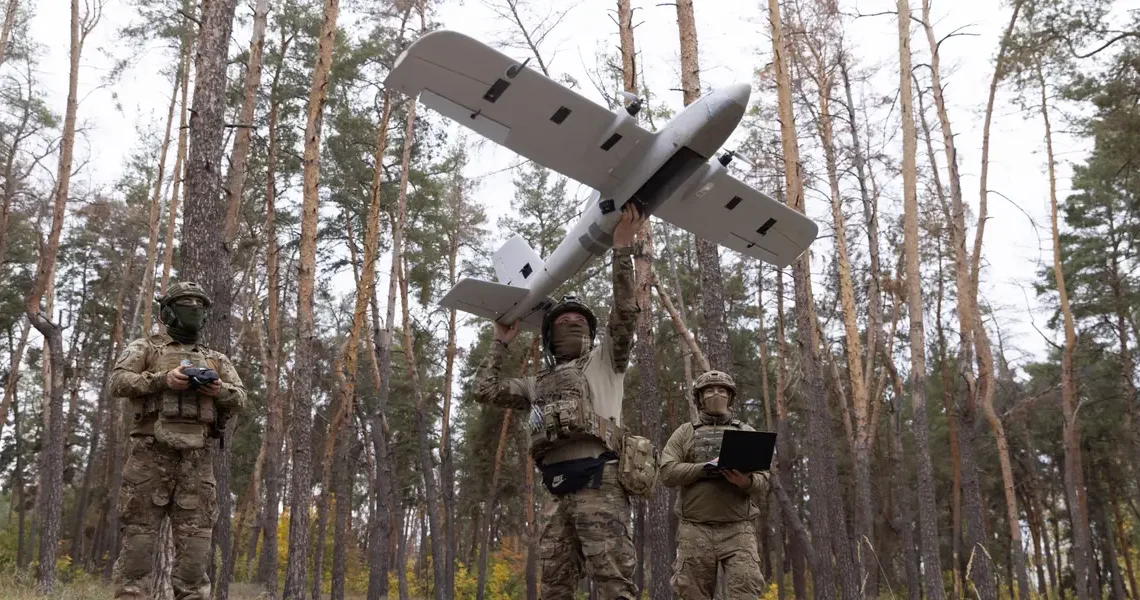
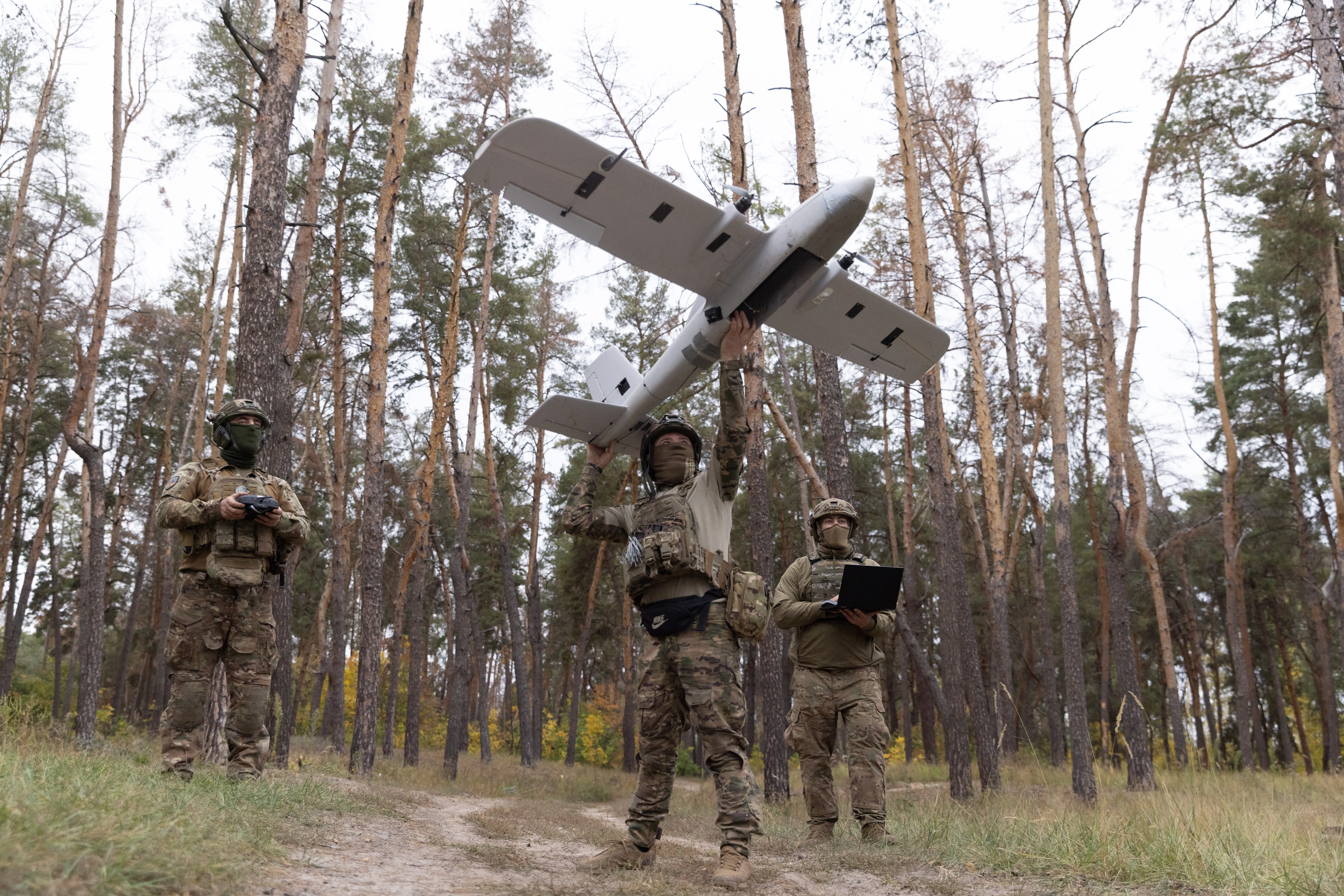
Ukraine showed the US Army just how effective small drones can be, not just as scouts, but as offensive weapons, officials told Business Insider.
Maj. Wolf Amacker, who leads the Army’s Unmanned Aircraft Systems and Tactics Branch at the Aviation Center of Excellence, told Business Insider the service had a capability “gap” due to having long viewed small drones primarily as tools for surveillance and reconnaissance.
Russia’s invasion of Ukraine unlocked a world of new realizations with regard to drone warfare.
Facing an existential crisis, the Ukrainians had to develop a way to counter hostile forces cheaply yet with mass. That meant figuring out how to turn inexpensive drones into weaponry, a step that quickly and fundamentally changed how the war was being fought. Now, drones carry out 80% of all battlefield hits and are responsible for most combat casualties.
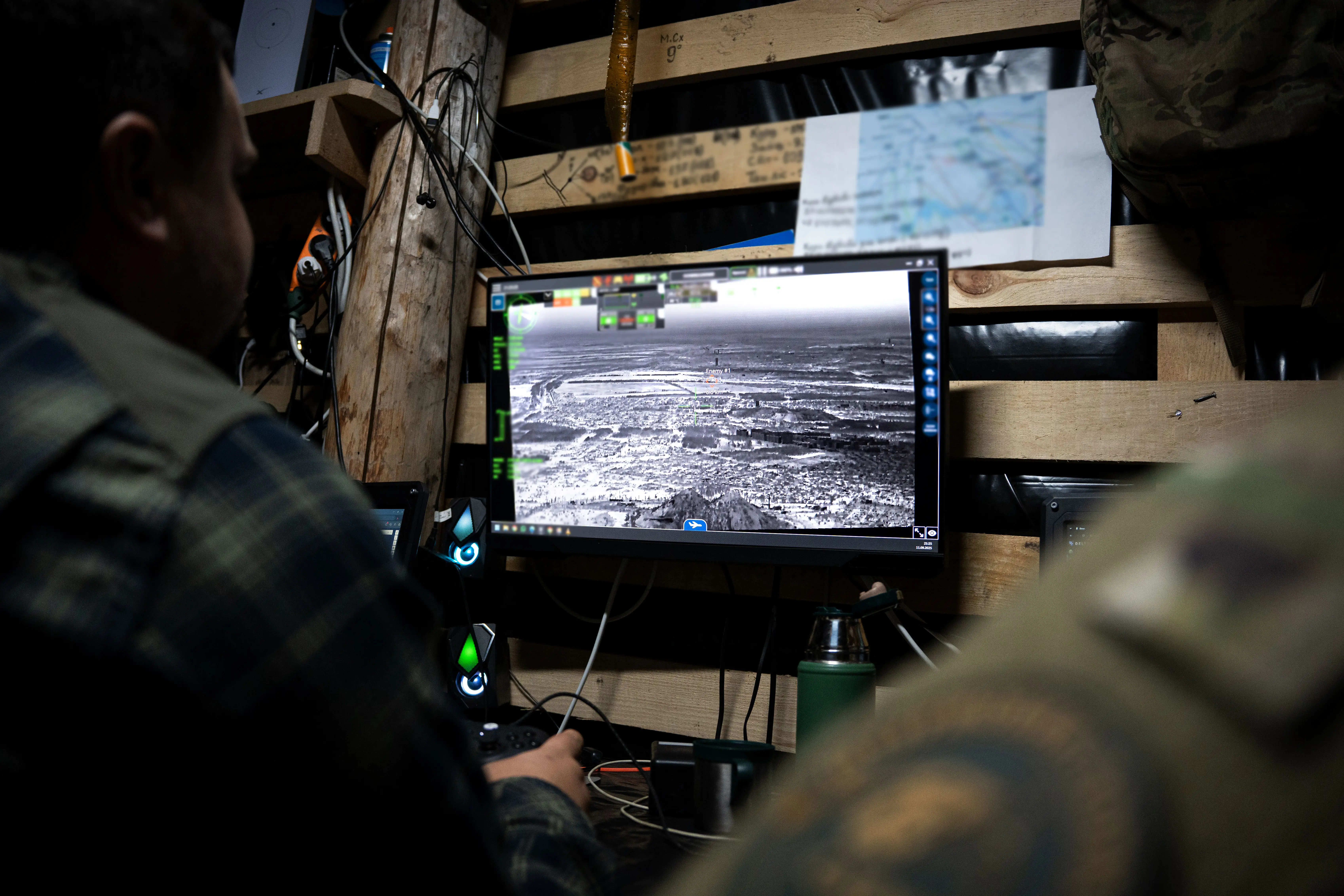
Drones had been used in warfare prior to Russia’s invasion, but this is different. The dramatic shift in warfare has inspired Ukraine’s partners, including the US, to up their training on drone warfare and production of small drones.
“We’re still a very capable force as a US Army,” Amacker said; however, “there is a new capability that we just don’t have fielded across the force yet.”
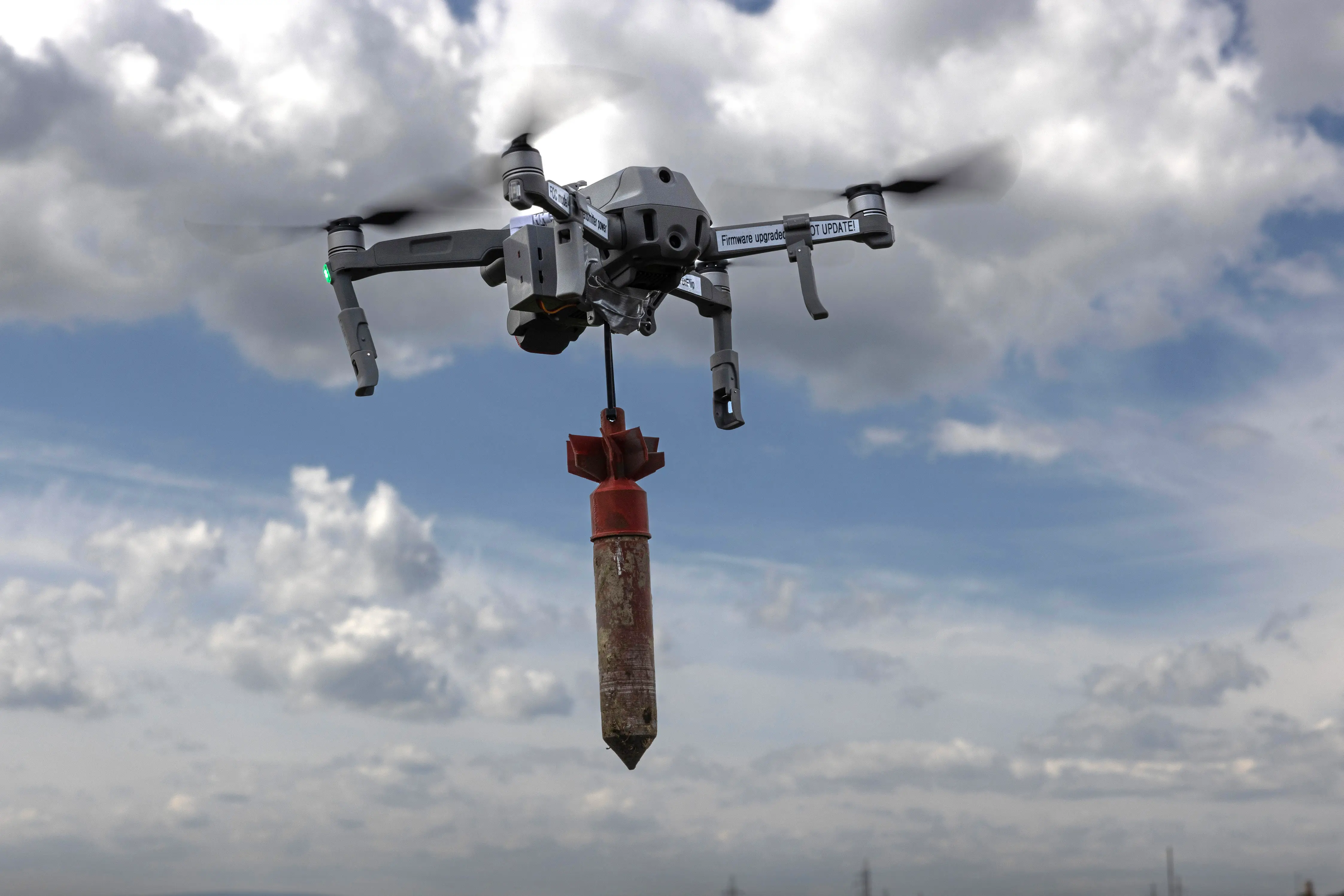
That’s changing though. The Army has been increasingly prioritizing small drone operations, using them the way that the Ukrainians do, to direct fire and drop grenades, among other actions. Drones are also an important part of the Army’s major transformation initiative.
Critical skills are now being taught at the Aviation Center of Excellence’s Unmanned Advanced Lethality Course in Fort Rucker, which began last year and aims to train soldiers to lethally employ small drones in combat. This includes learning to pilot and attack, as well as use drones to support traditional fire missions with artillery.
Maj. Rachel Martin, the course’s director, said that Ukraine has shown the US what it needs to learn.
“The eyes of the world are on the Russo-Ukrainian war and the tactics and equipment that are being utilized in that type of warfare,” she said, explaining that “in America, that is not a style of warfare that we’re accustomed to, where we’re heavily using robotics and unmanned systems in order to target in the near fight.”
She said it’s “a doctrinal and tactical thing that we weren’t prepared for a year ago, but we’re rapidly getting better at it as we go through.”
Drones as offensive weapons
Ukraine uses small aerial drones, like first-person-view quadcopters, to gather intelligence on Russian troops and equipment positions, but also to directly attack soldiers and equipment. Those drones have killed troops, exposed defensive positions, and destroyed high-value systems such as tanks.
US military drones have long been mostly large, fixed-wing aircraft deployed for reconnaissance and intelligence gathering or armed strike. Those drones, systems like the MQ-9 Reaper or RQ-4 Global Hawk, are typically operated by the Air Force, rather than the Army, and they are expensive, millions of dollars each.
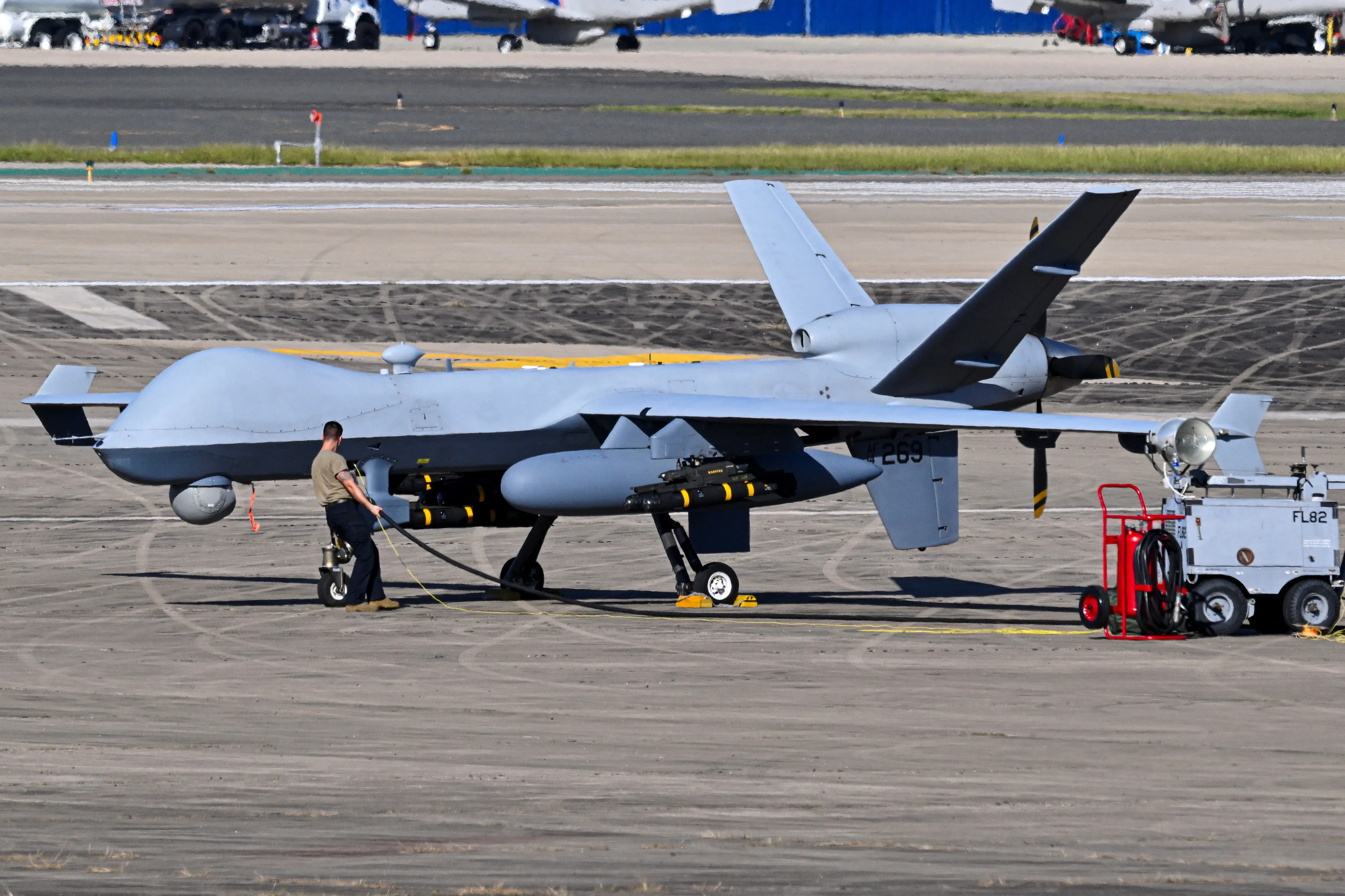
Martin said Ukraine’s battlefield experience showed the Army that inexpensive drones can destroy weapon systems worth millions of dollars. It’s a capability the Army couldn’t afford to ignore.
The Army is looking into restructuring combat units to prioritize drones as weapons, including creating new specialized, drone-led strike units.
Col. Nick Ryan, who oversees US Army drone integration, explained to CNN in September that he wants soldiers to look at their drone “as if it was their personal weapon,” or their radio, their night-vision goggles, or a grenade.
Martin said that the Army test units struggled early on simply learning to fly small drones. First-person-view drones, she said, “require a high skill level,” and many units weren’t resourced for that initially.
“What we want is not just flying,” she said, “but employing those systems lethally.”
That presents additional challenges. “The lethal part is very complicated,” Martin said, requiring risk management, approvals, and handling munitions that most soldiers don’t regularly train with. “So this course was created here.”
She described lethal drone use as something infantry training has only begun to incorporate recently.
Drones as part of a larger arsenal
Part of the training course emphasizes limits as well as capabilities. Martin said students are taught that drones are a tool, not a universal solution.
“Ultimately, drones are a tool,” she said, “but there are other tools available.”
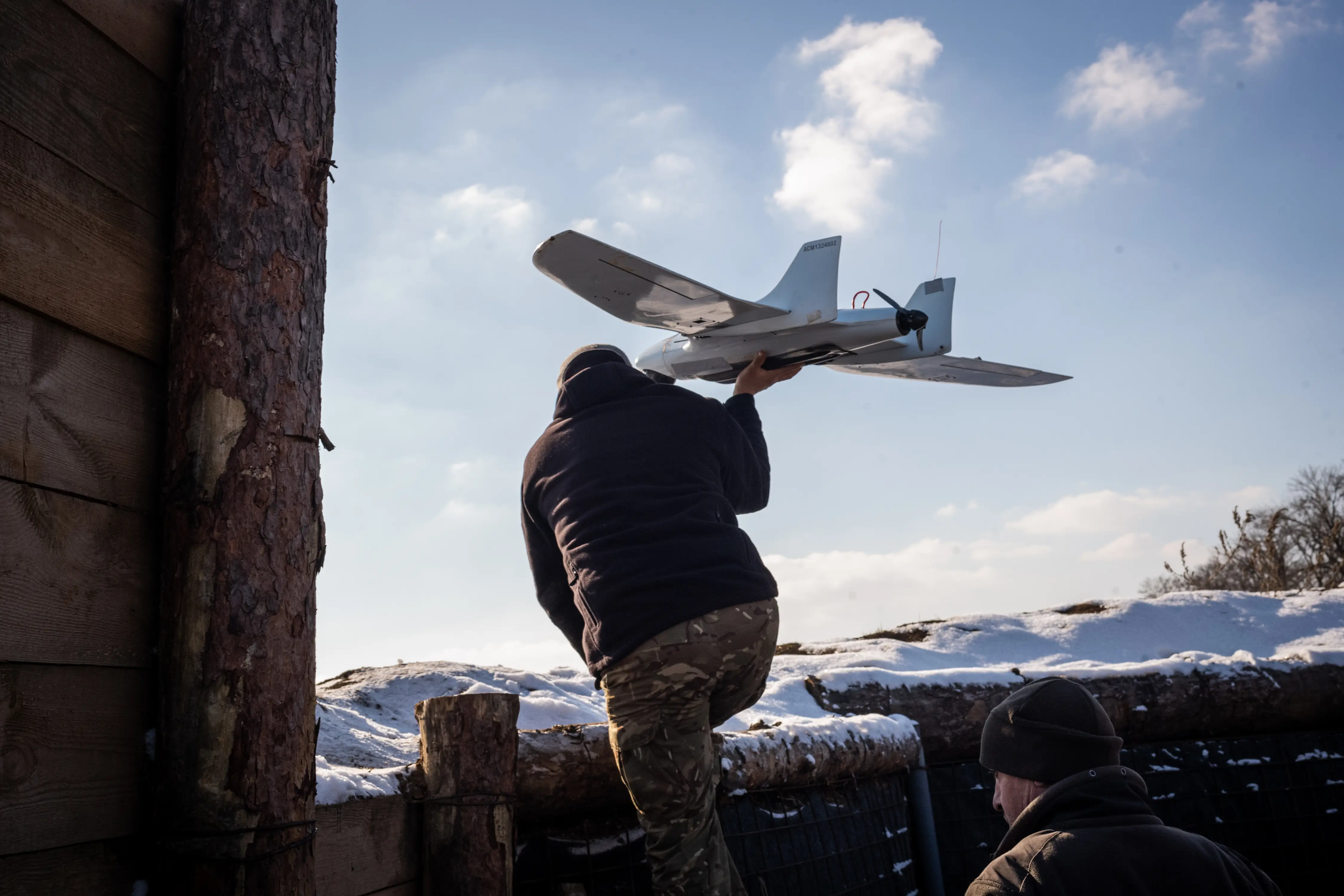
Ukraine turned heavily to drones in part because it lacks the substantial volume of traditional weapons needed to fight a larger military and has faced repeated shortages and delays in promised aid. Cheap, adaptable drones helped fill those gaps.
The US is not in the same position. With advanced airpower and other high-end systems supporting operations, the Army approaches drone warfare differently, integrating drones rather than relying on them as substitutes for other capabilities.
That said, the Army sees the potential and plans to buy at least one million drones within the next two to three years.
It also intends to grow the training program, which had its inaugural session in August, to teach more advanced tactics and complex scenarios and have graduates take their lessons back to their respective units and become trainers themselves.
Amacker said that the goal is to teach drone warfare skills such that “when we combine it with our full force of effects, it just complements everything we’re doing. It makes us even more efficient and effective on the battlefield.”
Read the original article on Business Insider
The post The US Army once saw small drones primarily as scouts. Ukraine showed they could be weapons. appeared first on Business Insider.