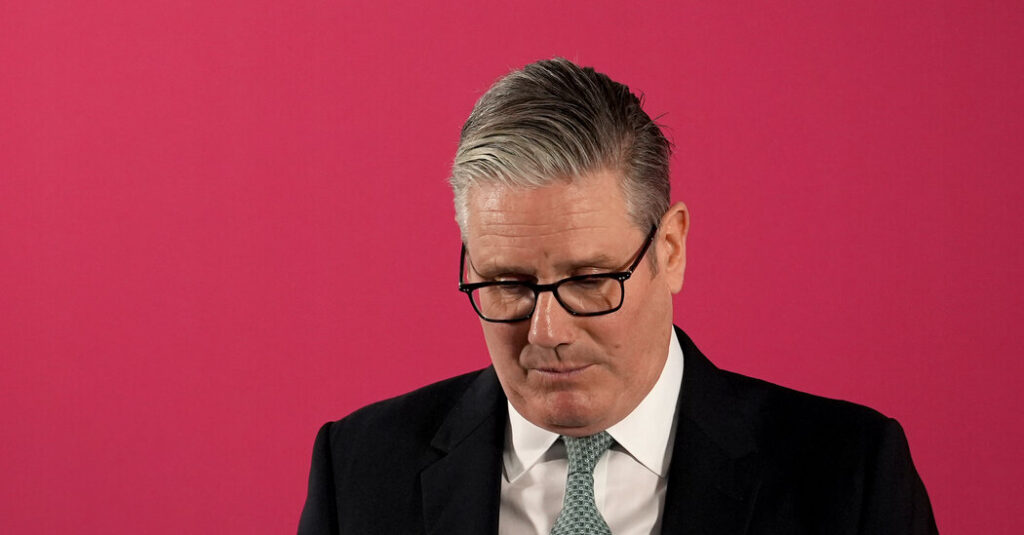
The reach of the Epstein files is truly international. Norwegian royals, French luminaries and globe-trotting businessmen have been caught in its net. But one country, America aside, is worst afflicted: Britain. There’s all the stuff about the former Prince Andrew, of course. But the latest revelations reach right into the heart of the government, threatening to bring down the country’s embattled prime minister, Keir Starmer — or at least accelerate his exit.
The story began in late 2024, when Mr. Starmer appointed Peter Mandelson — right hand to Tony Blair, New Labour grandee, peer of the realm — the country’s ambassador to the United States. Mr. Starmer declared himself “delighted” with the decision. “Peter will bring unrivaled experience to the role and take our partnership from strength to strength,” he said.
It didn’t take long for him to regret his words. In September, Mr. Mandelson was revealed to have had close ties to Jeffrey Epstein — going as far as to call him his “best pal.” Mr. Starmer had no option but to relieve the ambassador of his role, pleading ignorance of the extent of the two men’s friendship. At the time, the prime minister emerged from the episode relatively unscathed.
But January’s tranche of Epstein documents brought a host of damaging new disclosures. Among them is that Mr. Mandelson, when he was a senior minister, leaked confidential government policy to Mr. Epstein and lobbied the chancellor to reverse a decision to tax banker bonuses, apparently on Mr. Epstein’s behalf. He also appears to have been intensely relaxed about his friend’s crimes, referring to Mr. Epstein’s release from prison in 2009 as “liberation day.”
For Mr. Starmer’s already fragile authority, it is a hammer blow. His attempts to contain the fallout — groveling apologies combined with bids to redirect blame onto Mr. Mandelson, who resigned from the party and the House of Lords — have yet to work. Under intense pressure, Mr. Starmer insisted that Mr. Mandelson lied to him and that the former ambassador’s relationship with Mr. Epstein “was materially different from what we’d been led to believe.”
Yet even if the prime minister was deceived, this line of defense isn’t the most convincing. Mr. Mandelson’s association with Mr. Epstein has been a matter of public record since 2019, after all. Even without that, Mr. Mandelson was tainted goods. Forced in his time to resign from government twice, he was so scandal-ridden that his name became a byword for sleaze. It is hard to claim that the man nicknamed the “prince of darkness” was an unknown quantity.
So why did Mr. Starmer bring him into the fold? The answer has a name: Morgan McSweeney. Often described as a ruthless protégé of Mr. Mandelson, Mr. McSweeney amassed great power as the prime minister’s chief of staff. He reportedly used that influence to push hard for Mr. Mandelson to be chosen as ambassador and even brought him into the heart of government decision-making. Accepting “full responsibility” for advising the appointment, Mr. McSweeney resigned on Sunday.
In a futile attempt to hold onto his Machiavelli, Mr. Starmer had defended Mr. McSweeney as an “essential” part of his team, crediting him as the person who “helped me change the Labour Party.” That change has often looked like a return to the New Labour past, in both attitude and conduct. Profiles of Mr. McSweeney revealed his main obsession to be destroying the left flank of the party, blaming it for a downturn in electoral success since Mr. Blair left power.
In that project, he and Mr. Starmer have succeeded. But when the primary focus is on routing party factions, governing can prove tricky. Since Labour’s election victory in 2024, Mr. Starmer has failed to distinguish himself as a leader in word or in deed. Neither the public nor his own party seems to know what he really stands for. Often, the prime minister is caricatured as a puppet, with Mr. McSweeney pulling the strings.
The show is not going well. Mr. Starmer’s premiership has grown weaker with every passing month, undermined by internal rebellions, damaging reversals and growing whispers of leadership challenges. Seemingly sensing danger, Mr. Starmer recently blocked a rival from standing as a candidate in an upcoming special election: Victory would have made possible a bid for the leadership. Mr. Starmer and his allies — who remain in key administrative positions — apparently didn’t want to run that risk.
The bigger danger is that Labour will lose the special election altogether. Labour has long dominated the area where the seat is, but current polling puts the hard-right Reform U.K. ahead. Defeat might spell the end for Mr. Starmer, who could be pushed to resign by his colleagues. If he staggers on, local elections in May are predicted to bring heavy Labour losses. If those come to pass, few believe Mr. Starmer can retain his position. Even longtime admirers see the writing on the wall.
If there is one quality Mr. Starmer possesses, it is poor political judgment. Throughout his tenure, he has consistently failed to act until it is too late. Bad decisions in personnel and policy have been compounded by dither and delay. Even in this case, he had to be forced to take action by furious Labour lawmakers. Now the prime minister will have to weather the public release of documents surrounding Mr. Mandelson’s appointment without his Praetorian Guard.
Perhaps Mr. Starmer’s poorest judgment has been reserved for his choice of advisers. To become leader, he allied himself with people defined by their ability to maneuver through party ranks rather than their commitment to any substantive political vision. These figures helped Mr. Starmer to power. But their way of working — backroom deals, shadowy networks of favors — may prove to be his undoing. With friends like these, who needs enemies?
Moya Lothian-McLean is a contributing Opinion writer and the managing editor at Mill Media.
The Times is committed to publishing a diversity of letters to the editor. We’d like to hear what you think about this or any of our articles. Here are some tips. And here’s our email: [email protected].
Follow the New York Times Opinion section on Facebook, Instagram, TikTok, Bluesky, WhatsApp and Threads.
The post The Epstein Files Are Coming for Britain’s Prime Minister appeared first on New York Times.