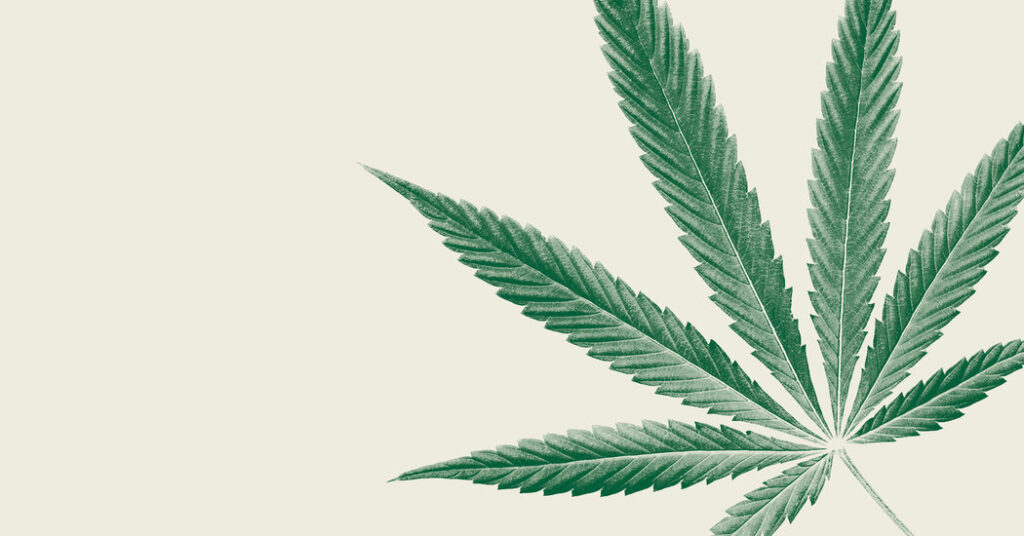
More than a decade ago, The New York Times editorial board argued that the United States should legalize recreational marijuana. This week, the board modified its stance. Yes, it should be legalized — but marijuana is causing more harm than predicted by many during the fight to legalize it. Now, it must be better regulated. In this conversation, David Leonhardt, an editorial director in Times Opinion, and Emily Bazelon and German Lopez, Opinion writers who work with the editorial board, explore what smarter regulation could look like and why it’s sorely needed.
Below is a transcript of an episode of “The Opinions.” We recommend listening to it in its original form for the full effect. You can do so using the player above or on the NYTimes app, Apple, Spotify, Amazon Music, YouTube, iHeartRadio or wherever you get your podcasts.
The transcript has been lightly edited for length and clarity.
Emily Bazelon: I’m Emily Bazelon, a writer for New York Times Opinion and The Times Magazine. I’m here today with two of my excellent colleagues, German Lopez and David Leonhardt. Hey guys.
German Lopez: Hi.
David Leonhardt: Hello, Emily.
Bazelon: The three of us help write and edit Times editorials; the unsigned articles that say editorial board at the top. And they express the institutional view of New York Times Opinion.
This week we published an editorial that we have been working on for a long time about marijuana, in which we’re calling for increased regulation of the pot industry. So we’re going to talk about our argument and how we got to this point, but I wanted to start by asking both of you how you feel the place of marijuana has changed in the culture in the last decade and a half? Is weed part of your lives? Do you feel like you see it much more now that it’s been legalized in many states? How do you think about marijuana these days? German, let’s start with you.
Lopez: So it’s been legalized where I’m based, which is Ohio. Definitely once legalization took off, I saw more people using it in public. I actually was walking to the grocery store and somebody offered me a hit earlier in public and I thought, like 20 years ago, this absolutely would not have happened. So it’s definitely been a dramatic shift. I mean, this is like something that I just keep thinking about. It’s one thing to legalize a drug, but it’s another thing to culturally embrace it. And I think we have really culturally embraced it in a way that, that has surprised me. Like you’ve seen Gwyneth Paltrow invest into big weed in California, and that’s really the biggest thing that’s changed — there’s just much more public support for it in a cultural sense, not even just a legal sense.
Bazelon: David, what are your thoughts about this?
Leonhardt: I walk a lot in both Washington, D.C., and New York, and the smell is everywhere. If you go for a long walk at this point, you should assume you’re going to smell marijuana at some point in a way that you don’t actually smell tobacco anymore quite so regularly. The place that I first noticed it was Colorado, where I happen to have a whole bunch of family members live. I go to Colorado every year and I have been for a long time, and I remember years ago it started to become common to see marijuana shops pretty much everywhere. It has just become a normal part of the commercial landscape in Colorado and in some other parts of the country as well.
Bazelon: Also the strains of weed have become so much stronger. As someone who rarely actually uses or smokes it, I feel like with edibles I have to be really careful and start with a really small amount and just assume that it’s going to be way too strong. Or else I’ll wake up in the morning and still be in some kind of fog. I won’t ask either of you to divulge your personal pot unless you feel like chiming in —
Lopez: I remember making fun of Maureen Dowd’s experience with an edible, then going to Colorado and having basically the exact same experience where I’m sitting in a bed just in a state of panic and completely shocked that this was so much stronger than anything I had been used to. I just was not expecting it at all.
Leonhardt: It’s a good reminder that Maureen Dowd is always right.
Lopez: Yeah, that’s true.
Bazelon: OK, let’s turn to our editorial and the ways in which the country has changed that set up this stance that we decided to take. So 13 years ago, there was no state that allowed recreational use of marijuana. And at that point, the editorial board published a whole series about legalization. David, what did the issue look like then?
Leonhardt: So the editorial board published this series in 2014, as you said, when none of us were part of the editorial board, and this was pretty early in the big legalization push. The headline on the main one was “Repeal Prohibition Again,” and it was a set of editorials that got a lot of attention.
As that headline suggested, the core of the argument was that the prohibition of marijuana was as wrong as the temporary prohibition of alcohol had been in the 20th century, and that Americans, at least adults, should have the freedom to smoke and use marijuana as they have the freedom to drink alcohol and smoke tobacco.
Bazelon: German, you have been writing about drugs and drug policy for more than a decade. How has your thinking about marijuana shifted in that time?
Lopez: When I started writing about this topic, the younger, more naïve me really did buy into a lot of the legalization arguments. I thought marijuana was already pretty accessible. It’s not like it was particularly difficult to get before, so how much can legalization possibly increase use? I thought that the country would regulate it in a much more serious way than it has. I just had a hard time believing that the country would move from criminal prohibition to very hands-off commercialization that easily. I would say that I started having my doubts fairly early because I was also covering the opioid crisis, and that is an actual example of a legal drug being marketed irresponsibly and the government really underreacting to it. So that was a first hint that, look, maybe this legalization regulation thing doesn’t work exactly as it’s sold. But then over time, we saw more and more problems pop up with marijuana legalization. We’ve seen a sharp increase in daily users. More people now use pot daily in the U.S. than use alcohol daily. And that is a dramatic shift. We’ve seen increases in addiction. We’ve seen increases in people going to E.R.s and reporting what’s called “cannabinoid hyperemesis syndrome,” which we’ll just say C.H.S., but it’s like really violent nausea. It’s not at all pleasant.
I think from a basic standpoint, somebody who’s spending every single day stoned is just going to be a less productive member of society and that, I think, is something that we should worry about when we see those daily increased numbers.
Bazelon: For me, what’s been really unexpected is the health effects; I just didn’t understand that. I remember in high school learning untruly that you couldn’t be addicted to marijuana. I think that idea and the pretty benign culture of pot made me give a lot of thought to regulation. There’s always a distance from saying that something shouldn’t be criminal anymore to deciding exactly what kind of place it’s going to have in society. And I think that’s what we were wrestling with as we’ve been working on this editorial, and it was kind of tricky for us to figure out how to frame it. David, can you talk a little bit about that?
Leonhardt: It’s a really tricky issue, because we want to be clear about this. We are reiterating our pro-legalization position. We say in the new editorial that we oppose this ballot initiative that Massachusetts citizens may be able to vote on this year that would essentially recriminalize marijuana. We don’t think it should be recriminalized; probably the biggest cost of the criminalization of marijuana is we ended up arresting large numbers of people for partaking in an activity that is not fundamentally different from consuming or selling alcohol and tobacco, both of which are obviously legal. Those arrests had long-term costs, financial costs, job opportunities costs, and the people who bore those costs were disproportionately poor, disproportionately Black and disproportionately Latino. And ending the criminalization of marijuana has meant that we have ended that form of injustice, and that is worth celebrating. But when you have a big, new policy, and legalization of marijuana has been a big, new policy, it’s really important to step back and look at what the effects are. Just as German was saying, a lot of the effects have been bad. Use has gone way up. Addiction has gone up. Illness associated with marijuana has gone up. And not only have those effects been bad, but they are quite different from what advocates predicted.
And so what the three of us and our colleagues really grappled with was how do we get the balance right — where we simultaneously say, look, marijuana should be legal. Adults who want to use it should be able to use it. And also let’s acknowledge that legalization has had real downsides. So then what do we do about that?
Lopez: Just to punctuate one thing that David and you have said, on this addiction point. I mean, you still see people who really are skeptical that you can get addicted, and I would just point out that when you look at the data on this, it is people saying, on their own, in national surveys, that they have a problem with marijuana. They’re basically saying that they want to stop using but cannot, and it’s causing problems in their lives.
Bazelon: I feel like everybody knows at least one person for whom this is true. It’s a pretty common phenomenon. David, you explained the position that the editorial board took in 2014. Our current editorial says governments can enact policies that keep the drug legal and try to curb its biggest downsides. So we’re looking for this kind of middle ground of regulation. And one of the ways we’ve been talking about this is this idea of grudging toleration, which is a Scrooge-like phrase that almost mocks itself. But what’s the ballast that we are looking for here? German, how do you think about where we’ve arrived and tell us about grudging toleration, because it has a good origin story.
Lopez: Yeah, it comes from Mark Kleiman, a criminologist. He used to write a lot on these issues. If you read any book on criminal justice, I think it should be “When Brute Force Fails” by Mark Kleiman. And he was looking at this topic from the standpoint of: We clearly don’t like this punitive war on drugs, but we also don’t like the idea of everybody getting addicted to all these drugs. So what is the middle point? And he basically makes a point that just because you legalize something does not mean you have to embrace it. I don’t mean just legal, I mean culturally too. And so how do we balance these things?
We already see this with tobacco; it’s legal, but we restrict where people can use it. We have very high taxes on it. Same thing with alcohol. It’s restricted. You can’t drink and drive. It has relatively higher taxes, although I would say the taxes aren’t high enough on alcohol. And there’s limitations on even where you can drink. In a lot of places you cannot have an open container. So with marijuana, we’ve really gone in a direction where the taxes are relatively low. The regulations are not as strict as I think a lot of initial proponents were thinking.
So we’ve moved below that grudging toleration line, which, yes, it’s a funny phrase. But it basically gets at the idea that you can tolerate something, you can make it legal, but you don’t really have to think it should be a part of everyday life.
Bazelon: So David, what are the specific policy ideas that you feel are most promising for finding this more grudging approach than a lot of states are currently taking once they’ve legalized marijuana?
Leonhardt: I think taxes is the place to start. What I would say is that we’ve had huge success reducing tobacco use over the last few decades, and taxes have been absolutely central to that effort. We’ve made it much more expensive to smoke cigarettes and fewer people smoke cigarettes. So by increasing the taxes on tobacco, we have really helped drive down cigarette use. And as German was just saying, taxes on marijuana are really quite low — cents on the dollar in some cases, and we should raise them. The same way we should say that as a society, we want to find ways to discourage excess use of alcohol and tobacco, we should be able to say we want to discourage excess use of marijuana.
Another thing that should happen is we should tax marijuana based in part on its THC [tetrahydrocannabinol] levels. That’s the primary psychoactive compound in pot. The same way the taxes are higher on whiskey than they are on beer, taxes should be higher on stronger levels of marijuana than weaker levels. So I think taxes are really a central way to do it.
And as the three of us and our colleagues were talking about this, German made a really nice point, which is, there’s another beauty of taxes, which is that not only do they discourage excess use, but they’re not that big a deal for the person who wants to have gummies a couple times a month or smoke a joint with friends on the weekend, because they’re not heavy users of it. A tax is really well designed to discourage excess use, but not punish people who are using a product quite safely and getting enjoyment from it.
Bazelon: And what about medical marijuana? Do we need to rethink at all how we are currently handling that?
Lopez: I think people should step back and think about how medicine is supposed to work in the United States. Drugs are supposed to go through a regulatory process with federal agencies, which decide yes or no based on whether a drug meets safety and efficacy standards, after lots of rigorous testing. That has not happened at all with what’s being sold in medical marijuana dispensaries. Instead, state voters — and sometimes state legislators — have approved initiatives that basically say you can sell marijuana at a dispensary and claim it provides X, Y, Z medical benefits, really without any evidence.
When this debate first started, I was hopeful that medical marijuana would help a lot of people. But based on the most rigorous studies we’ve seen, it actually doesn’t have great benefits overall. For some people, it can help with pain or very specific issues, but when you compare it to other medications — or even to not using pot at all — it really doesn’t work as well as we once thought.
So I think we should step back and ask whether we should really have all these dispensaries claiming, without evidence, that medical marijuana does all these great things. We wouldn’t accept that standard for most other medications, and we probably shouldn’t accept it for marijuana either.
Bazelon: So one big development since legalization is that marijuana has become a multibillion-dollar industry that is in some gray area of legal and illegal, but we really are in an era of big weed. German, how does that fit into how we should think about regulation?
Lopez: I think if you’re a good liberal, you think a lot about personal liberty, personal freedoms and that people should be able to use what they want, consume what they want. But corporations have a lot of incentives to market their products irresponsibly, to really push people to misuse them, use them as much as possible, and that’s really not any different with weed. They make most of their revenue from the heaviest users. We should just think: Is that something we want these corporations doing, marketing their addictive products to really, really heavy users?
Leonhardt: And not just heavy users, but kids and teenagers. There are products called Trips Ahoy, which obviously evokes Chips Ahoy, and Double Stuff Stoneos that evoke Oreos. This is a classic playbook of corporations that care much more about their own profits and by extension, their executive salaries, than the well-being of Americans.
German Lopez: I was just going to say one thing that’s worth emphasizing. You were getting at this, Emily. It is a legal gray area right now because technically marijuana is federally illegal, so it’s much more difficult for companies to market their products in this way. You see beer ads in the Super Bowl. That’s not going to happen with pot because it’s illegal on a national level. I would say it’s the early days. So it’s the time to get a grapple on these issues and really start thinking through regulations and what we want these companies to be able to do when they’re out there marketing their products.
Bazelon: So if we move into this world of heavier regulation that you’re envisioning, does that push a lot of the market for pot back into the illegal black market? Because obviously that still exists, right? And the harder you make it or the more expensive you make it to get something legally, don’t you risk just going back to the world of underground dealers?
Leonhardt: So there is some of that risk there, but this is one of the things that on the editorial board, we actually end up talking about a lot. It is true that no law is perfect and sometimes things will go to the margin, but to then argue that therefore we should not have laws ends up being really nihilist. It actually ends up being this technique that people who don’t want any regulation use.
Often, corporate lobbyists and lobbyists for wealthy people say that we shouldn’t tax rich people or increase taxes on rich people because they’ll find ways to get around it. So let’s step back and ask ourselves, well wait a second, if they would actually be able to find ways to get around all the tax increases, why are they so upset about the tax increases? Why are they lobbying against them? It turns out, actually, that when you raise taxes on rich people, you raise taxes on rich people. And the same thing goes with marijuana, which is, if we crack down on some of these abuses, yes, some of it will move to the black market and we’ll then need to look for ways to restrict that. But the bigger dynamic will be that essentially harmful behavior by companies will be less common. And so I think we shouldn’t be scared of putting in place a law because it won’t have 100 percent efficacy.
Bazelon: So one of the things that I’ve been thinking about is whether marijuana is a vice in the kind of old fashioned 19th-century social reform version of a vice where you had an anti- vice squad in New York City going around looking for racy playing cards and anything else that appeared to them to be what people then called obscene and maybe now we would think of as pornography. Marijuana is a vice.
We’ve been talking about some other topics on the editorial board that could fit that definition — that have addictive qualities also — like sports gambling or pornography or even social media. Is there something helpful in this framing of this middle ground of regulation that could also apply more broadly? And at the same time, do we risk reviving this category of vice, falling into the 19th-century trap of Victorian morality where we’re not really thinking about harm, we’re more just disapproving of things?
Lopez:
I don’t want to go around like a moral grandstanding, telling people that “Reefer Madness” is real and they are a bad person for smoking pot, because I just don’t believe that at all. But it is also the case that with these drugs, we have long accepted the idea that some people do get in trouble and when they get in trouble, it hurts all of us and we should do what we can to prevent that from happening.
Leonhardt: I’m willing to do a little bit of moral grandstanding and maybe inspire disagreement from the two of you. Yes, smoking pot is a vice, so is drinking alcohol, which is something I very much enjoy doing — and so is smoking tobacco. So are a whole bunch of other activities. That doesn’t mean that people who do these activities are bad people — to echo German. But it does mean that you want to be honest about the trade-offs here. So I would say to your question, Emily, yes, smoking pot is a vice. The same way drinking a martini — which I very much enjoy — is a vice. It is a perfectly good thing for people to do in some circumstances, but when you add it up over society, it has costs that we’ve been too eager to wish away with marijuana over the last 15 years.
Lopez: One thing I wanted to do is also flip this a bit because in some ways, the way you have seen marijuana portrayed in the last few decades, it’s not just that it’s not a vice, but it’s a literal virtue. It has medical properties that are good, you see people celebrating its use. I mean, it’s not hard to find a celebrity who is boasting that they use pot every day. Now, I would just ask people to think: What if somebody was saying that about alcohol? Like: I’m getting drunk every single day. What would you think about that? I think you would start thinking that person has a problem and something is wrong here. Because intuitively we understand that there are limits to how much we should be celebrating this thing, even if it’s legal. And I think the same applies to marijuana here, especially in a cultural sense. I think we’ve gone way too far in glorifying its use.
Bazelon: Yeah, it’s such a ping pong back-and-forth. I think an additional element here is that when marijuana was criminal, the criminalization did enormous damage. Hundreds of thousands of people were getting arrested, going to jail, sometimes serving actual prison sentences. It was a cost that was inflicted mostly on poor people and people of color in urban settings and was part of ripping the fabric of those neighborhoods that is caused by lots of incarceration.
So in some ways, I feel like we’ve gone too far in the other direction because that was such a clear social harm. We needed a way out and making marijuana seem super benign and maybe even positive was a way to change those laws. Now, maybe, at least in states that have legalized pot, we’re in a different place and there’s enough recognition of that past harm. I hope that we can figure out how to find this middle ground of regulation without risking going backwards into the world of sending people to jail, which seemed really problematic and just did a lot of damage.
So that leads me to the last thing I really wanted to talk about, which is this whole question of trade-offs. They’re just unavoidable in policymaking. You’re never going to get it exactly right. There always are some harms that you’re causing or failing to mitigate by going in one direction rather than the other. Legalization was really important for reducing arrests and jails, and yet it also seems like it had this somewhat unexpected effect of greater use and more health problems. How should we be thinking about that going forward, applied to this problem, but then also to other kinds of social ills or vices that we want to try to find this middle ground for?
Lopez: I think a lot of people might hear this conversation we’re having and think, look at these three narcs, and they’re hating marijuana and all that —
Bazelon: I always like to think of myself as a narc. That’s my favorite self-image.
Lopez: But it’s just by the nature of this editorial, and by the nature of this conversation, we are talking a lot about why we’re making the case for regulation. But all three of us are supporters of legalization. We think marijuana should have been legalized. Like I partake, I’m cool — it’s not just —
Bazelon: Are you though? Anyway, keep going.
Lopez: Fair enough. But it’s not just that we’re people who oppose marijuana legalization to begin with and we’re coming back and saying, look, we hate this. No. I am reviled by this original statistic that hundreds of thousands of people were arrested, especially people of color, and then they had criminal records for lives tied to this drug that really was not doing enough harm to justify that kind of prohibition. But the advocates said, for a long time, legalize and regulate, and I think we really need to take the second part of that seriously.
Leonhardt: The advocates were right when they said legalize and regulate, and now let’s do it.
Bazelon: Thank you guys. Thank you both for helping me think about this and talking this through.
Lopez: Thanks for having me.
Leonhardt: Thank you.
Thoughts? Email us at [email protected].
This episode of “The Opinions” was produced by Jillian Weinberger. It was edited by Kaari Pitkin. Mixing by Sonia Herrero. Original music by Pat McCusker and Carole Sabouraud. Fact-checking by Mary Marge Locker. Audience strategy by Shannon Busta and Kristina Samulewski. The director of Opinion Video is Jonah M. Kessel. The deputy director of Opinion Shows is Alison Bruzek. The director of Opinion Shows is Annie-Rose Strasser.
The Times is committed to publishing a diversity of letters to the editor. We’d like to hear what you think about this or any of our articles. Here are some tips. And here’s our email: [email protected].
Follow the New York Times Opinion section on Facebook, Instagram, TikTok, Bluesky, WhatsApp and Threads.
The post Marijuana Is Everywhere. That’s a Problem. appeared first on New York Times.