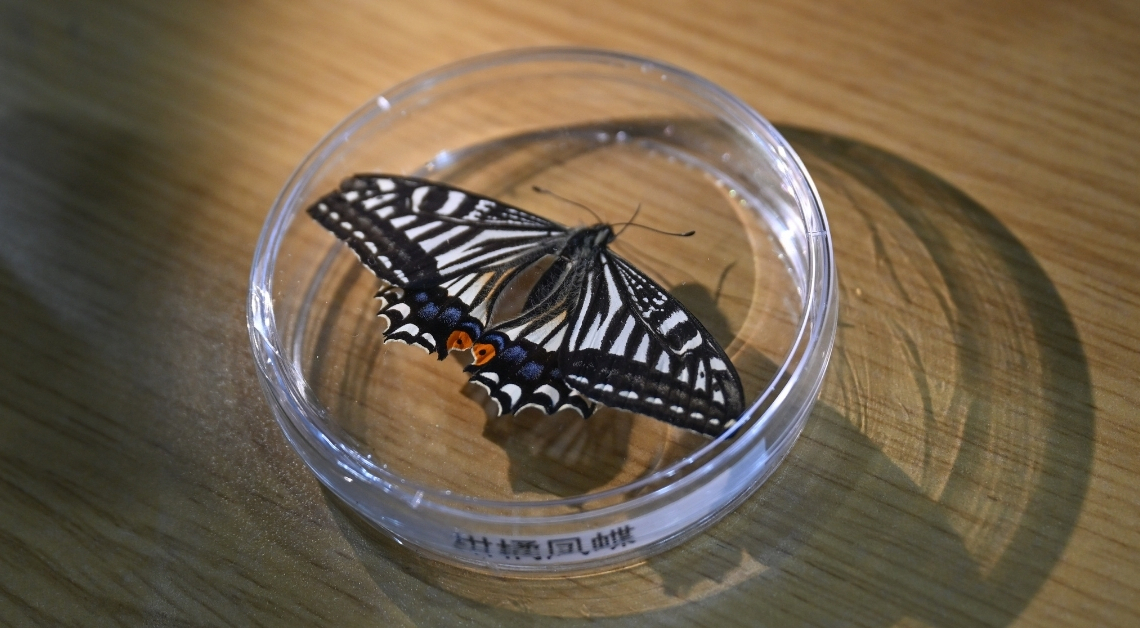
China’s Tiangong space station was just the home of a birth. Or, maybe more of a rebirth. The butterfly hatched while aboard the station and then lived in orbit, adapting to microgravity with seemingly no trouble.
According to People’s Daily, the butterfly arrived aboard a Kuaizhou 11Y8 cargo mission in December, sealed inside a 14.2-liter capsule designed to function as a tiny, self-contained ecosystem. The chamber was kept at about 86 degrees Fahrenheit and included plants and microorganisms that supported the insect through metamorphosis.
After emerging from its chrysalis, the butterfly survived for several days in orbit, fluttering around and generally behaving as it would on Earth.
The Space-Grown Butterfly, Explained
A little surprising, considering scientists weren’t sure the insect would be able to orient itself or fly without gravity. While butterflies have completed metamorphosis in space before, as they did on the International Space Station back in 2009, this experiment was a little harsher.
The capsule had no radiation shielding and no active temperature regulation beyond basic heating. It also had no full-spectrum lighting. There was also no human intervention.
Pair all of this with previous work growing plant leaves on the moon, like during China’s Chang’e 4 mission, and we could be laying the groundwork for future space agriculture, where insects like butterflies could serve as pollinators for space plants.
If space farming is ever going to become a reality, it’ll start with getting the natural processes that occur here on Earth happening naturally in a place where they are as unnatural as can be.
The post Everything We Know About the Butterfly Scientists Just Grew in Space appeared first on VICE.