President Donald Trump’s contempt for the rule of law in America — and the judges who enforce it — is by now well-established. Whether seeking to deport migrants without hearings or refusing to spend appropriated funds or unilaterally tearing down the East Wing of the White House, Trump has shown scant regard for legal limits on his authority.
Given this domestic track record, it’s hardly surprising that Trump has shown similar indifference to international law and the institutions that try to enforce it. Admittedly, the United States has a long regard of ignoring international statutes when convenient; the U.S. has been accused of flouting the law in the past, from the invasion of Cambodia in 1970 to the invasion of Iraq in 2003. But since 1945, the U.S., while guilty of hypocrisy and inconsistency, has generally been on the side of a rules-based international order. Some of its proudest moments have come when it has helped the victims of aggression, including South Korea in 1950, Bosnia in 1995 and Ukraine in 2022.
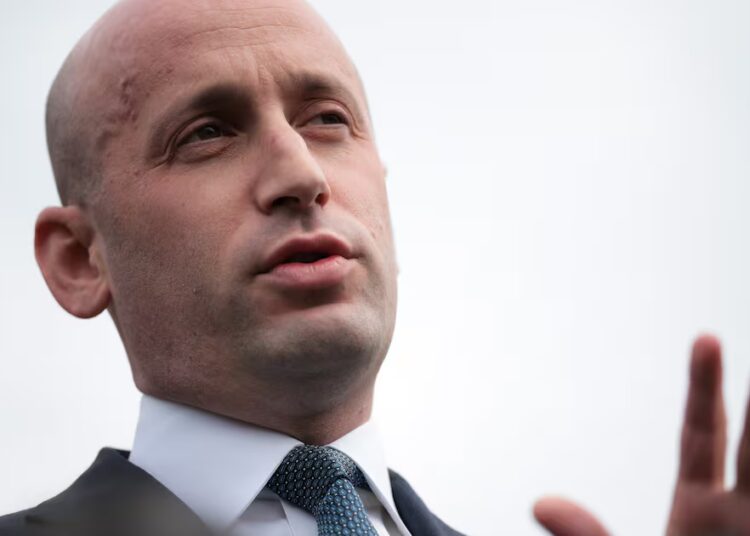
Trump, however, seems bent on destroying the very foundations of a rules-based order. He told the New York Times last month, “I don’t need international law.” The only limit on his authority abroad he recognizes is his “own morality.” (Given his long record of amorality, that’s scant comfort.) In a similar vein, one of Trump’s top aides, Stephen Miller, has dismissed talk of “international niceties,” insisting in a recent chilling CNN interview that “we live in a world … that is governed by strength, that is governed by force, that is governed by power. These are the iron laws of the world.”
Miller’s cynical comments, reflecting a strongman’s view of the world, came while defending Trump’s interest in annexing Greenland. Even though Trump has since backtracked, his rhetoric already violated the U.N. Charter: It requires members to “refrain … from the threat or use of force against the territorial integrity or political independence of any state.”
So, too, Trump’s deadly attacks on alleged drug boats — which have become much less frequent since his legally dubious capture of Venezuelan President Nicolás Maduro — have been widely criticized as a violation of both U.S. and international law.
Then there are Trump’s signature tariffs. They are often levied on a whim, in likely defiance not only of U.S. law but also of international trade agreements signed by previous presidents, and even (in the case of the U.S.-Mexico-Canada Agreement) by Trump himself.
The problem is that it’s nearly impossible to enforce international law when the scofflaw happens to be the world’s most powerful country — and one that is actively trying to kneecap international organizations. Though Trump hasn’t pulled out of the World Trade Organization, he has prevented the WTO’s main enforcement mechanism — the Appellate Body — from functioning by blocking the appointment of judges since 2017. (President Joe Biden, who abandoned his earlier free trade beliefs, did not lift the U.S. opposition to judicial appointments.)
Now Trump has gone further by attacking a core WTO principle known as “reciprocity.” This means that a country should levy the same tariff rates on all trade partners that enjoy “most favored nation” status. Trump, by contrast, insists on setting rates country by country, and changing them regularly, making it impossible to have binding rules for the international trade system.
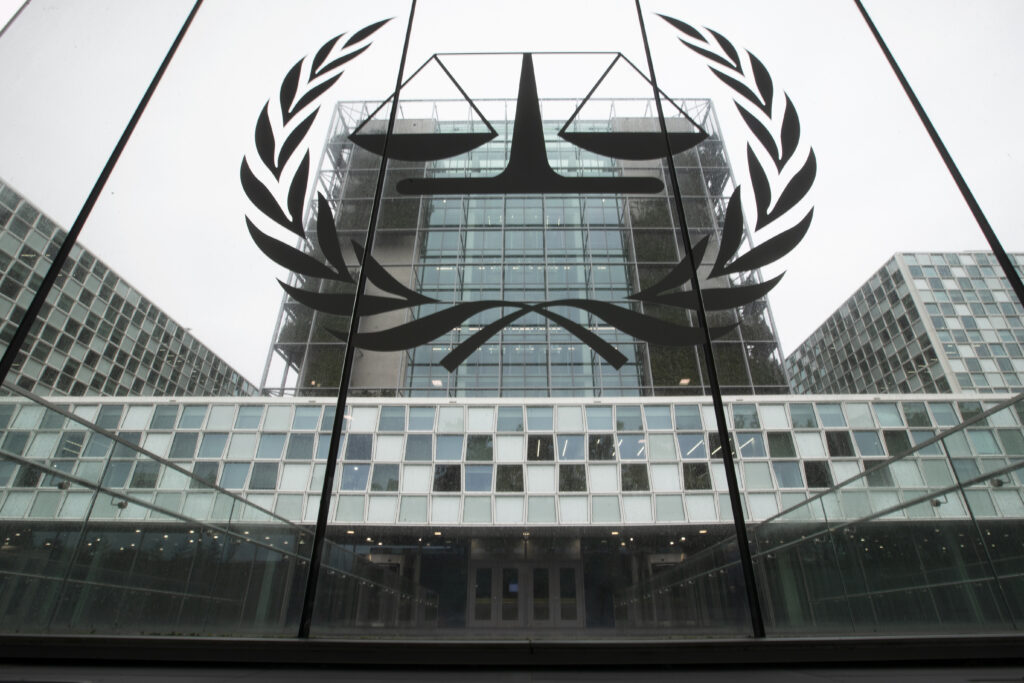
But Trump’s efforts to undermine the WTO are nothing compared with the all-out war he has declared on the International Criminal Court in The Hague. The Trump administration is mad at the ICC because it briefly investigated alleged U.S. war crimes in Afghanistan and indicted Israeli Prime Minister Benjamin Netanyahu (along with Israel’s former defense minister and a now-deceased Hamas leader) on war crimes charges.
In response, the administration has imposed stiff sanctions on eight ICC judges and three prosecutors. “The sanctioned ICC staff,” Reuters noted, “now sit on the U.S. Treasury Department’s Specially Designated Nationals list, alongside suspected al Qaeda terrorists, Mexican drug traffickers and North Korean arms dealers.” Not only are the ICC staff unable to travel to the United States, but they have had any U.S. assets frozen, and they have been denied access to dollar-denominated transactions. They are also cut off from U.S.-issued credit cards and from accounts with U.S.-based technology companies such as Microsoft, Amazon and Google. (Little wonder Europeans are developing alternatives to U.S. technology.)
In attacking the ICC, the Trump administration is in bad company. After Russian dictator Vladimir Putin was indicted for war crimes in Ukraine, the Kremlin responded by issuing arrest warrants for three ICC officials. Meanwhile, three African countries ruled by military juntas (Burkina Faso, Mali and Niger) announced that they would be leaving the ICC, which they accuse of “neo-colonialist repression.” But 125 other countries still belong to the ICC, and it is doing valuable work, such as putting on trial former Philippine president Rodrigo Duterte for allegedly authorizing extrajudicial killings as part of his “war on drugs.”
Reuters reports that Trump is worried that the ICC could someday prosecute him or his aides. That’s unlikely, despite the similarities between Duterte’s actions and Trump’s boat strikes, because the U.S. is not a party to the ICC, and it’s doubtful that any future president would turn over Trump for trial. But that this could even be a concern for Trump highlights a dispiriting turn of events: The U.S. has gone from siding with the law-abiding nations of the world to standing with the rogue regimes.
The post Trump has a strongman’s contempt for international law appeared first on Washington Post.