Zachary Karabell is an author and investor and writes “The Edgy Optimist” on Substack.
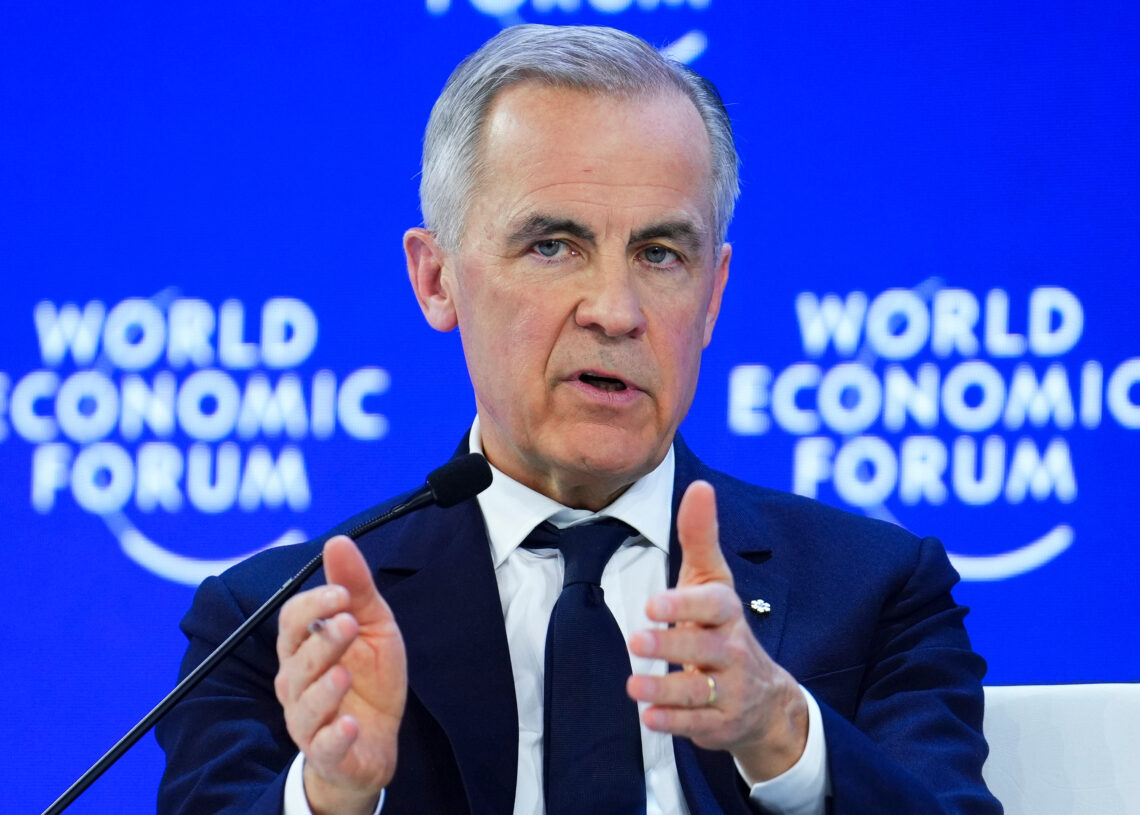
In the second year of the second season of the Trump Show, there is an emerging consensus among politicians, pundits and the public that we are entering a Hobbesian world of global disorder. That was epitomized in a memorable speech to the World Economic Forum by Canadian Prime Minister Mark Carney. He warned the Davos set that with the “rupture” in the global system caused by the new unilateralism of the United States, we are returning to an era of great-power rivalry where, to quote Thucydides, “the strong do what they can and the weak suffer what they must.”
It is also widely assumed that the world economy is fraying as well. “The post-war global economic order is finally on the verge of collapse,” professor Francisco H.G. Ferreira of the London School of Economics wrote in April. According to a Pew Research Center survey, a median of 70 percent of respondents in 25 countries said that global economic conditions posed a major threat to their nations.
But in economic terms, these words and mental models do not reflect reality. The world is thriving economically, more than ever and almost everywhere, to such a degree that it seems as if there is a funhouse-mirror effect between how people see conditions and what is happening in real life.
Take world GDP, or gross domestic product. You would think that the net effect of the past few years’ events — including the coronavirus pandemic and its hangover, President Donald Trump’s high-handed unpredictability, Russia’s bombardment of Ukraine, increasing Chinese authoritarianism — would be to depress global growth. Not so. According to the World Bank, global growth was 2.6 percent in 2025; according to the International Monetary Fund, it was 3.3 percent. Yes, that is down slightly from 2023 and 2024, but the world in general has become substantially more prosperous since the mid-20th century and growth typically slows as countries become richer and populations age. Dozens of developing countries, such as India, China, Indonesia, Brazil, Turkey and Vietnam, have seen extremely strong growth and middle-class wealth creation.
What about the economic chaos that trade wars fueled by new U.S. tariffs were supposed to unleash? Nowhere to be found in the numbers or in global trade flows. In spite of U.S. tariffs at their highest levels since the 1930s (albeit much lower than announced last April), total U.S. trade increased in 2025, while commerce between countries not involving the United States has blossomed. Though the U.S. remains a major importer and exporter, its percentage of world trade has shrunk as world trade has expanded. China’s exports to the United States have been dropping steadily, but its exports to the rest of the world have been rising even faster. Some of that is a way to circumvent tariffs, but much of it is simply because linkages between countries are increasing rapidly as the central role of the United States is decreasing.
It seems hardly a month goes by without some country or bloc of countries announcing a trade deal. Since September, the European Union has concluded agreements with India, Indonesia and the Mercosur countries of Latin America (Argentina, Brazil, Paraguay and Uruguay) — and it is currently negotiatingwith the United Arab Emirates, Australia and the Philippines. Canada recently inked an accord with South Korea, and Canada and China have been mulling a more comprehensive trade pact. Britain recently joined Asia’s Comprehensive and Progressive Agreement for Trans-Pacific Partnership. Almost every one of Africa’s 55 countries has signed on to the African Continental Free Trade Area. Central Asian republics are slowly creating their own free-trade zone, as well as with China.
Trade is only one symbol of a world moving forward with or without the United States. Most major economies continue to see better-than-expected growth. Urbanization, higher education levels, more middle-class consumption and more responsive governments are dominant themes for most countries, rather than the wars, repression and ratcheting regional tensions that make the headlines. Yes, those headlines reflect real events, but they are not proportionate. There is no reporting about economic strength in Southeast Asia commensurate with the dire discussions about the dire situations in Sudan or Iran or Gaza.
Part of the problem is the nature of news and politics: If it doesn’t bleed, it doesn’t lead. But the root of the mismatch is that many of the best things happen quietly while the worst things happen loudly. The chaos caused by Trump’s designs on Greenland affected attitudes, but it didn’t touch the daily lives of the billions of people in India, Argentina, Brazil, Indonesia, Saudi Arabia and elsewhere who continue to see meaningful gains in material prosperity.
The disconnect between very grim sentiment and rather positive trends has consequences. It creates a pervasive climate of fear, apprehension and pessimism that can, over time, shape actions and foster self-fulfilling prophecies. Yes, the world of politics appears to be fracturing from the post-1945 system, with no clear sense of what comes next. And yes, the United States appears to be breaking conclusively with that order and no longer upholding global economic rules. That may prove harmful to the United States in the long term, but for the moment, it doesn’t appear that harmful to the world at large. That world — where more people than ever have access to more food, shelter, health care and the physical and virtual benefits of the modern age — is far from perfect. Still, it is far better than it was for much of the post-1945 period that is viewed with such rueful nostalgia.
The post The world economy is thriving. It reveals a disconnect. appeared first on Washington Post.