The Epstein files name men around the world. Ehud Barak, Israel’s former prime minister, stayed at Jeffrey Epstein’s Manhattan apartment multiple times. A close associate of the Saudi crown prince, Mohammed bin Salman, exchanged messages with Epstein about “opening so many legs.”
In some places, embarrassment has turned into political scandal: An adviser to the prime minister of Slovakia has resigned. So has a former French education minister who led the Arab World Institute in Paris. But the biggest fallout has been in Britain, where the prime minister, Keir Starmer, is now under pressure.
Today I’m writing about his Epstein troubles.
Keir Starmer’s Epstein problem
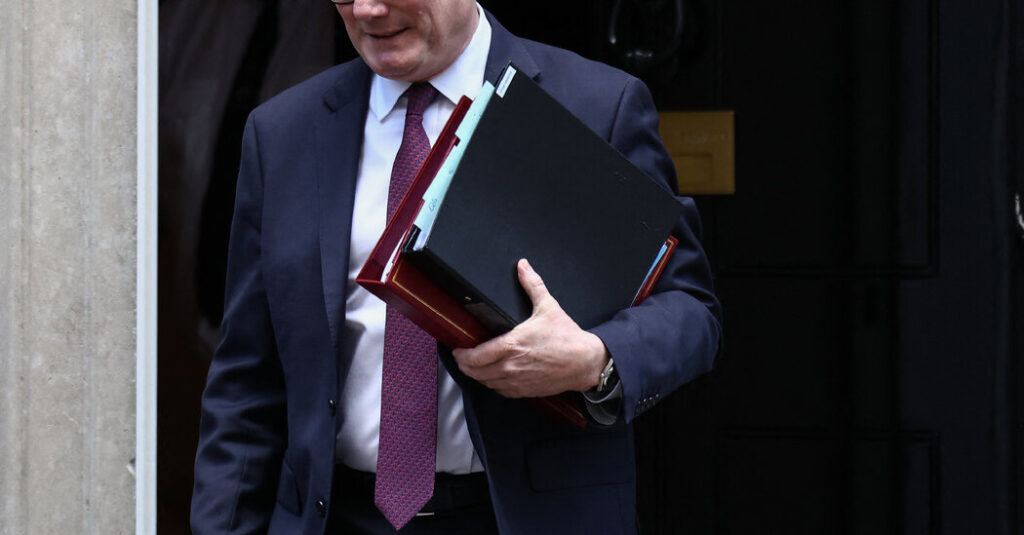
As far as we know, Keir Starmer never met Jeffrey Epstein. He never went to Epstein’s island and never sent him raunchy emails. He might be brought down by the Epstein files anyway.
The first signs of trouble came in September, after Peter Mandelson, Starmer’s ambassador to the United States, was shown to have had close ties with Epstein, even after his 2008 conviction for having sex with a minor. Mandelson was fired.
But that wasn’t the end of it. On Sunday, Starmer’s chief of staff, a Mandelson protégé who lobbied for his appointment, resigned after even worse emails emerged between Mandelson and Epstein. Starmer’s communications chief resigned yesterday. A senior Labour politician openly called for Starmer to step down.
There seems to be little doubt that the Epstein scandal has damaged the Starmer government. He won decisively in 2024. Now, few analysts see him lasting until the 2029 elections.
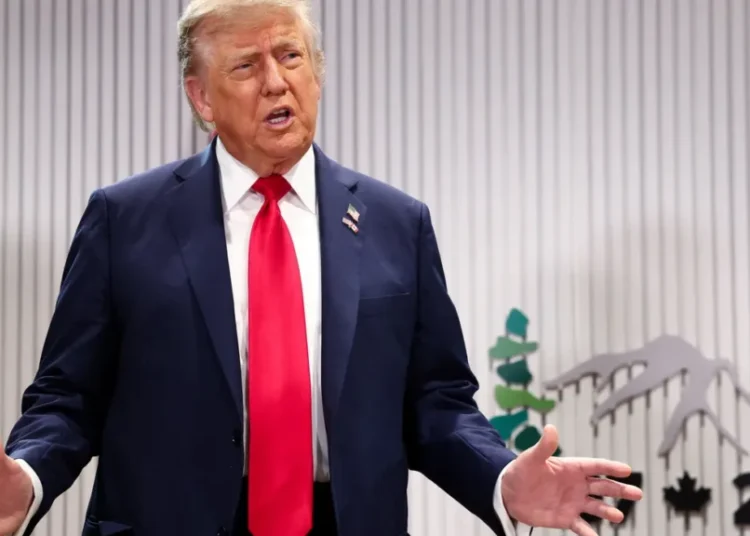
It’s a striking outcome. At their origin, the Epstein files are an American scandal. Why have they become a crisis for Starmer — but not for President Trump, who was a close friend of Epstein’s? (Read this for more details about Trump in the Epstein files.)
“Prince of Darkness”
Mandelson, the man at the center of this, has held multiple cabinet positions in the British government. He was appointed ambassador to the U.S. in December 2024.
It was known at the time that he’d had contact with Epstein. Red flags were raised in the news media. Starmer said the Mandelson vetting process had included questions about his dealings with Epstein; in the end, he chose to appoint him anyway. “Sorry for having believed this man’s lies and appointed him,” Starmer said last week.
Mandelson, nicknamed “The Prince of Darkness,” was known as an operator, which was seen as a virtue in some corners: “Ruthless, cynical and cunning — why Mandy is the perfect choice as U.S. ambassador,” ran one headline in the conservative Daily Mail at the time.
As one British journalist, Lewis Goodall, noted this week, the same qualities that led some to view him as a good ambassador in Trump’s Washington — his comfort level with the rich and powerful, for instance — were those that brought him into Epstein’s orbit.
Newly released files suggest an even closer friendship between the two men than previously known. They include emails in which Mandelson jokes about strippers with Epstein. In another email, Mandelson sends Epstein a confidential document intended for the prime minister at the time, Gordon Brown.
Starmer and Mandelson weren’t known to be close friends. But critics argue that Starmer should step down for making a serious error of judgment. By appointing an associate of a notorious sex offender, they say, he did what many close to Epstein have done: chose political expediency over doing the right thing.
Pre-populist politics
Still, it’s impossible to understand the scale of the response to this latest batch of Epstein emails without understanding the state of British politics.
I spoke to Esther Bintliff, our U.K. editor. She told me that Starmer had been seen as a weak leader for a long time. “There were already a lot of people worried that he’s just not the right leader to take Labour into the future,” she said.
His critics had been waiting for something to seize on, Esther said. Mandelson’s Epstein emails were just the thing.
As of late Monday, it seemed unlikely that Starmer would step down imminently. There is no clear successor in place, and there will be local elections in May in which Labour is expected to perform badly. It wouldn’t make much sense for Starmer to step down now and let his successor take the hit, Esther said.
But the Epstein saga seems to be shaping his political fate in a way that Trump has so far avoided.
Starmer has billed himself as a centrist, a decent man, the one holding populist forces at bay. There is nothing connecting him directly to Jeffrey Epstein.
But Starmer still represents mainstream elites — the very forces Epstein has become linked with, and that Trump campaigned against. When viewed through that lens, an outcome that at first seems paradoxical instead fits in this political moment.
Other news about the Epstein files:
-
Ghislaine Maxwell, Epstein’s longtime companion, refused to answer questions during a congressional hearing.
-
The New York real estate mogul Andrew Farkas had a deep friendship with Epstein, whom he called “one of the blessings” in his life.
MORE TOP NEWS
Israel made it easier to settle the West Bank
Israel took greater control over the occupied West Bank by making it easier for Jewish settlers to buy land there.
The changes were made by the Israeli security cabinet at a closed-door meeting on Sunday. Eight Arab and Muslim countries, including Egypt, Jordan and Turkey, denounced the measures and accused Israel of “accelerating attempts at its illegal annexation and the displacement of the Palestinian people.”
The move came after Trump recently rejected annexation and acknowledged the Palestinians’ aspirations to statehood in his peace plan for Gaza. Prime Minister Benjamin Netanyahu is set to meet Trump in Washington tomorrow.
OTHER NEWS
-
The media mogul Jimmy Lai was given a 20-year prison sentence, showing how Hong Kong is enforcing Beijing’s playbook on dissent.
-
Iran has detained at least five prominent members of the country’s reformist opposition movement as the government expands its fierce crackdown.
-
Prince William traveled to Saudi Arabia for his first diplomatic trip to the country.
-
Japanese stocks surged as investors embraced Prime Minister Sanae Takaichi’s landslide election victory.
-
At least 53 migrants were missing after their rubber dinghy capsized last week off the coast of Libya.
-
To Lam is Vietnam’s most powerful leader in decades. Here’s his vision.
WHAT ELSE IS HAPPENING
-
Bad Bunny’s performance at the Super Bowl showcased Puerto Rican pride at a tense moment in American politics. Trump described the show as “absolutely terrible.”
-
A large study found that two to three cups of coffee a day might reduce the risk of developing dementia — but not if it’s decaf.
WINTER OLYMPICS
Skiing: Mathilde Gremaud of Switzerland edged out Eileen Gu of China for gold in the women’s slopestyle.
Figure skating: The quad axel is considered an impossible jump. Here’s how Ilia “Quad God” Malinin lands it.
Snowboarding: At 52, Claudia Riegler has become the oldest female athlete to participate at the Games.
Top of The World: The most clicked link in your newsletter yesterday was about Lindsey Vonn’s downhill crash at the Olympics.
Follow the latest action and see the medal count here.
IMAGE OF THE DAY
— A couple married live onstage during Bad Bunny’s Super Bowl halftime show. The pair had initially invited the singer to their wedding but instead received an invitation to join the show, Bad Bunny’s management said.
MORNING READ
At 77, Haruki Murakami is still remarkably prolific. He recently finished a new novel, which will be published in Japan this summer and is being translated into English.
But when Murakami sits down to write, he has no idea what’s going to happen. He doesn’t regard himself as a masterly prose stylist or a brilliant storyteller. In his telling, his unique skill is his ability to travel between worlds and report back.
“Every time I write fiction, I go into another world — maybe you can call it subconsciousness — and anything can happen in that world,” he said. “I see so many things there, then I come back to this real world and I write it down.” Read the full interview.
AROUND THE WORLD
Kite fights are back in Lahore
The century-old Basant kite festival, renowned for dogfights between kites flying over Mughal-era landmarks, recently returned to Pakistan’s second-largest city. It had been banned for nearly two decades after a series of deaths and injuries caused by the glass-coated lines used to cut rival kites loose.
The return of the festival came with a number of restrictions, but it prompted a burst of public elation among Pakistanis coping with problems like alarming levels of air pollution and tightening military rule.
“Kite flying is in the blood of Lahoris,” said Yousaf Salahuddin, a prominent cultural figure in the city. “For a weekend,” he added, “the whole city is on Lahore’s roofs.” See the kite fights.
RECOMMENDATIONS
Connect: What does it mean to be touch-starved?
Watch: “Sirat,” a thriller about a man’s search for his lost daughter, is set amid raves in the Moroccan Sahara.
Rest: Here are five sleep habits to steal from Olympians.
Design: Choose wallpaper like a pro.
RECIPE
There are many ways to cook lablabi, the cumin-and-garlic-scented Tunisian chickpea soup. This version has crunchy, spice-sprinkled chickpeas garnishing the top and a creamy, silky broth. Add a squeeze of lemon at the end for a bright tang.
WHERE IS THIS?
Where is this proposed site for a huge, new data center?
TIME TO PLAY
Here are today’s Spelling Bee, Mini Crossword, Wordle and Sudoku. Find all our games here.
You’re done for today. See you tomorrow! — Katrin
We welcome your feedback. Send us your suggestions at [email protected].
Katrin Bennhold is the host of The World, the flagship global newsletter of The New York Times.
The post Starmer’s Epstein Crisis appeared first on New York Times.