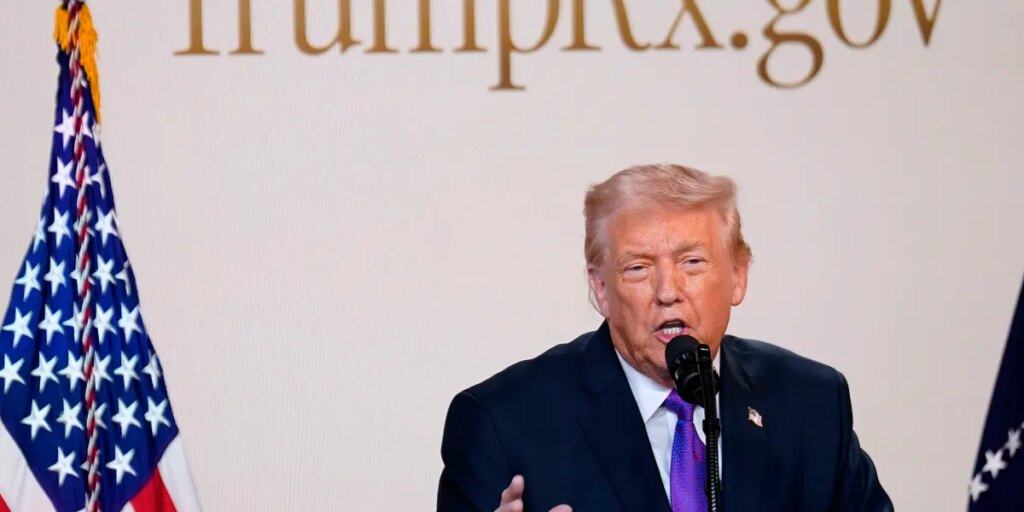
- In today’s CEO Daily: Diane Brady reports on CEOs’ reaction to the launch of TrumpRx.
- The big leadership story: The first-ever CEO of the IRS is drawing on his private sector experience.
- The markets: Up globally, with Japanese stocks hitting fresh highs after Prime Minister Sanae Takaichi’s party won a general election landslide.
- Plus: All the news and watercooler chat from Fortune.
Good morning. After months of waiting, the Trump administration last week launched TrumpRx.gov, a direct-to-consumer platform offering 43 brand-name prescription drugs with varying levels of discounts. I’ve been talking to CEOs in all parts of the health care industry, from the drugmakers and insurers to those leading digital health platforms that now compete—and cooperate with—the new government site. “It’s another platform that Americans can use to compare pricing,” said Wendy Barnes, CEO of GoodRx, one of several platform partners with TrumpRx. “At present, I rate it positively from our perspective because it expands our reach and aligns with our mission.”
So what’s the takeaway for leaders looking at rising health care costs?
It’s probably not relevant to those who have insurance. Many of the listed prices are higher than what 92% of the U.S. population now pays because they have insurance, and the site excludes low-cost generic drugs. People on government plans probably aren’t eligible to use the discounts. Moreover, the money spent on TrumpRx can’t be counted toward an annual deductible or out-of-pocket maximum. Where it might save money: some fertility or GLP-1 drugs not covered by insurers.
This won’t impact Big Pharma’s business model. No drugmaker is going to embrace a site that states: “Thanks to President Trump, the days of Big Pharma price-gouging are over.” But as one CEO argued: “We’ve negotiated similar prices with other DTC (direct-to-consumer) platforms. This is just another label.” Many of the drugs are off-patent or already offered at deep discounts. What’s not on the platform: Merck’s lucrative Keytruda cancer drug, Bristol Myers Squibb’s blood thinner Eliquis, Abbvie’s Humira, Rinvoq and Skyrizi, as well as Dupixent, which is jointly developed by Regeneron and Sanofi. If there’s a hero behind TrumpRx, it’s Pfizer CEO Albert Bourla, whose company makes 31 of the 43 listed drugs.
This could impact industry innovation. There are many arguments and ideas to bring more transparency, flexibility and consumer choice to the realm of drug pricing. Most involve removing regulatory obstacles to encourage innovation, not an executive order for a platform bearing Trump’s name, which increases the likelihood that it will only last as long as his tenure. Existing platforms now have to compete for mindshare with a government rival. Also raising questions: TrumpRx’s ties to vendor BlinkRx, where Donald Trump Jr. sits on the board. That said, many applaud the effort as an important step in addressing rising health care costs. Said Barnes: “I think just shining a spotlight on the idea that consumers do have power when it comes to shopping for drug pricing is a lesson that we’re learning as Americans.” Contact CEO Daily via Diane Brady at [email protected]
The post Some health care CEOs are praising TrumpRx for empowering consumers to compare drug prices appeared first on Fortune.