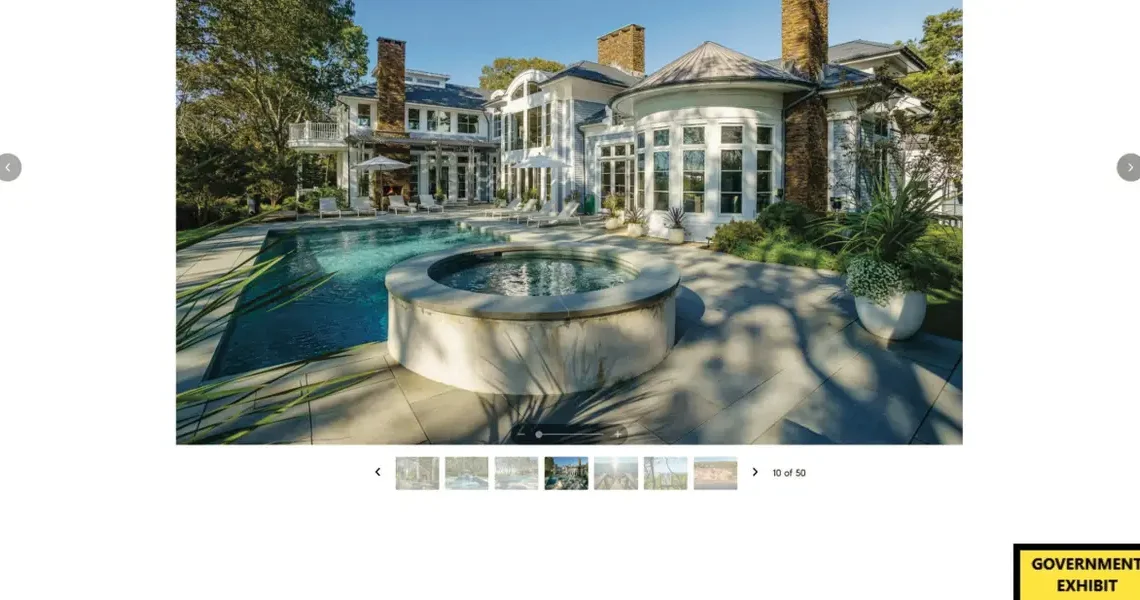
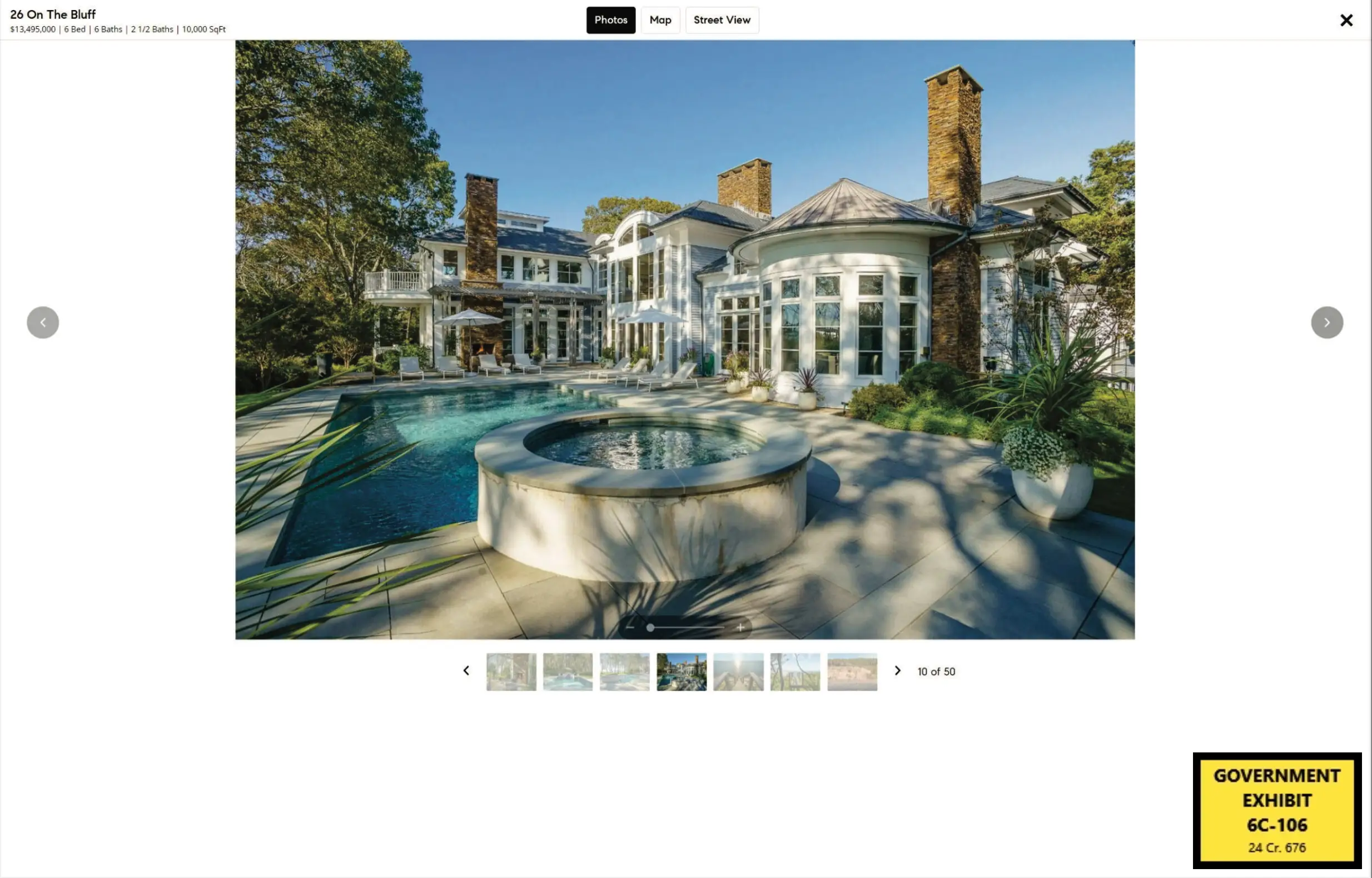
A waterfront Hamptons mansion. A five-star hotel in Las Vegas. Posh resorts in Aspen and the Bahamas.
Luxurious? No question. But whether these and other costly locales are also crime scenes is a central question in the Alexander brothers’ sex trafficking trial, which on Monday starts its third week before a federal jury in Manhattan.
The wealthy brothers — Tal and Oren Alexander sold high-end real estate, and Alon Alexander was a security firm executive — are accused of using luxury homes and resorts as bait in a decadelong sex trafficking conspiracy.
And so throughout the trial, six alleged trafficking victims are slated to tell stories of enticement and abuse as the courthouse screens fill with judge-approved photographs of ski resorts and beachfront homes.
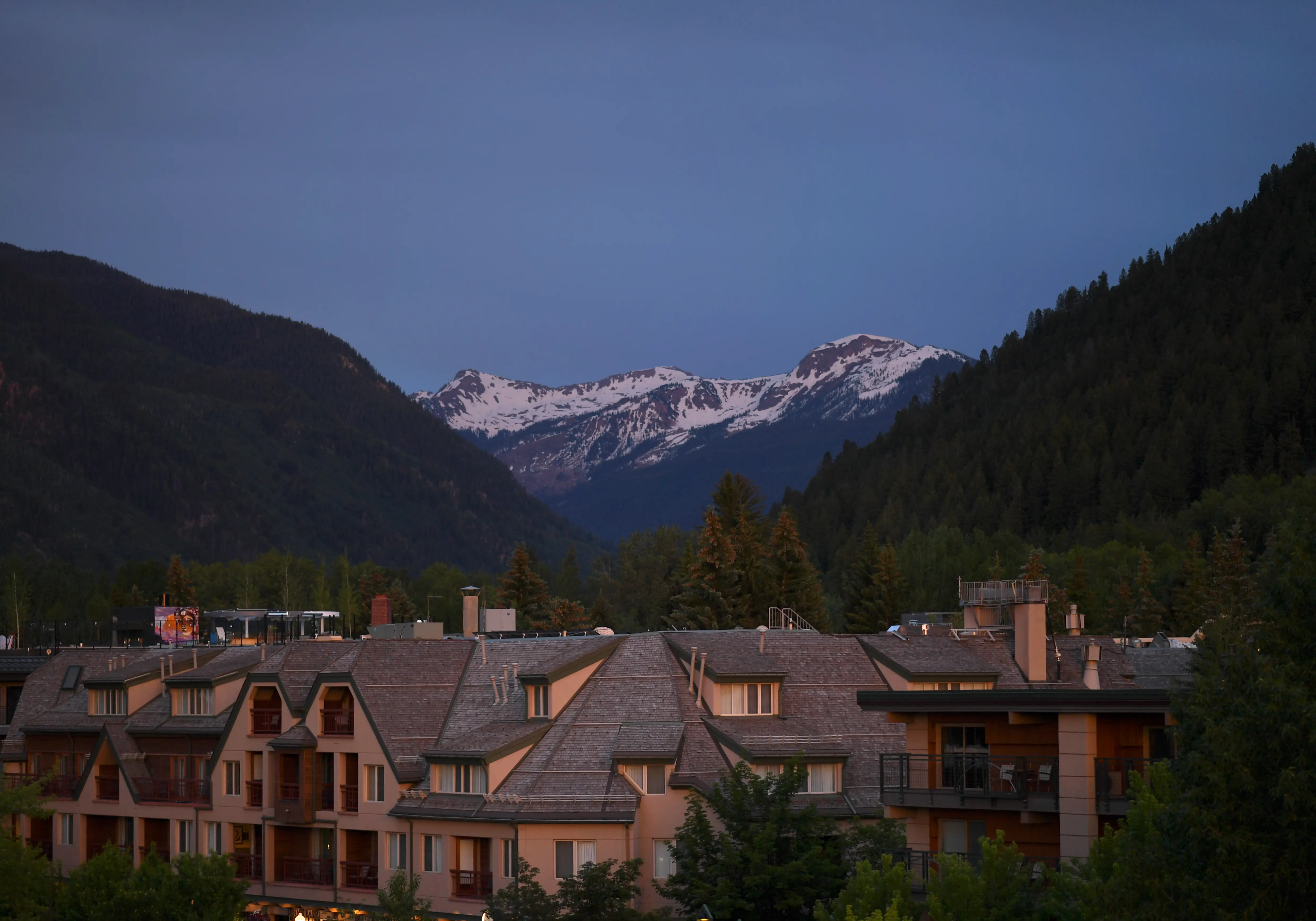
Prosecutors say that in Aspen, three accusers — two of them minors — were sexually assaulted at The Little Nell, a world-class ski resort, on one night in January 2017.
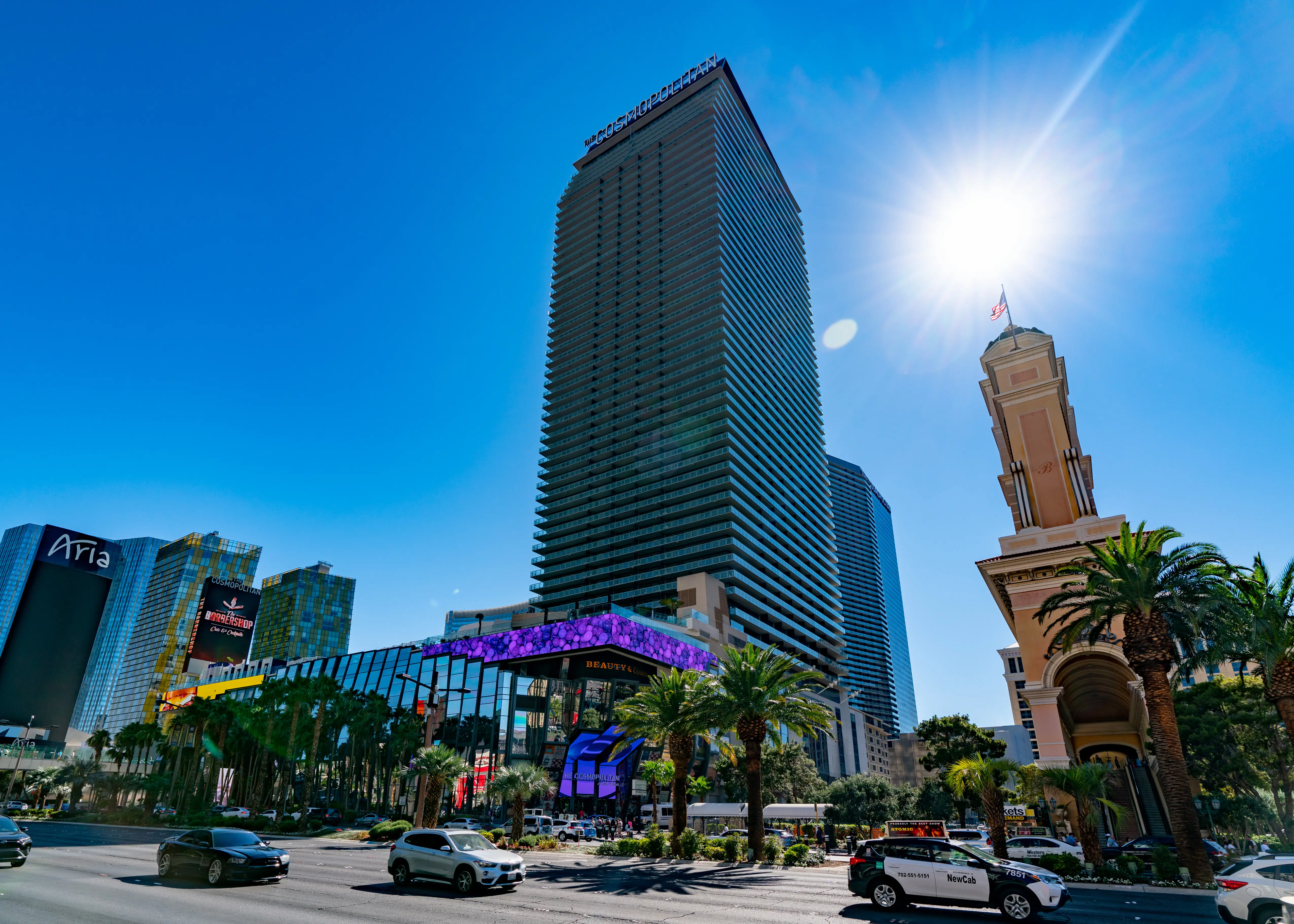
The Cosmopolitan of Las Vegas, a five-star casino resort and events space, is the location for what prosecutors say were sexual assaults on two women on one night in August 2017.
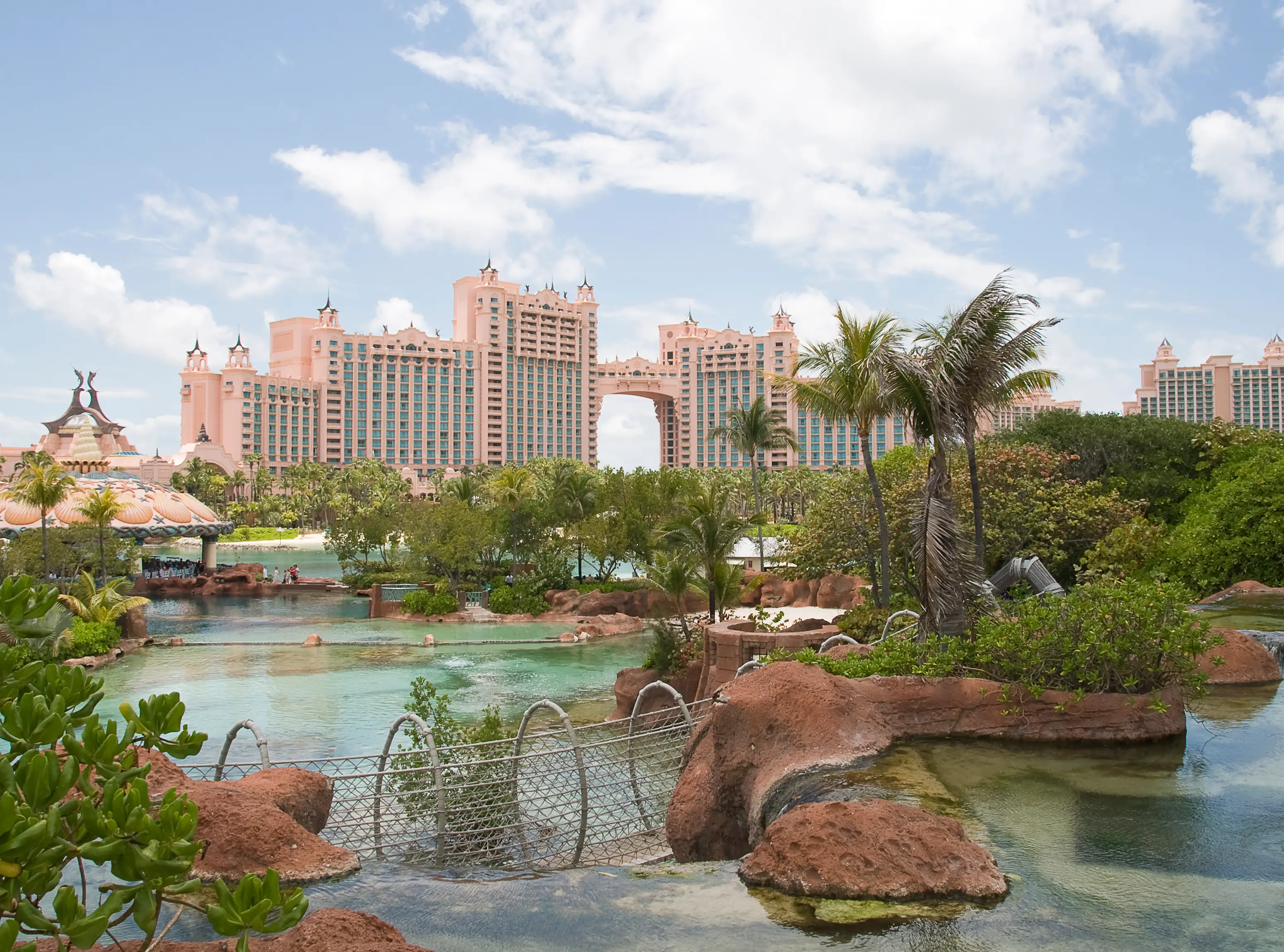
And in December 2017, prosecutors say, a woman was sexually assaulted at the Atlantis Paradise Island resort.
The brothers have denied the allegations, and their lawyers are arguing that any sex was consensual.
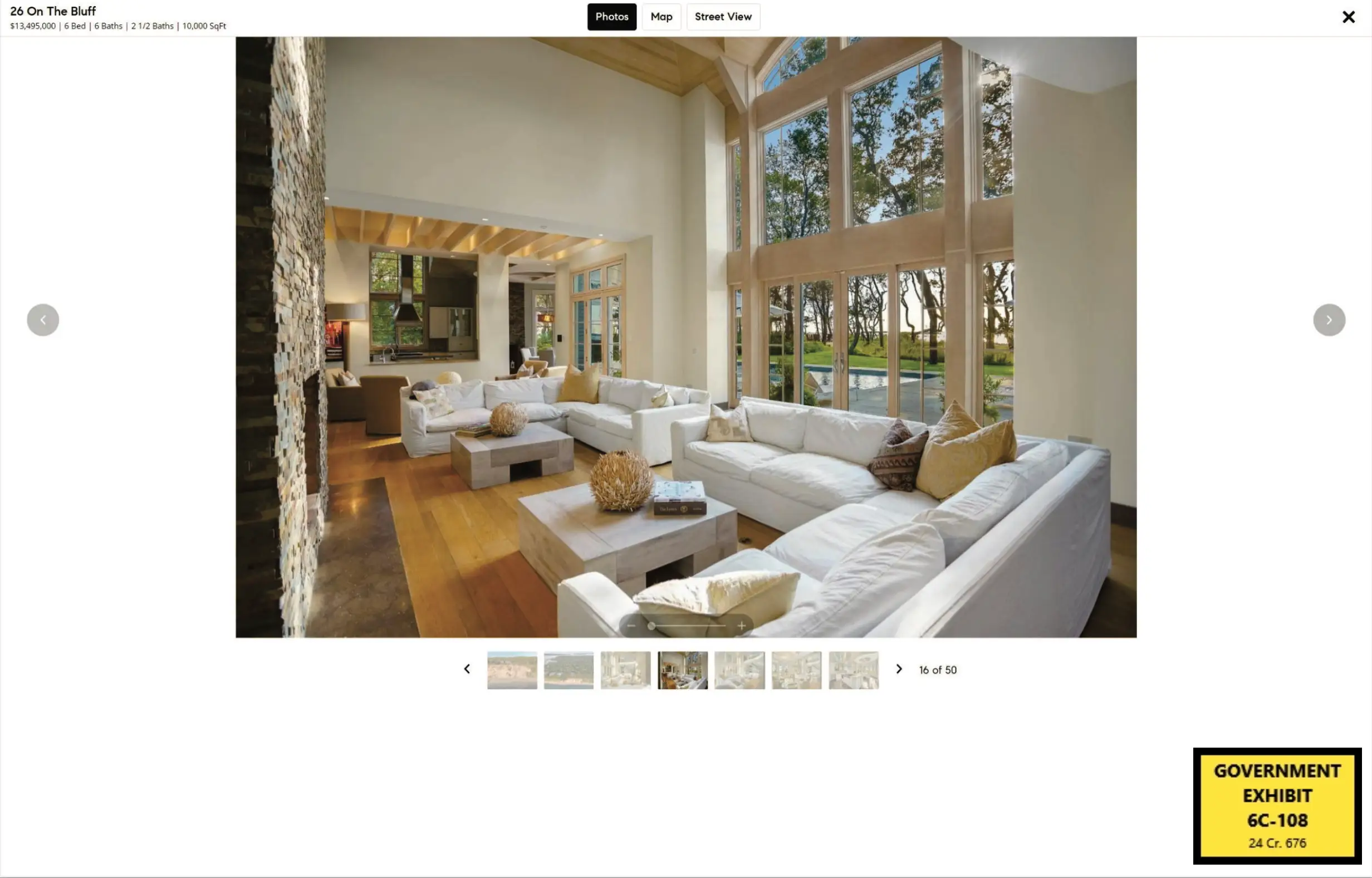
At trial so far, prosecutors have shown the jury photographs of a 10,000 square foot Sag Harbor mansion, the site of two alleged sex traffickings. As visually stunning as these photos may be, there’s a dry but important reason for their use in the trial.
To prove sex trafficking, prosecutors must convince the jury that something of value was offered to cause a victim to cross state lines — some kind of “material benefit” as the indictment terms it.
Prosecutors say these material benefits, these lures, were the women’s invitations to all-expense-paid trips to homes and resorts in the Hamptons, Aspen, and the Bahamas.
“It was the biggest home I’d ever been in,” a woman who testified under the pseudonym Maya Miller told jurors of the Sag Harbor mansion where she said she was grabbed by the neck in the shower and raped by Tal Alexander in 2014.
“This is how you thank me for inviting you to a beautiful home?” she said Tal angrily asked when she tried to rebuff his advances.
Lawyers for Tal Alexander, 39, and twins Oren and Alon Alexander, 38, are strenuously defending the brothers at trial, repeatedly pointing out that none of the accusers called the police, and that many exchanged friendly-sounding messages with their alleged attackers afterward.
Any sex, the defense argues, was agreed to and only later regretted. In fact, the defense argues, the accusers had romance, not just a luxury vacation, on their minds when they agreed to cross state lines.
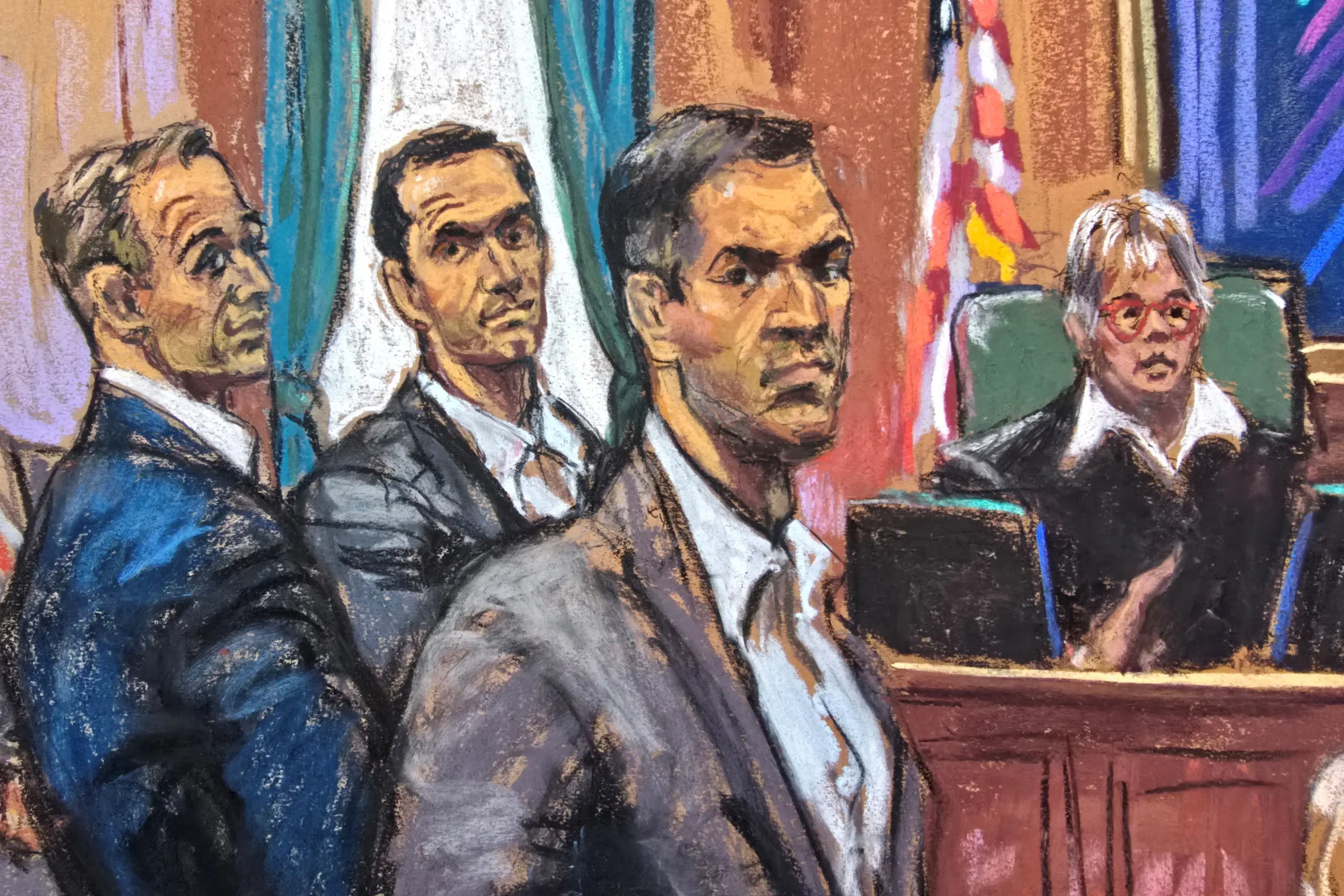
In accepting the brothers’ invitations, often after lengthy social media exchanges, the accusers weren’t planning “to play backgammon, to watch Netflix,” Teny Geragos, a lawyer for Oren Alexander, told jurors during opening statements.
Prosecutors have countered that the women sought romantic getaways, not rape, and could not have afforded these weekend trips if the brothers had not promised to foot the bill — the “material benefit” without which sex trafficking can’t be proven.
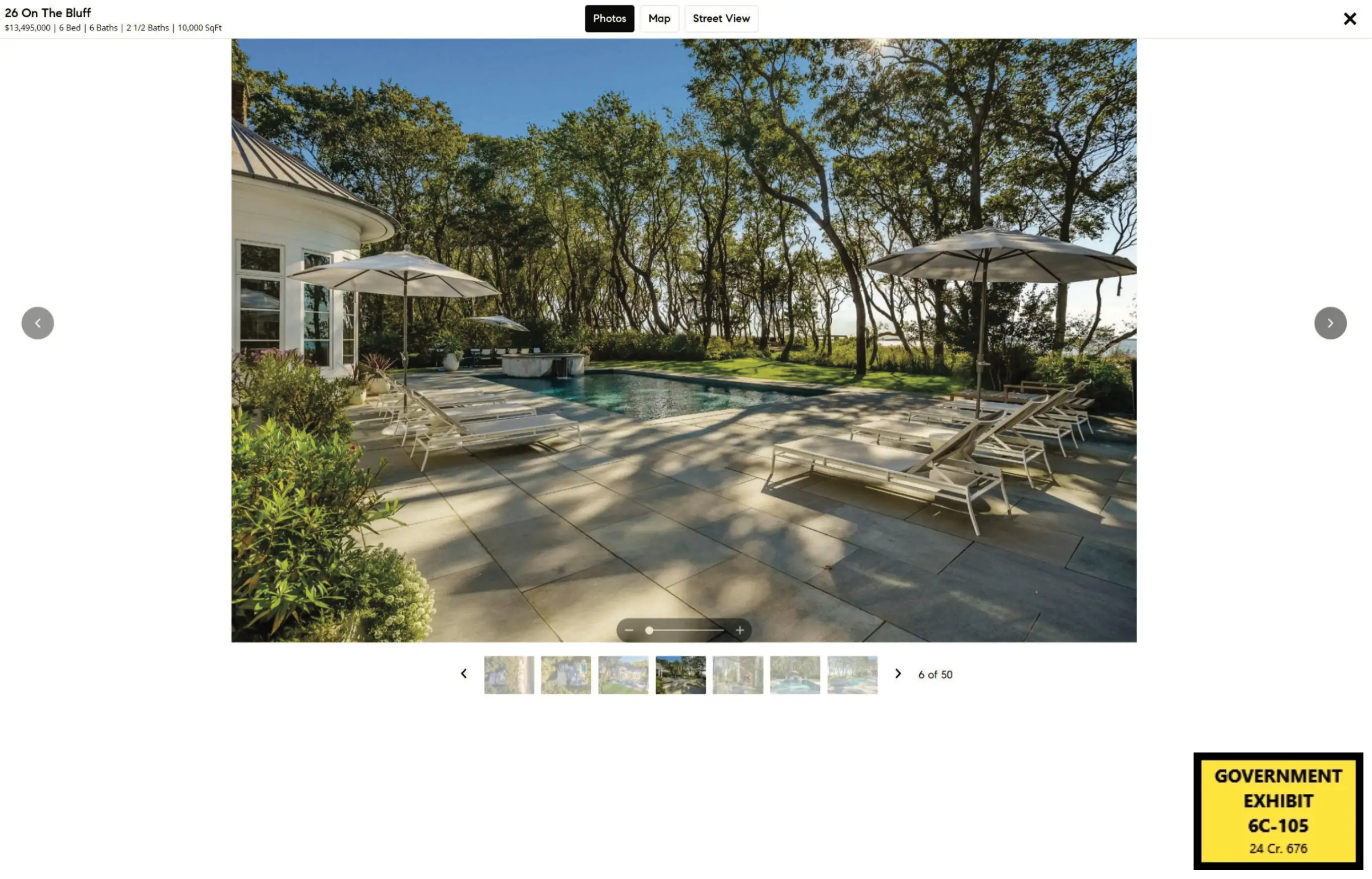
“They said they would get private chefs, boat trips, everything would be covered,” a second trafficking accuser explained of her decision to travel from Chicago to the Sag Harbor mansion with her friend Alison on Labor Day weekend in 2016.
The woman, who testified as Bella Koval, told the jury she was drugged during a pool party on their second day at the home.
Oren Alexander gave her something “fruity” in a red Solo cup that left her barely able to walk, she testified. She told jurors that the other twin, Alon, then gave her a glass of water after helping her to a bedroom, and raped her while “my whole body was tranquilized.”
So far, the jury has heard testimony from five rape accusers — the two from the Sag Harbor trips, and three other women who described assaults that did not involve interstate travel.
Prosecutors have roughly two more weeks of witnesses to call. The indictment cites eight alleged victims; as many as 16 additional accusers may also testify in support of the top count of conspiracy to commit sex trafficking.
The Hamptons will continue to figure prominently in the trial.
Prosecutors say that in 2009, three sex trafficking accusers, one a minor, were assaulted during two separate weekends at a five-bedroom home in Southampton that currently rents for between $12,500 and $20,000 a month.
Prosecutors also say that on Memorial Day weekend in 2011, a woman was sex trafficked in a 6-bedroom East Hampton home that real estate listings say is worth $4 million.
Read the original article on Business Insider
The post Luxury as lure: the role of high-end real estate in the Alexander brothers’ sex trafficking trial appeared first on Business Insider.