Last summer, Japan’s long-dominant political force, the Liberal Democratic Party, faced a crisis. Plagued by scandal, it had suffered a series of electoral defeats so devastating that its leader, Japan’s prime minister, was forced to resign.
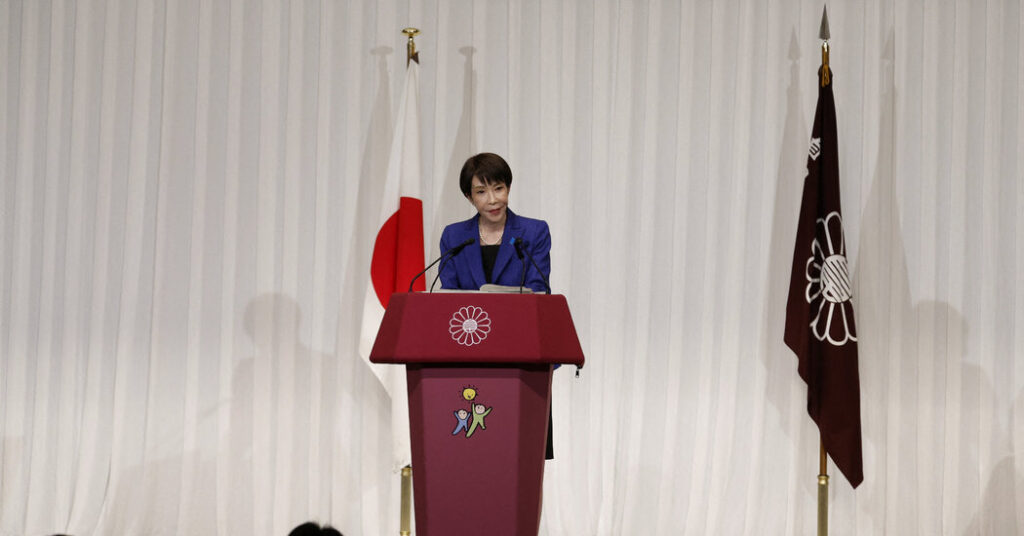
Then, just as the political obituaries were being written, the Liberal Democrats found a savior: Sanae Takaichi, a veteran conservative lawmaker who in October became the first woman to serve as Japan’s prime minister.
Ms. Takaichi, 64, spoke plainly and energetically — sometimes with Trumpian flourishes — about immigration, taxes and the high cost of living. She had a knack for connecting with young people: quoting lines from manga, raving about the Hanshin Tigers baseball team and the hard rock band B’z, and speaking candidly about the stresses of choosing her wardrobe when she took her place on the global stage.
On Sunday, only 110 days into her tenure, Ms. Takaichi achieved what had seemed impossible only a few months ago: the biggest electoral victory in the L.D.P.’s 71-year history. In a snap election, the party secured 316 seats, up from 198, garnering a supermajority for the first time in the 465-member House of Representatives.
Ms. Takaichi can now claim a resounding mandate at home for her hard-line policies, which include cracking down on immigration and standing up more forcefully to China’s growing military and economic clout.
Ms. Takaichi on Monday said that the victory reflected the public’s belief in her administration’s proposals to strengthen national security and reinvigorate the economy.
“Yesterday, the public gave me a strong push to see this policy shift through at all costs,” she said at a news conference in Tokyo. “I am truly grateful.”
The prime minister’s office in Japan can sometimes feel like a revolving door, but Ms. Takaichi appears eager to become an enduring, transformative figure in the mold of her mentor, Shinzo Abe, Japan’s longest-serving prime minister. He was assassinated in 2022, after he had left office.
“She is really in the driver’s seat,” said Sheila A. Smith, a senior fellow at the Council on Foreign Relations. “She can set the legislative agenda and decide what comes up and what doesn’t.”
But while Ms. Takaichi was able to save her party in the election, she has not yet addressed its deeper challenges, including lingering distrust among voters over the party’s political finance scandals, and concerns about the older generation’s grip on power in Japan. Ms. Takaichi’s approval ratings have been consistently above 60 percent, about double the rating for the Liberal Democratic Party.
“This is a Takaichi win,” Ms. Smith said. “But it’s not necessarily an L.D.P. win.”
Ms. Takaichi came into office last fall as the Liberal Democrats, who have led Japan for all but four years since 1955, were reeling from stinging electoral losses. The party had just lost its majority in the House of Councillors, leaving it in the unusual position of being a minority in both houses of Parliament, known as the Diet.
She moved quickly to rehabilitate the party’s image, promising action on two issues that the public seemed increasingly concerned about: the rising cost of living and immigration. Her administration eliminated a tax on gasoline last year, and it has signaled it might suspend the consumption tax on food.
Ms. Takaichi responded to a wave of anti-foreigner sentiment by promising to make it tougher for foreigners to become citizens. Under her watch, the government has drafted proposals to encourage people seeking residency to enroll in Japanese language classes. Her administration also wants to force buyers of real estate to disclose their nationalities. And the government has promised to work more aggressively to disperse tourists around the country to avoid overcrowding in the most popular areas.
Her message resonated with young people, who were drawn by her nationalistic calls for a “strong and prosperous” Japan and her colorful social media posts.
She has proved a master of the viral moment. Last month, for example, she invited the president of South Korea for a K-pop jam session on drums. (Ms. Takaichi is an amateur heavy metal drummer.)
She has appealed to the public through her posts on X. In January, for example, she wrote a 1,231-character post detailing her busy holiday season, describing how she unpacked boxes at her new residence; held a call with President Trump; dealt with issues related to North Korea and Venezuela; and cooked for her husband. The post has been viewed more than 26 million times.
Now comes the hard part. In Parliament, Ms. Takaichi must work to some degree to build support in the House of Councillors, the less-powerful upper chamber where the Liberal Democrats are still a minority — especially if she decides to move forward with proposals to revise Japan’s Constitution to unfetter its military.
She also faces pressure from abroad. The Trump administration has pushed Japan to accelerate its military spending and put up $550 billion to invest in American projects.
China has led a campaign to punish Japan in response to a comment Ms. Takaichi made on Taiwan, a self-governed democracy that Beijing claims is part of its territory. Ms. Takaichi told Parliament in November that a hypothetical Chinese attack on Taiwan could trigger a military response from Tokyo.
The Chinese government showed no signs of backing down on Monday. Asked about Ms. Takaichi’s election victory, Lin Jian, a spokesman for China’s foreign affairs ministry, said Japan should “follow the path of peaceful development instead of repeating past mistakes.” He urged her to retract her comment on Taiwan.
In the near term, Ms. Takaichi seems focused on seizing on the Liberal Democrats’ new momentum. She said on Monday that the party had earned the public’s trust.
“That’s why the party will unite, grit its teeth and fulfill our promises to the public,” she said. “I will lead the way and see this through.”
Hisako Ueno and Kiuko Notoya contributed reporting from Tokyo, and Pei-Lin Wu from Taipei.
Javier C. Hernández is the Tokyo bureau chief for The Times, leading coverage of Japan and the region. He has reported from Asia for much of the past decade, previously serving as China correspondent in Beijing.
The post How Japan’s Leader Rescued Her Party from the Abyss appeared first on New York Times.