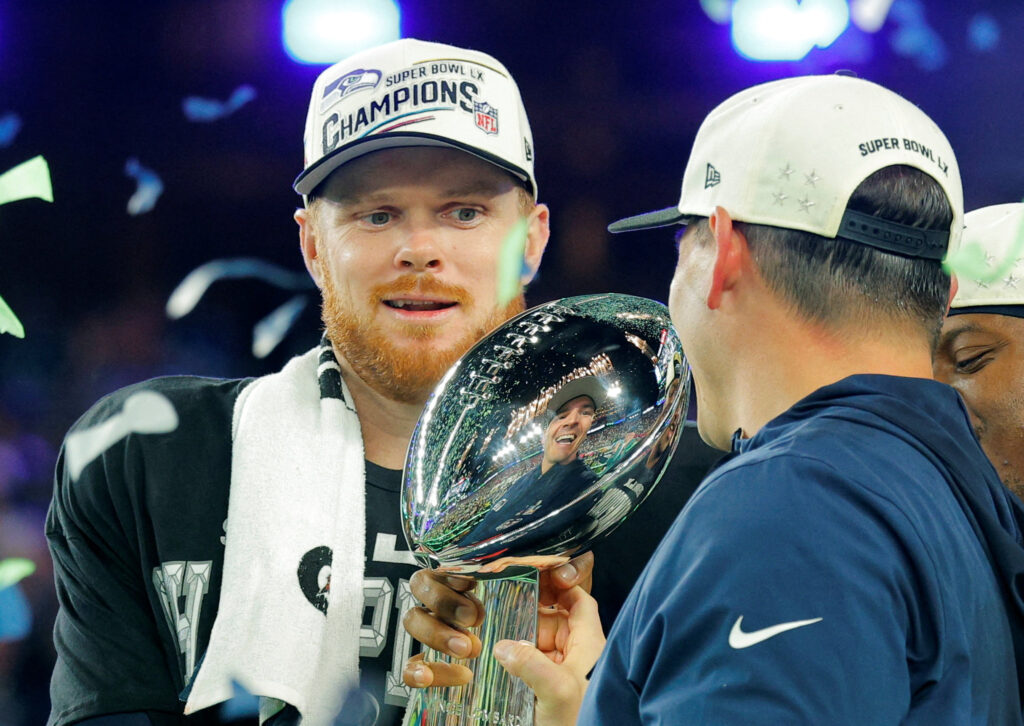
Winning a Super Bowl is a career-defining achievement for any NFL player. Yet California’s political leaders have managed to make victory bittersweet for everyone involved.
The Golden State’s top income tax rate of 13.3 percent is the highest in the country. Players on the winning team of Sunday’s game in Santa Clara will receive an extra $188,000 each, and players on the losing team are getting $113,000. Paying taxes on that may be no big deal for pro athletes, but they are also required to pay taxes based on the number of “duty days” they spend working in-state. For the Super Bowl, that’s usually about 10 days.
California calculates the number of days worked in the state against the value of a player’s base salary and bonus. Because of the wide range of payouts, tax bills diverge widely. Policy analyst Jared Walczak created a calculator to see how different players will be taxed.
Losing Patriots quarterback Drake Maye is only in his second year in the league, with a relatively low base salary and no allocatable bonus compensation. His California tax bill will be $20,363.
Victorious Seahawks quarterback Sam Darnold has a California tax bill of at least $202,102, which is bigger than the default victory bonus. On top of that, his contract included an additional $4 million in bonuses to drive his tax bill even higher.
Two years ago, when the Super Bowl was in Nevada, players didn’t need to worry about this because the Silver State has no income tax. And when the Raiders moved from Oakland to Las Vegas a few years before that, every player got a de facto pay hike.
Pro athletes pay accountants to figure out their taxes, but the same laws also apply to staffers who travel with the team and earn middle-class salaries. They get nickeled-and-dimed by different tax collectors through the regular season.
Most people ignore these laws, but 22 states say that working there for even one day means someone must file a tax return. Other states have enacted various thresholds below which someone does not have to file, or they don’t have an income tax at all.
Legislation introduced in Congress would establish a 30-day threshold for every state, a sensible policy that would make tax compliance easier for everyone, not just NFL stars. Working for just a few days in another state — whether you’re attending a business meeting, installing a roof or defeating the New England Patriots — should not generate another tax bill.
The post California to Seahawks: Pay up appeared first on Washington Post.