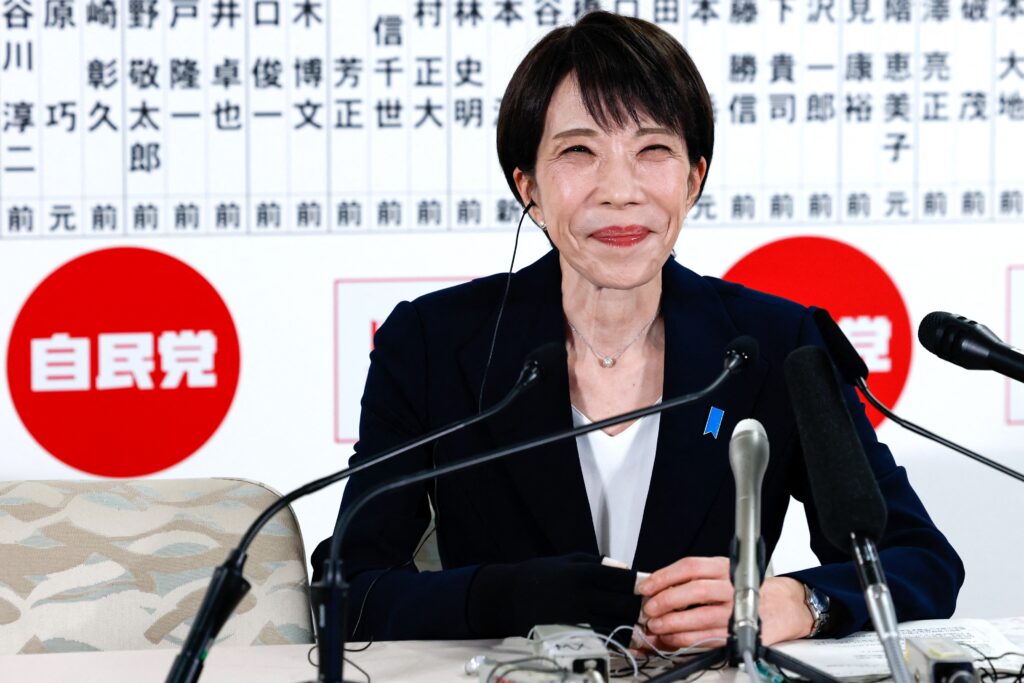
Japanese Prime Minister Sanae Takaichi won a mandate for her ambitious reform project after years of listless leadership in Tokyo. Her success is good news for America, and now Washington can help her succeed.
Takaichi supports a major military buildup in Japan. In addition to boosting defense spending to at least two percent of gross domestic product, she ran on expanding offensive military capabilities and lifting a ban on lethal weapon exports. The sweep of the victory, which gives her muscular majorities in parliament, might even allow Takaichi to repeal the pacifist clause written into Japan’s constitution after World War II.
If her agenda passes, Japan can shoulder more of the security burden for countering China. Confirming plans to visit D.C. on March 19, the prime minister on Sunday touted the “limitless” potential of the U.S.-Japan alliance.
The results reflect a growing recognition among the people of Japan that Beijing poses an existential threat. They rallied around Takaichi after she went toe-to-toe with Chinese dictator Xi Jinping by stating bluntly that an attack on the self-governed island of Taiwan would be a direct threat to Japan.
China reacted with military threats, costly economic boycotts and overheated bluster. As the communists restricted seafood imports, discouraged tourism and threatened to restrict the export of critical minerals, bureaucrats and investors begged Takaichi to back down. She refused.
Now that the election is out of the way, the prime minister’s biggest challenge will be paying for an expansionary economic agenda. She wants to juice Japan’s long-stagnant economy with heavy spending, but aggressive industrial policy risks pushing Japan’s debt load to unsustainable levels.
Austerity budgets in the past might have gone too far, but profligacy now risks undermining her promised investments in the military.
The post Big win for Japan’s prime minister is good news for the U.S. appeared first on Washington Post.