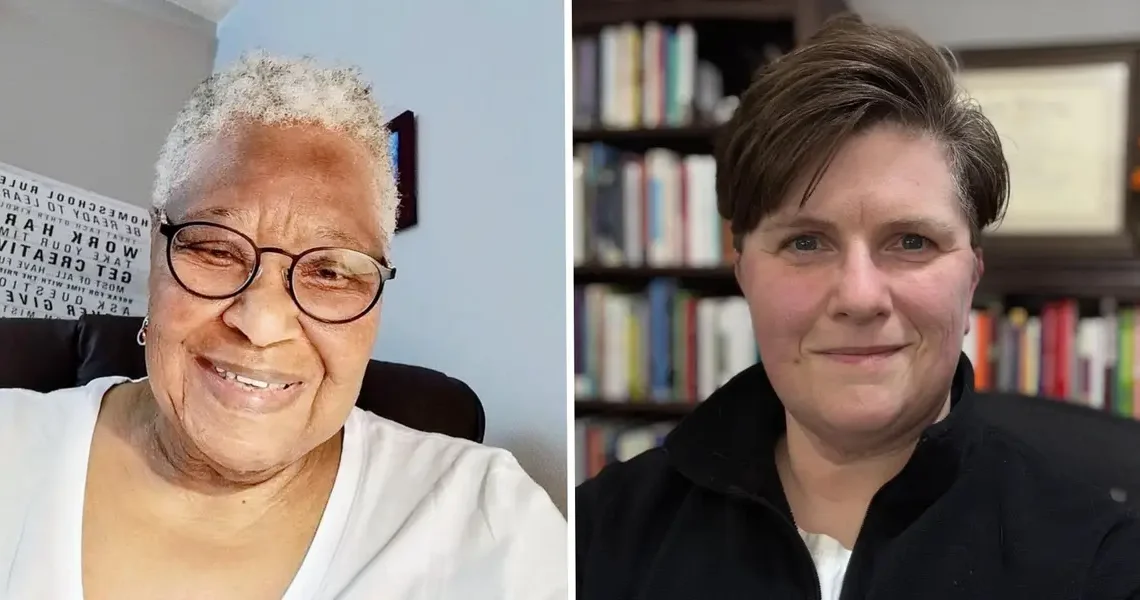
For some, retirement means relaxation. For Jordan Hendrickson, retirement means debt.
“I don’t have any retirement savings,” Hendrickson, 54, told Business Insider. “I don’t see any other way than working up until my last day.”
Hendrickson received her doctorate in psychology in 2013, bringing her total student-loan balance to about $350,000, including what she borrowed for her bachelor’s and master’s degrees. While she qualified for Pell Grants, which are awarded to low-income students, Hendrickson turned to federal loans to help cover the remaining costs.
She now works two jobs, as a telehealth provider for a mental health company and on the mobile support team for her county. The latter qualifies her for the Public Service Loan Forgiveness program, which forgives student debt for government and nonprofit workers after 10 years of qualifying payments.
While Hendrickson is about halfway through her PSLF payments, she’s worried federal changes to student loans — including President Donald Trump’s plans to narrow eligibility for PSLF — could leave her paying off her debt, which now stands at just over $500,000, for decades to come.
“I don’t know what’s going to happen with this. I think that’s my biggest anxiety, is the uncertainty,” Hendrickson said. “I would like to plan for retirement, but I don’t see a path forward right now, given that debt.”
Business Insider wants to hear about the challenges, successes, and unique experiences you’re facing with your student loans. Do you have a story to share? Please fill out this form, and we’ll be in touch.
Read more of our student-loan coverage:
- Student-loan borrowers are gearing up for higher monthly payments after Trump moves to ax their affordable plan: ‘I’m bracing for an astronomical bill’
- How Trump’s big spending bill will overhaul repayment for millions of student-loan borrowers
- We heard from over 400 student-loan borrowers. Here’s what’s on their minds, from repayment to relief.
Business Insider has previously spoken to student-loan borrowers who have said they’re postponing retirement, or are struggling in retirement, due to their student-debt loads. This year’s looming changes to the federal lending landscape are adding additional stress. Trump’s administration will begin implementing repayment changes this summer, including new repayment plans and a new rule that would limit PSLF eligibility.
While Hendrickson said she doesn’t regret taking out student loans for her education, she wishes there were more certainty for her and other borrowers’ repayment outlooks.
“The education I got was really good. I really love what I do. I do work 70 hours a week, but there’s a meaning in that work,” Hendrickson said. “I wouldn’t change it. I just wish it wasn’t like this.”
What retiring with student loans looks like
While Hendrickson isn’t sure if she’ll retire, Amye Cooley, 85, is already retired — but has just over $60,000 in student loan debt weighing her down.
After a divorce, Cooley returned to school in 1978, hoping it would help her earn more money to take care of her family. She took out about $25,000 in student loans for her bachelor’s degree, but upon graduating, she was unable to find a job, so she put her loans into forbearance.
She began working as a paraprofessional in her school district in 1984, earned her teaching certification, and taught for about 15 years before retiring from her full-time job in 2010 and switching to part-time tutoring. However, she’s not enjoying the peace she had hoped for because of her student loans.
“I could have new rugs put in. I could have new windows put in. I could have some work done on my car. I could stop worrying about them garnishing my Social Security,” Cooley said. “There’s a whole lot of things I could do, but I have these student loans.”
While Cooley is current on her student loans, she relies on Social Security and a teacher’s pension to stay afloat and is worried that her federal benefits could be seized should she fall behind on her payments. The Department of Education announced in January that it was pausing wage garnishments and tax refund seizures, but did not specify when the pause would lift.
Similar to Cooley, Grace, 67, pursued her bachelor’s and master’s degrees in psychology to make more money. Her balance now stands at $232,000, and despite making payments for over 25 years as required for forgiveness under income-driven repayment plans, she said she’s been unable to get an answer on whether she qualifies for relief.
She’s now retired, and she said the anxiety with regard to her payment outlook is overwhelming — especially because, should she qualify for forgiveness this year, it could be accompanied by thousands of dollars in taxes. A 2021 provision in the American Rescue Plan that made student-loan forgiveness tax-free expired at the end of 2025, and the Trump administration has given no indication that it will be renewed.
With major federal repayment changes looming, though, the administration said it’s acting in borrowers’ best interests to curb excessive borrowing and simplify a complex student-loan system. Undersecretary of Education Nicholas Kent said in a statement last year that the repayment changes “will benefit borrowers who will no longer be pushed into insurmountable debt to finance degrees that do not pay off.”
Those improvements are coming too late for Cooley, who said her life— and retirement — was altered the moment she chose to take out student loans.
“I went back to school to give my kids a better life,” Cooley said. “And now 41 years later, I’m still paying this off. It’s made a hell of a difference in my life.”
Read the original article on Business Insider
The post Their goal is a peaceful retirement. Up to half a million dollars in student loans is standing in the way. appeared first on Business Insider.