The Winter Olympic Games have begun, and once again the sport of curling is set to draw in scores of new converts.
Although dominated by Sweden, Canada, Switzerland, and Scotland, many eyes during the 2026 Winter Olympics will be on the team from host country Italy thanks to Stefania Constantini and Amos Mosaner, the reigning Olympic and world curling champions in mixed doubles.
Here’s WIRED’s complete guide to the 2026 Winter Olympics in Milano Cortina.
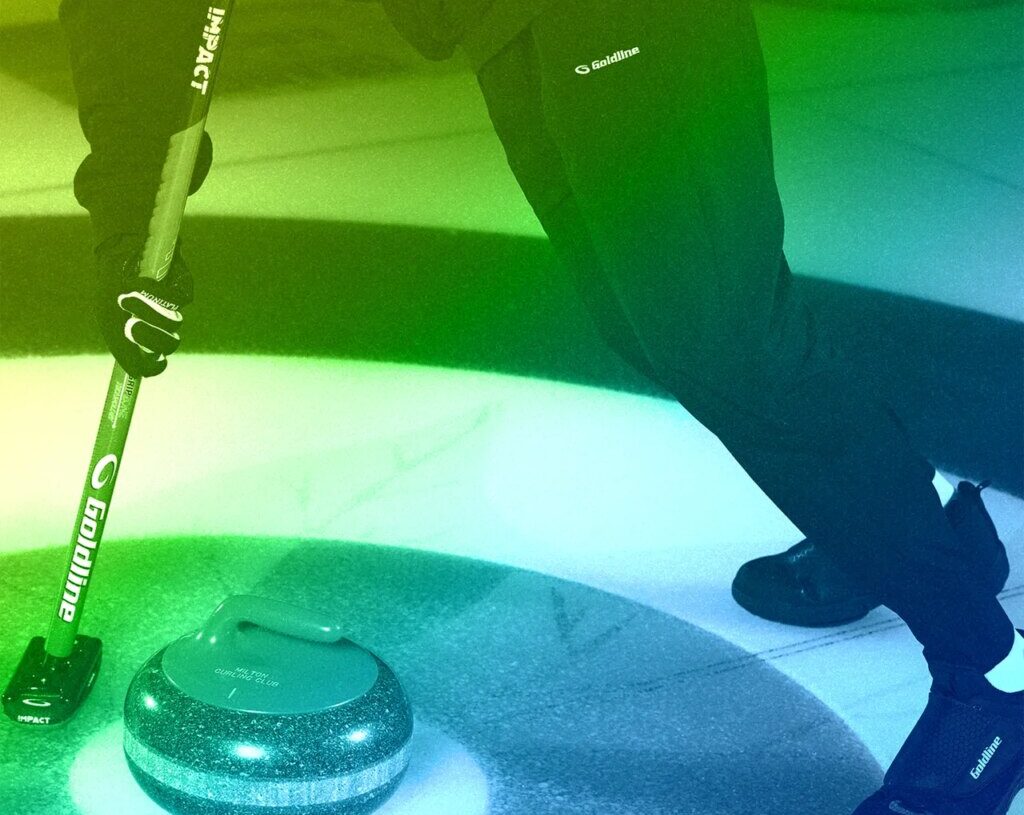
Regardless of which country takes home the gold, the real attention during the Olympics this year might be on the cool gadgets curlers use. Somewhat similar to a game of shuffleboard played with brooms and stones, curling has seen some pretty interesting advances in the gear that’s used on the ice.
In addition to raw skill and strategy, here’s everything you need to know about the state of the sport.
Scottish Stones
Nearly every curling stone—the round rock that slides down the ice—comes from the same place: Ailsa Craig. The 99-hectare island site in the Firth of Clyde inlet on Scotland’s west coast is known for its granite, and by extension its ability to provide enough of it to outfit curlers the world over.
Each stone must weigh between 19.96 and 17.24 kilograms and is made from one of two varieties of Scottish granite, common green and blue hone. These two types are the most resistant to heat and humidity and to the cracks and condensation that can form thanks to the 28 meters of ice the stones slide on during competitions.
The stones used at the Olympics, as well as the World Championships, are produced by Kays of Scotland. Many curling stones also come from Canada Curling Stone. (The sport has seen a recent spike in popularity in Canada.) Both companies produce the stones using a meticulous process of grinding and polishing.
Broom Boom
In addition to the stones, the main tools necessary to curl are a broom and shoes—this is where advancements in gear really come to the fore. For one, there are scores of sensors and microchips that allow players to manage the power of their throws.
For another, there are new-and-improved brooms that allow sweepers to maximize their skills. More than anything, what curlers need to work a broom are dexterity, physicality, and coordination. But beyond that, good tools don’t hurt.
“Broom technology continues to be a major focus because the physical demands of the sport continue to evolve, and one of the biggest challenges is finding the right balance between weight, strength, and effective energy transfer,” says Dale Matchett, general manager at curling equipment company BalancePlus.
As with any kind of sporting equipment, quality depends on how much a team or player is willing to spend. Carbon fiber brooms are best for their combination of strength and lightness. Composite fiber works well for midrange players. Fiberglass is the cheapest option. The broom’s handle and bearing factor into its weight and sweeping efficiency.
On the high end is BalancePlus’ LightSpeed line. The lightest weighs just 293 grams, which is “able to withstand the forces generated by the strongest and most athletic players,” Matchett points out. New high-end brooms ensure that no effort is wasted. The LiteSpeed RS XL 9”, for example, offers various handle, bolt, foam, sleeve, and other options that allow for 85,000 possible configurations. The nonslip coating reduces hand slippage, meaning curlers don’t need to use too much force to apply downward pressure, reducing fatigue.
Fancy Footwork
Shoes are one of the main secrets of curling, because stone throwers wear a different shoe on each foot: a “slider” and a “gripper.” The former has a smooth, slippery sole made of Teflon or steel and is worn on the gliding foot and allows the athlete to glide minimal friction. The latter has a rubber sole with a reinforced toe box to ward off constant rubbing. Despite their differences, the shoes should have identical weight to avoid imbalance during gliding.
“Athletes have different preferences, playing styles and physical needs, so there is no one shoe model suitable for all curling players,” Matchett says. “There are those who prefer a lightweight, flexible shoe to emphasize comfort and freedom of movement, but many professional players rely on a shoe that fully envelops the foot and limits unwanted foot movement, resists twisting, and promotes balance.”
The biggest focus is on the slider, one of the most crucial factors in performance on the ice. Curling equipment maker Goldline launched four new models in its Momentum series this year, each equipped with interchangeable grip discs to customize their configuration and allow for right- or left-handed play. The flagship option is the Stealth, which features integrated lace covers to reduce drag and keep the foot slightly elevated off the ice during slips and pushes. Made to extend the usual durability, the redesigned toe box and heel are higher on the shoe to protect areas that wear out more quickly from kicks and sweeps.
Despite all the advances in shoe technology, though, there is one classic model that, with appropriate modifications and updates, remains popular for their comfort and durability: The Delux. The line, also from BalancePlus, has been used by professionals since 1998 and uses leather uppers, welt construction, and a smooth toe design to reduce friction and facilitate throws. They also offer two sets of insoles and padding to ensure warmth for longer competitions.
The post The Shoes and Brooms Transforming Curling at the 2026 Winter Olympics appeared first on Wired.