Americans are using artificial intelligence apps more but surveys show they doubt the technology is good for them or the world. A growing number of their elected officials are moving to restrict the industry.
Companies are trying to exorcise the bad vibes and spent more than $1.7 billion on AI-related advertising last year — an ongoing marketing blitz that will be inescapable during Sunday’s Super Bowl.
OpenAI, which makes ChatGPT, is planning its second Super Bowl TV commercial, the Wall Street Journal reported. Anthropic, which offers the Claude chatbot, will counter with ads that mock ChatGPT. Movie star Chris Hemsworth will imagine Amazon’s Alexa+ AI assistant murdering him. And Google will air a tearjerker commercial for its Gemini chatbot. (Amazon founder Jeff Bezos owns The Washington Post.)
Commercial breaks in America’s biggest yearly TV gathering have previously provided a marketing launchpad for new technologies including cryptocurrencies, electric vehicles and dot-com start-ups. The Super Bowl ads are a high-stakes pitch to win new fans and become enmeshed in American life. But the AI industry faces a special challenge, because it’s selling a vision of the future that Americans don’t like.
“The reason they’re having to advertise is reputation management because people are nervous” about AI, said Eric Wilson, who advises Republicans on digital strategies. These ads come loaded with weighty baggage. “It’s a lot like if Coca-Cola went onto the market and immediately jumped into a huge policy debate about the future of humanity,” Wilson said.
The Washington Post asked experts in marketing and political campaign messaging to analyze four AI TV commercials set to air during this year’s Super Bowl or that appeared in recent months to see how the messages are trying to win over an AI-skeptical public. The campaigns tout how AI might improve a young man’s love life, help a mother and son decorate their new home or preserve jobs in small-town America.
Google Gemini for imagining your dreams
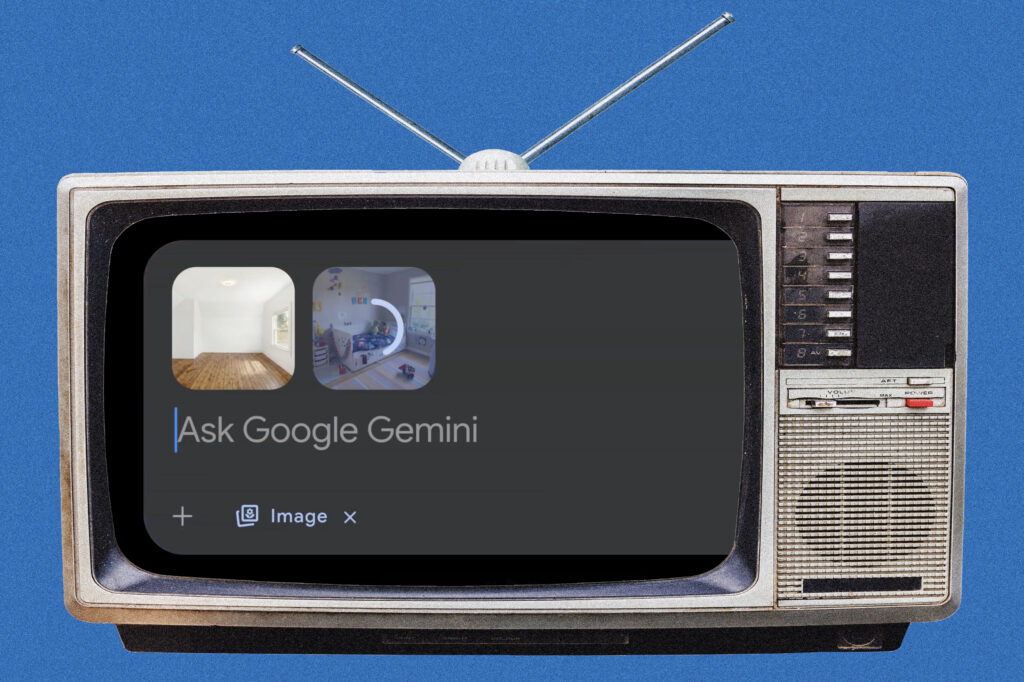
The pitch: In the Google Super Bowl ad, a mother and young son use its Gemini chatbot to visualize what his room and their garden could look like in a new home they’ve moving into.
Does the message work? Advertising and brand messaging experts raved about several Google advertisements in the past year that pitch its AI as helping people clarify what matters in their lives and work. Most featured parents and children and hit viewers over the head with warm-and-fuzzies.
Angeli Gianchandani, a New York University adjunct professor who specializes in brand strategy and communications, said it’s smart for Google to pitch AI that offers “reassurance” and emotional connection rather than just practical capabilities. “The next era of AI marketing will not be won by showing what machines can do, but by clarifying what humans still own,” she said.
Marketing experts said that Google’s AI messaging has come a long way from a botched advertisement a couple of years ago. In that ad, a dad asks Gemini to help his daughter write a fan letter to her sports hero. Critics were turned off by the idea of outsourcing a childhood rite of passage to a machine. Google yanked the ad, which was in heavy rotation during the 2024 Olympics.
MediaRadar, which tracks advertising for corporate clients, estimates that companies spent more $1.7 billion last year on advertisements related to AI on TV, streaming services, social media, billboards and more.
That splurge is a relatively small slice of the $400 billion spent in total on advertising in the U.S. last year, excluding political ads, according to Luke Stillman at the technology and media consulting firm Madison and Wall.
Advertising analysts also cautioned that Amazon, Google and other technology companies are already big spenders on ads, and it’s not clear how much AI is adding to their typical marketing tally.
ChatGPT as romantic wingman
The pitch: A young man making dinner for a date asks ChatGPT to recommend a recipe that “says, ‘I like you but want to play it cool.’” His date looks impressed with the pasta dish that ChatGPT suggested.
(OpenAI is planning a different commercial for the Super Bowl, CEO Sam Altman suggested in a post on X this week. The company didn’t make Sunday’s ad available before the game. The Washington Post has a content partnership with OpenAI.)
Does the message work? This ad and similar ones for ChatGPT were polarizing among marketing and advertising experts consulted by The Post.
“They’re emotionally sweet. They make you feel okay about the company,” said Allen Adamson, a brand strategist and co-founder of marketing firm Metaforce.
But Joe Burns, head of strategy at the advertising agency Quality Meats Creative, got the ick from the implication that ChatGPT can help men seduce women.
He also said that OpenAI had fallen into a common marketing trap for technology companies, which often pitch their products as tools to maximize human efficiency. Burns said that isn’t effective. “Advertising works because human beings are fundamentally irrational creatures,” he said.
A different approach, Burns said, could show how ChatGPT can expand human capacity and ingenuity. He imagined an ad showing a woman with dreams of starting a baking business using the chatbot to get started with a stall at a farmers market, creating fliers and promoting the business online.
“The thing that I find brilliant about AI is it lowers the bar of effort of all the possible things you can do,” Burns said.
Claude’s swipe at ChatGPT
The pitch: A spindly young man struggling to perform a pull-up asks a chatbot, embodied by a muscular fitness god, for advice. The muscly deity pauses between replies like a laggy AI app and then blurts out a promotion for shoe insoles.
Does the message work? The planned Super Bowl commercial for Anthropic’s Claude mocks ChatGPT’s recent addition of advertising messages to the widely used chatbot. The Claude ad also echoes a recent ChatGPT commercial that also featured a young man struggling with pull-ups.
“A war has started,” said Sandy Greenberg, co-founder and CEO of advertising agency Terri & Sandy.
Greenberg said it was brilliant of Anthropic, whose chatbot is much less popular than ChatGPT, to position itself as the kinder, gentler AI helper and to home in on people’s anxieties about chatbot ads harnessing what they privately confide to AI.
“It was a smart, strategic move — tapping directly into a fear consumers already have to strike a very real chord,” she said.
The ad got under the skin of OpenAI executives. In Altman’s X post about Super Bowl ads, he called the Anthropic commercial “dishonest.”
Greenberg said that marketing is often inherently divisive but it’s much more acute for AI.
“People are not rooting for AI,” she said. “It’s going to be more likely that your ads can be polarizing just by the nature of you’re on a topic that people hate.”
Meta says that AI creates jobs
The pitch: A man in rural New Mexico says he landed a good job in his hometown at a Meta data center. It’s interspersed with scenes from a rodeo and other folksy tropes.
Does the message work? The TV commercial, and a similar one set in Iowa, have aired in Washington, D.C., and a handful of other communities. The targeting suggests the pitch is aimed at convincing elected officials and their constituents of the economic and job opportunities from AI.
Prominent politicians including Sen. Bernie Sanders (I-Vermont) and Florida Gov. Ron DeSantis (R) have called for restrictions on data center developments after backlash against the facilities from some communities.
Burns said that while the ad isn’t subtle or creative, it is effective at giving national and local elected officials a “narrative off-the-shelf” that AI data center projects create jobs. He said that advertising’s goal is forging those kinds of mental shortcuts — like seeing the yellow Cheerios box in a sea of supermarket cereals and reflexively picking up that brand.
But Wilson, the Republican digital strategist, said that Americans are generally “very skeptical” about job creation promises from technology companies. Communities in blue and red states alike have balked at local construction of hulking, electricity-hungry computing hubs used to power AI.
Greenberg said that Meta is taking a risk that its job creation messages become fodder for critics if AI proves to be a massive job-destroying force.
Adamson, from Metaforce, said that a perennial question about advertising is whether it can fix bad vibes about a product. “The answer since the dawn of marketing and advertising is no,” he said.
The post Can these Super Bowl ads make Americans love AI? appeared first on Washington Post.