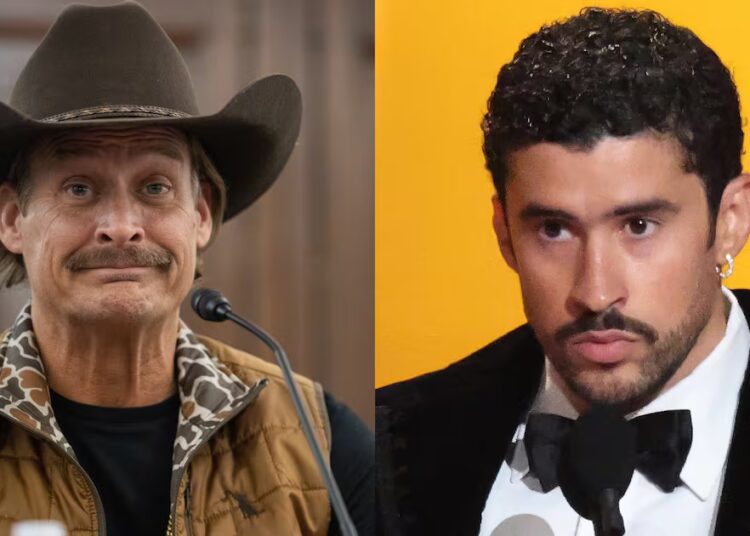
When Bad Bunny takes the stage at halftime of the Super Bowl on Sunday, he will break a nearly six-decade N.F.L. tradition by performing primarily in Spanish.
Something similar will happen for those who are deaf or hard of hearing.
Instead of offering a stream of the halftime performance in American Sign Language, as it typically does each year, the National Football League is having the musical act interpreted into Puerto Rican Sign Language, a unique dialect used on the island that academic researchers and other experts consider endangered.
By using L.S.P.R., as Puerto Rican Sign Language is known, deaf fans can experience Bad Bunny’s hits — songs with titles such as “Me Porto Bonito” and “Tití Me Preguntó” — as close as possible to how the singer intended. The more than 100 million people, deaf or hearing, who are expected to watch the Puerto Rican rapper’s groundbreaking performance are not guaranteed to understand the lyrics. (Bad Bunny’s performance, which will air on NBC, is not likely to be subtitled in English.)
“We knew we needed to be representative of the language and culture being performed in the show,” Anna Isaacson, the N.F.L.’s senior vice president of social responsibility, said in an email, adding, “A.S.L. and L.S.P.R. are not the same.” (While L.S.P.R. derived from A.S.L. in the early 20th century, it includes distinctive markers, pacing and cultural nuance.)
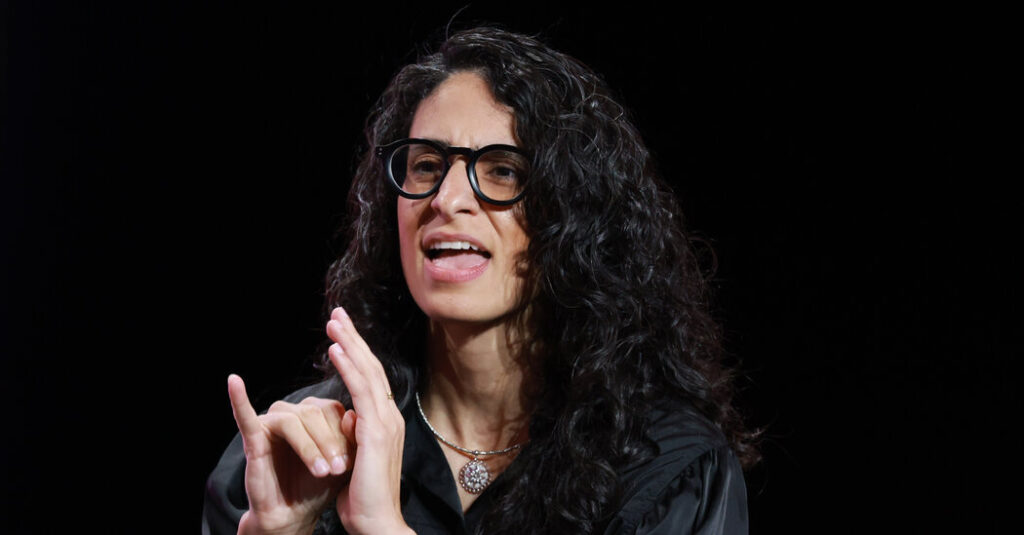
To help it achieve its goals, the N.F.L. has enlisted Celimar Rivera Cosme, a native of Puerto Rico who is hard of hearing and who has deep experience interpreting Bad Bunny’s performances into Puerto Rican Sign Language. The Super Bowl will be, by far, Cosme’s largest platform. Through it she hopes to help viewers better understand Puerto Rico, her language and her peers who also have hearing disabilities.
“The stakes here are to show that we are friendly people, and also how we dance, our lyrics, our slang,” Cosme said through an interpreter. “Puerto Rico — we might be a small island, but people here have a huge, huge heart.”
Cosme interpreted for Bad Bunny during his world tour in 2022 and his 31-show residency in San Juan last year. The rapper’s lyrics are infused with local slang and folklore, and Cosme’s homegrown knowledge of Puerto Rico means she doesn’t miss a reference or an allusion.
When Bad Bunny shouts “Calle Sol, Calle Luna,” in “La Mudanza” (a song in which he declares he’s not leaving Puerto Rico), Cosme knows those historic streets that course through the heart of Old San Juan. And in “Weltita,” when Bad Bunny refers to the tale of “el pozo de Jacinto,” Cosme is well aware of the folk tale of the farmer Jacinto, who died when his cow dragged them both into the sea. Shout “Jacinto, dame la vaca!” (“Jacinto, give me the cow!”) from a particular spot in the island’s northwestern region of Isabela, and water will erupt in response — or so the legend goes.
One aim of Cosme’s on Sunday is simply to allow a multitude of humanity to catch a glimpse of L.S.P.R. in action. A.S.L. is the most widely used form of communication for people who are deaf or hard of hearing in the United States, and it is increasingly pushing aside its Puerto Rican counterpart, just as it is Hawaiʻi Sign Language, used on another U.S. island some 6,000 miles away.
“We’ve been fighting not to lose our language, but to keep it,” Cosme said. “The Super Bowl will be an excellent platform for us to use our language.”
Anabel Maler, an assistant professor of music theory at the University of British Columbia, said she hoped that deaf people in the United States would engage with Cosme’s performance despite it being in another language.
“If we listen to a song in Spanish, we don’t mind that we don’t understand all the lyrics — we just enjoy the performance,” Maler said. “We can still all enjoy the aspects of musicality that go into a sign language performance even if we don’t catch every word that she is saying.”
Emmanuel Morgan reports on sports, pop culture and entertainment.
The post Bad Bunny’s Sign Language Interpreter Will Make Super Bowl History, Too appeared first on New York Times.