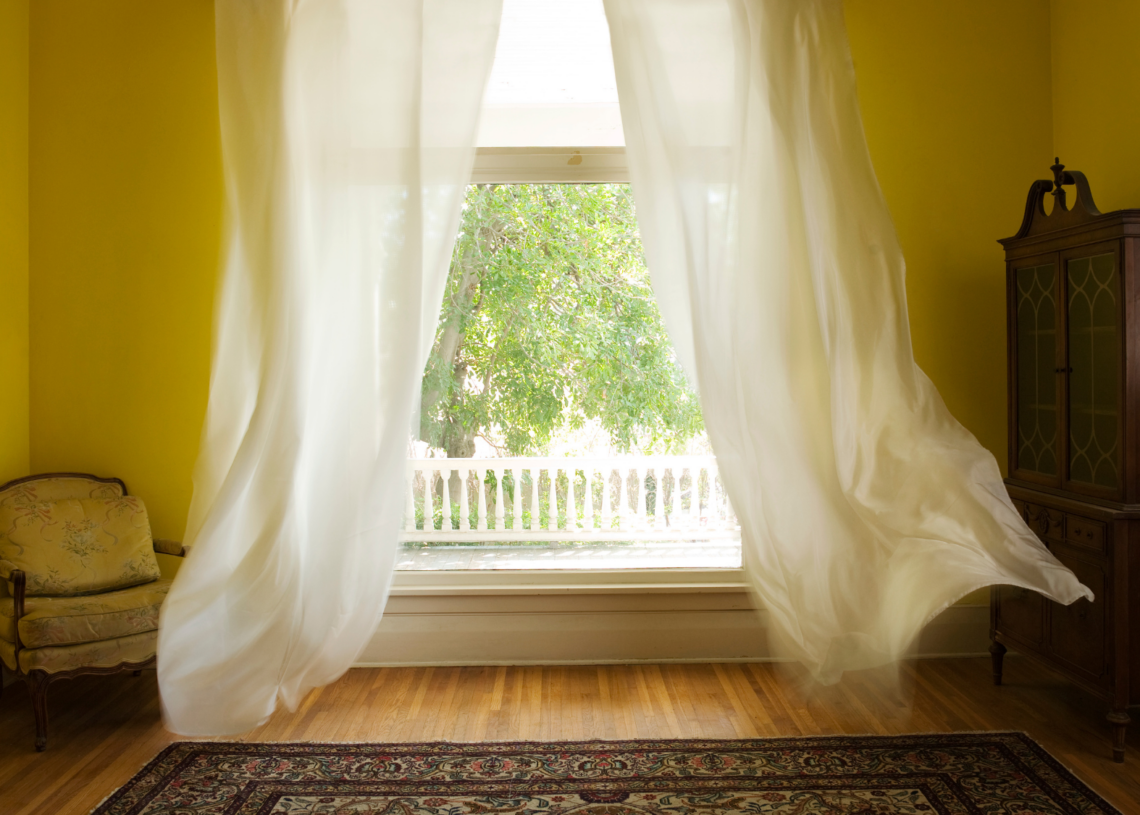
The internet loves giving everything its own name, and apparently, that applies to household ventilation, too. “Burping” your house means opening windows and doors for a few minutes to push out stale indoor air. Even though the new name for it is trending, public health experts have been recommending the same thing for years.
A recent research analysis shared by ScienceAlert explains why this works. Indoor air slowly fills with moisture, particles, and gases from daily life. Cooking, cleaning sprays, candles, furniture, and plain old breathing all add to the mix. Modern homes are built to hold heat, which also means they hold whatever else is floating around inside. A short blast of outdoor air can thin out that buildup.
This practice is normal in parts of Europe. In Germany, Lüften and Stoßlüften involve opening windows wide for a few minutes, even during winter, to reduce damp and mold. Some rental agreements still list regular airing as basic upkeep.
Ventilation has real health implications. During the COVID pandemic, public health agencies emphasized opening windows as a way to reduce airborne spread indoors. One classroom study found that opening windows and doors lowered carbon dioxide levels by about 60 percent and cut a simulated viral load by roughly 97 percent over a school day. Fresh air changed how long exhaled particles stayed in the room.
Indoor air quality also affects brain health. Studies link higher carbon dioxide and fine particle levels with slower thinking and reduced concentration. People feel foggy without knowing why. Even pets are affected. Veterinary research connects poor indoor air with respiratory irritation in dogs and cats, especially near the floor where particles settle.
Outdoor air isn’t automatically better. Traffic pollution moves indoors through windows, vents, and gaps in buildings. Homes near busy roads show higher indoor levels of nitrogen dioxide and fine particles when street-facing windows are opened. For people with asthma or heart disease, that trade can cancel out the benefits.
Deciding when and where to open windows takes some thought. Air pollution gets worse during rush hours but decreases later at night, around noon, or after it rains. Opening windows on the side of your house that faces trees or quieter streets can lower the amount of pollution that comes in. Letting fresh air in for a short time can improve indoor air quality without making your home too cold or driving up heating bills.
The name is silly. The science is solid. Homes that never air out trap what people exhale and generate all day. Five minutes of ventilation offers real benefits for everyone breathing inside that space. The internet stumbled into something actually useful for once, which feels like it deserves a little nod.
The post Are You Burping Your House for a Few Minutes a Day? You Should Be. appeared first on VICE.