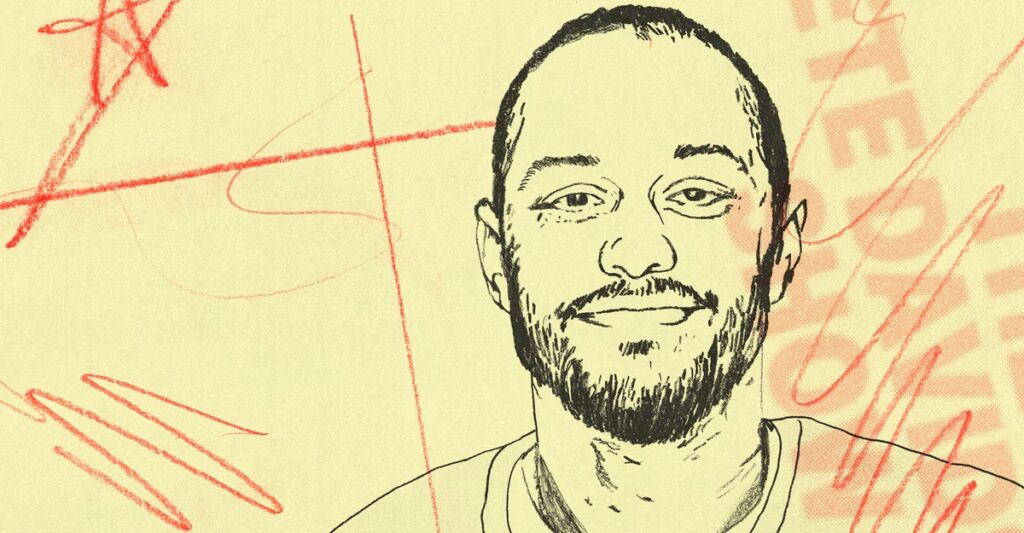
The first question to confront when considering The Pete Davidson Show, a new Netflix series that the streamer is calling a “video podcast,” is: What is a podcast? The term can be a little difficult to pin down; what initially referred to downloadable audio files you ported onto your iPod is today used for most online radio. Now the notion of a podcast is transforming again to include filmed entertainment. Bite-size clips of chat programs are flooding every social-media feed, in a desperate hunt for engagement. But I would argue that podcasts should always involve a dedicated feed you can listen to on your phone.
The Pete Davidson Show does not have that. Instead, the weekly program is available to consume only on Netflix, and only in video form. A cynic might wonder if branding The Pete Davidson Show a “podcast” is just a way for the streaming empire to avoid paying for the kind of unionized crews and production staff a talk show demands. Or perhaps, if I am being more charitable, Pete Davidson’s effort is considered a podcast because it’s imitating the stripped-down aesthetics of one. The host sits in a fairly bare garage, with a couple of paint cans stacked between two comfy armchairs. His first guest, the musician Machine Gun Kelly, doesn’t even have a place to put his coffee, so he sits it on the floor near his feet. Talk shows have bands and green rooms; podcasts are for raw, unfiltered chat, though preferably, for companies like Netflix, also between famous people.
So on that front, does The Pete Davidson Show deliver? There’s already a gigantic pile of celebrity talk programs in the podcasting space—many of them weak clones of other lo-fi interview podcasts, most obviously WTF With Marc Maron, which ended last year. Davidson, who has been in the public eye since joining the cast of Saturday Night Live at age 20, is the sort of highly scrutinized person viewers might want to learn more about. This is partly the allure of any public figure’s podcast: that you encounter them in a more candid mode.
But as a host, he is casual to a fault. He’s prone to slouching in his chair, ripping a thousand cigarettes, and reminiscing about various awkward interactions he and his guests have had at parties over the years. In the series premiere last week, Davidson and Kelly (who are good friends) hold court about, among other topics: Davidson’s fancy Japanese toilet; Kelly’s flight to the podcast taping, in upstate New York; acting together in The Dirt, the Mötley Crüe biopic; and generally weathering the slings and arrows of megastardom. There are interesting pockets of intimacy between the pair, as they discuss their mirrored battles with depression and addiction, and sweeter moments, like when they gush about their young daughters. But for being just 38 minutes long (which is pretty short by most podcasting standards), the episode feels unfocused at best.
[Read: The Dirt celebrates the soullessness of Mötley Crüe]
Davidson’s inexperience becomes obvious when seated across someone much better versed in the medium. Episode 2 features Charlamagne tha God, a seasoned radio personality, whose comfort and facility with the format forces Davidson to keep up. He trades quips with the comedian before eking out further insights: A string of jokes about the rapper turned actor Ice-T and his longtime wife, Coco, becomes a reflection on the role romantic partners can play in one’s career. As Davidson thanks his guest for stopping by, he also notes Charlamagne’s prowess: “This also made me appreciate how amazing you are at this job,” he says.
Maybe Davidson can grow into the gig; very few hit podcasts emerge from the gate fully formed. But The Pete Davidson Show is a particularly rough lump of clay. The garage setting riffs on Maron’s format, but the space is devoid of any notable physical objects for guests to bounce off—nothing like Maron’s frequently remarked-upon tchotchkes or guitars. Davidson’s chat with Kelly has no structure, no segments, and no particular gimmick; and while none of that is required of a podcast, some sense of organization can help shape an otherwise-unformed snippet of conversation. Most vital, Davidson doesn’t have much interest in learning more about Kelly, because he doesn’t need to—this is his good friend, with whom he already has a rich history that the viewer only gets glimpses of over the course of their chat.
The lax vibe stands in stark relief to that of most successful celebrity-chat podcasts. Maron, who launched WTF when his comedy career was on a downswing, as peers emerged and surpassed him in fame, took an almost antagonistic approach with guests: He’d try to puzzle out their insecurities and ambitions, then compare them against his own. For Conan O’Brien, an old hand whose podcast Conan O’Brien Needs a Friend is a big player in the field, witty banter and appropriately leading queries come naturally; O’Brien also has plenty of pals on, but has a knack for turning their back-and-forth into a deeper examination of their friendship. The latest hit example is Amy Poehler’s Good Hang, which collected the first-ever Golden Globe for Best Podcast this year. As a host, Poehler has demonstrated a surprising amount of savvy in how she runs her show, from booking guests to steering them toward a compelling conversation.
[Read: The Golden Globes tried to have it both ways]
I kept thinking about Poehler’s show (which is filmed but is also available on an audio feed) while watching Davidson’s attempt. Good Hang is similarly pitched as a casual, low-stakes hour or so of chitchat between two celebrities; Poehler, one of Davidson’s fellow SNL alums, has chummy banter with a well-known subject, a role that has been filled by such major names as Jennifer Lawrence, Gwyneth Paltrow, and Ina Garten. But Poehler opens every episode by secretly calling up a friend of her guest on FaceTime, setting the mood for what she and her audience might be intrigued to learn. She then peppers her interviewees with a good mix of serious and silly questions, keeping them just goofy and off-balance enough to maybe reveal some vulnerabilities.
Nothing is revolutionary about what Poehler is doing, but she’s doing it well—it’s why the anodyne-seeming Good Hang has risen above the many imitators, to the point where anecdotes from the episodes regularly make news. Davidson’s chat with Kelly, on the other hand, seemingly vanished without a trace after its Friday drop. Perhaps some of his future guests will come armed with hotter takes, or juicier gossip, to avail the show’s relaxed host in his smoky garage. Or perhaps Netflix’s video-only podcasting experiment will go the way of many other such clones in this medium, which never took on board the lesson that podcasts require more than two microphones and a garage to actually be interesting.
The post The Fundamental Flaw of Pete Davidson’s Podcast appeared first on The Atlantic.