The Environmental Protection Agency has re-approved weedkillers containing a contentious chemical for use on genetically engineered cotton and soybeans.
The decision, announced late Friday, faced immediate backlash from environmental groups as well as “Make America Healthy Again” activists who are aligned with President Trump and have called for tighter regulation of chemicals in the nation’s air and water and its food supply. Their criticisms of Trump administration policies are a sign of growing tensions among the president’s base of supporters.
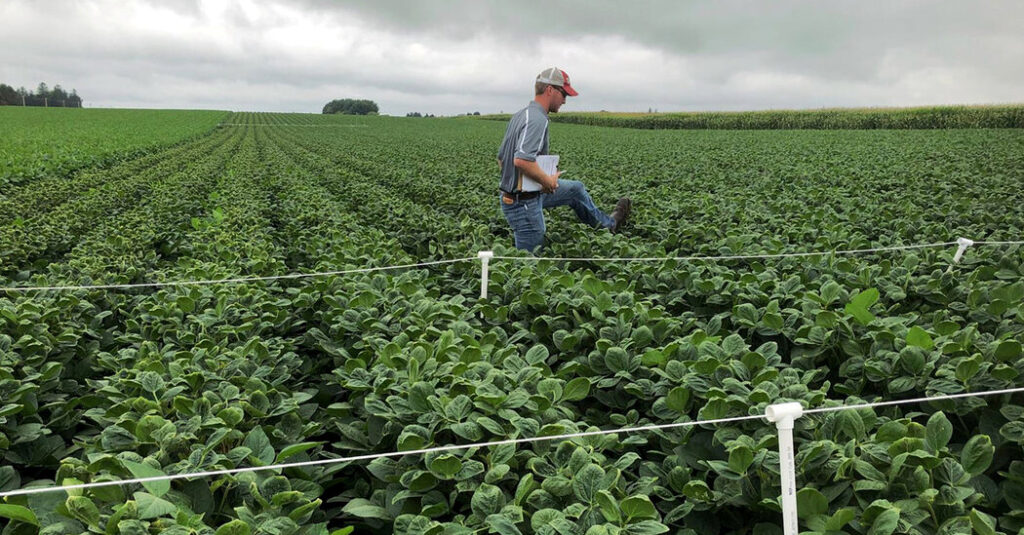
A federal court had made certain uses of dicamba illegal in 2024 after some farmers complained that it tended to drift into neighboring farms and gardens, damaging crops that hadn’t been genetically engineered to resist it. It was the second time courts had vacated E.P.A. approvals of the weedkiller, each time citing risks that the herbicide would harm neighboring fields. The ban was scheduled to take full effect last year.
The E.P.A. subsequently reviewed dicamba’s uses and found it posed no risk to human health. On Friday, it said it was re-approving the chemical.
The agency’s decision was in response to advocacy from cotton and soybean farmers who relied on access to dicamba for controlling weeds, E.P.A. said in its Friday-evening statement. Its analysis had found that there was no unreasonable risk to human health and the environment so long as dicamba was applied according to instructions, the agency said.
The risks to the environment from dicamba were real, the E.P.A. added, and said it was adding new restrictions to the weedkiller’s use. It said those restrictions would include cutting in half the amount of dicamba that could be used annually; restricting use during hot weather, when the risk of drift is highest; and requiring conservation practices to protect endangered species.
Environmental groups challenged that characterization, saying that the E.P.A. had loosened restrictions it had previously proposed, allowing year-round use and dropping restrictions on when spraying could occur during the day to reduce volatility.
Nathan Donley, environmental health science director at the Center for Biological Diversity, which has sued over the use of dicamba, called the measures “less protective than the prior ones that were struck down by courts.” The agency had “approved a pesticide that they know drifts for miles and poisons organic crops, backyard gardens and 100-year-old trees,” he said.
The American Farm Bureau Federation, the nation’s largest agricultural lobby group, applauded the decision. “Farmers appreciate the decision by Administrator Lee Zeldin and the E.P.A.,” said Zippy Duvall, the group’s president.
Dicamba was “an important herbicide that allows farmers to grow safe and healthy food,” he said, and the E.P.A.’s decision “will provide farmers with certainty as they plan for this year’s planting season.”
Since its release in 2016, dicamba has become one of the most widely used herbicides in the country. Agribusiness companies like Monsanto sell genetically engineered seeds that can tolerate dicamba, so that farmers can spray their fields with the herbicide, wilting the weeds while their crops survive.
The dicamba-tolerant seeds were developed in response to a growing resistance among weeds to glyphosate, the active ingredient in Roundup, another controversial herbicide.
Some of the strongest criticism of the E.P.A.’s latest decision came from “Make America Healthy Again” activists aligned with the health secretary, Robert F. Kennedy.
The activists, who have risen to prominence under Mr. Trump, have expressed particular concern at the appointment of former industry officials to influential posts at the E.P.A., saying the agency is prioritizing the interests of chemical makers over the well-being of families and children.
Kyle Kunkler, a former soybean-industry lobbyist who had been a vocal proponent of dicamba, joined the E.P.A.’s Office of Chemical Safety and Pollution Prevention last year as its deputy assistant administrator.
“The approval is a favor to the special interests of chemical companies, and will only serve to perpetuate a failing agriculture system based on chemicals that destroy the soil and our ability to grow food,” said Kelly Ryerson, a former investment banker and an influential MAHA activist.
Ms. Ryerson, who last year led a petition urging Mr. Trump to fire Mr. Zeldin, the E.P.A. administrator, had in recent weeks met with Mr. Zeldin to share MAHA activists’ concerns.
The decision on dicamba was a major disappointment, she said, adding, “When the nation’s top pesticide office is led by a former American Soybean Association pesticide lobbyist, expectations that the E.P.A. will uphold the president’s Make American Healthy Again mandate are dampened.”
Hiroko Tabuchi covers pollution and the environment for The Times. She has been a journalist for more than 20 years in Tokyo and New York.
The post Contentious Herbicide Is Greenlit in a Blow to the MAHA Agenda appeared first on New York Times.