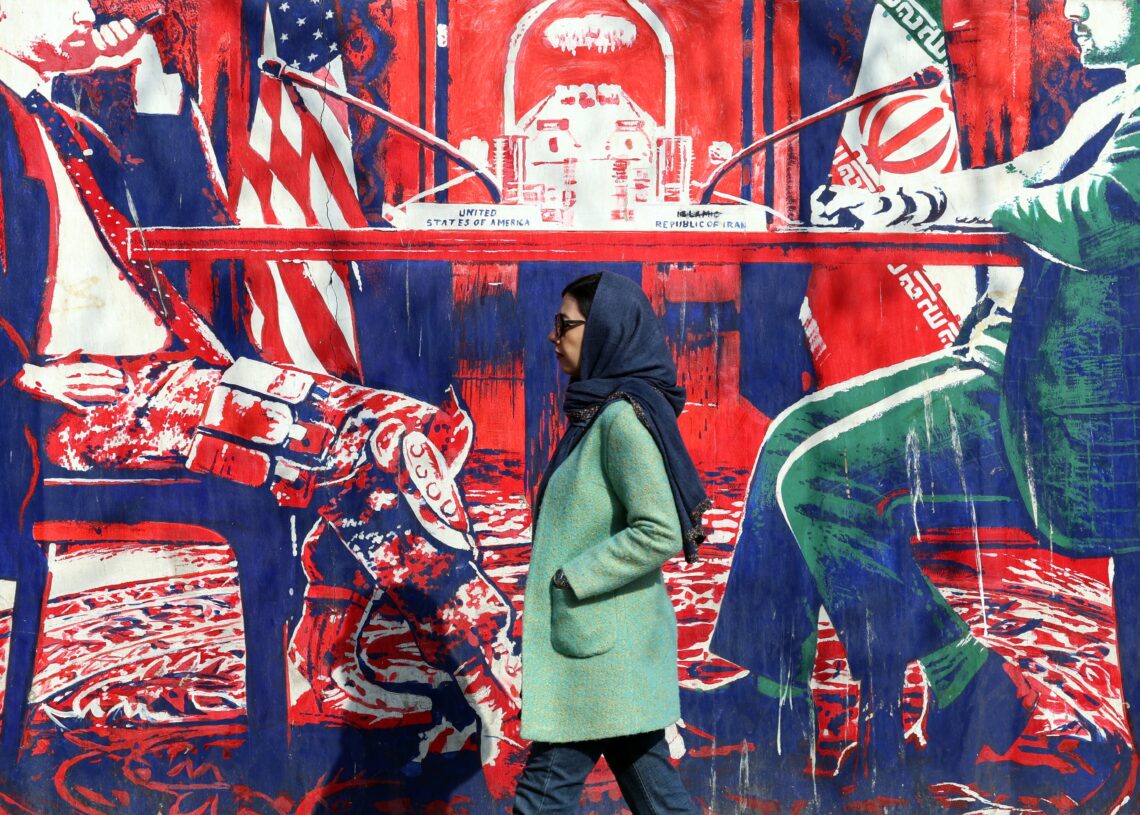
U.S. and Iranian representatives met in Oman on Friday for talks over the fate of Tehran’s nuclear program, the first such negotiations between the two sides since U.S. strikes on Iranian nuclear sites in June ended 12 days of war with Israel.
Desperate to avoid another confrontation, regional leaders launched a flurry of diplomacy to push Washington and Tehran to agree to the meeting Friday. But the scope of the talks remains unclear. Iranian officials have said they will only discuss the nuclear program, while the Trump administration has called for broader concessions.
“We had long, intensive talks today. Views were exchanged in a very good atmosphere. It was a good start,” Iranian Foreign Minister Abbas Araghchi told Iranian state-run media Friday. Araghchi, who is leading negotiations on the Iranian side, said both sides agreed to continue meeting.
His tone sounded more optimistic than the statement he issued before talks began. “Iran enters diplomacy with open eyes and a steady memory of the past year,” he said in a post on X. “We engage in good faith and stand firm on our rights,” he said.
This diplomatic push is occurring against the backdrop of a massive U.S. military buildup in the region that President Donald Trump has threatened to use if Iran doesn’t agree to a nuclear deal. Iranian officials have responded by threatening devastating counterattacks in the event of a U.S. strike.
The U.S. negotiating team is led by U.S. envoy Steve Witkoff and Trump’s son-in-law Jared Kushner. Images of the meeting published in local media also showed Adm. Brad Cooper, commander of U.S. Central Command, present.
Omani Foreign Minister, Badr Albusaidi, met with the Iranian and U.S. teams separately, according to a Foreign Ministry statement Friday. The meetings “focused on preparing the appropriate conditions for resuming diplomatic and technical negotiations,” the ministry said. Albusaidi said he expressed his “profound appreciation for the efforts of the region’s countries in supporting these talks.”
The Trump administration first launched talks aimed at securing a nuclear deal with Iran last year. Negotiators met in Oman and Italy, but failed to secure measurable progress. The Israeli attacks that launched the 12–day war upended the diplomatic effort.
Trump withdrew the U.S. from the 2015 deal to limit Iran’s nuclear program in May 2018, during his first term.
Iran enters the current round of talks at its weakest point in decades. The country’s military suffered staggering losses to Israel during the 12-day war, and its nuclear program was severely damaged by U.S. airstrikes in June. Iran was subsequently plunged into crisis last month by massive protests that the country’s security forces responded to with deadly force, killing thousands of people.
After Trump threatened strikes in support of Iranian protesters last month, Iran vowed punishing retaliation against U.S. military bases in the Persian Gulf. Despite its military losses to Israel during the 12-day war, Iran’s missile arsenal remains the largest in the region.
Days before the talks in Oman, tensions appeared to spike. U.S. forces shot down an Iranian drone approaching the aircraft carrier USS Abraham Lincoln in the Arabian Sea on Tuesday. Tim Hawkins, a spokesman for U.S. Central Command, warned that “Iran’s unnecessary aggression near U.S. forces, regional partners and commercial vessels increases risks of collision, miscalculation and regional destabilization.”
The U.S. military buildup includes dozens of aircraft at bases operating near Iran and about 12 warships in or near the Middle East, according to Washington Post analysis of satellite imagery.
“While these negotiations are taking place, I would remind the Iranian regime that the president has many options at his disposal aside from diplomacy as the commander in chief of the most powerful military in the history of the world,” said White House press secretary Karoline Leavitt said at a press briefing on Thursday.
Leavitt said the U.S. president’s goal was to see Iran with “zero nuclear capability,” though it remains unclear how that minimum threshold is defined. During the previous round of talks last year, Trump administration officials made contradictory statements on whether Iran would be allowed any enrichment capability at all.
Tehran has consistently denied that its nuclear enrichment is designed for weapons production and that, along with all sovereign countries, it has a right to enrich uranium for civilian purposes.
The wider demands Trump administration officials have made of Iran include curbs to the country’s missile program and an end to Iranian support for armed allied armed groups in the region. U.S. Secretary of State Marco Rubio said the agenda for talks would also include Iran’s “treatment of their own people” as well was missiles, proxies and the nuclear program.
Iran is unlikely to agree to significant concessions beyond it’s nuclear program, fearful such a move would signal weakness, according to current and former officials.
“That’s just such a blatant sign of weakness that [Iran fears] it would embolden the U.S.,” said Alan Eyre, a former State Department official involved with Iran nuclear talks under the Obama administration, now with the Middle East Institute think tank in D.C. Eyre said despite the meeting in Oman Friday he fears the risks of a military confrontation remain high.
“Iran is more scared of compromising and inviting further aggression from the U.S. than they are of taking on a military strike,” he said.
Iran does appear more willing to compromise on the issue of nuclear enrichment, according to a western diplomat briefed on the issue. The leaders in Tehran may be willing to agree to a years-long pause on enrichment, but it’s unclear if that will satisfy the Trump administration, the diplomat said, speaking on condition of anonymity as he was not authorized to discuss the issue with the media.
The post U.S. and Iran hold nuclear talks amid threats of regional war appeared first on Washington Post.