In his groundbreaking book, “Private Truths, Public Lies,” political scientist Timur Kuran attacks a vexing question: How can official orthodoxies persist for so long even when few people believe them?
I read that book hungrily during the “Great Awokening,” trying to understand why so many institutions quickly abandoned their liberal commitments for radical social justice politics — and reread it as the Trump administration sought to impose its own brand of public truth on issues such as free speech. That proved to be excellent preparation for what happened recently.
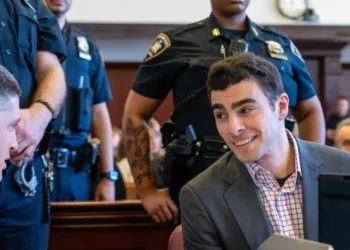
A jury on Jan. 30 awarded $2 million in damages to a woman who sued her psychologist and plastic surgeon for their role in a “gender-affirming” mastectomy she got when she was 16. This verdict does not necessarily implicate all such surgeries. Erica Anderson, a former president of the U.S. Professional Association for Transgender Health, testified for the plaintiff, whose psychologist she said was “wholly unqualified, failed to observe standards of care and simply blew it.” But the verdict puts practitioners on notice that there are risks to mindlessly affirming.
On Tuesday, the American Society of Plastic Surgeons issued a position paper recommending waiting until age 19 to perform transition surgeries, saying “there is insufficient evidence demonstrating a favorable risk-benefit ratio for the pathway of gender-related endocrine and surgical interventions in children and adolescents.”
Though ASPS policy has been evolving toward caution for some time, this seems to raise questions, not just about surgery for minors but hormone treatments. Shortly after the guidance came out, the American Medical Association released a statement taking a more cautious stance than its previous recommendations, saying “surgical interventions in minors should be generally deferred to adulthood.”
These might seem like small shifts. But as Kuran notes, when public orthodoxy differs widely from private opinion, orthodoxies are prone to a “preference cascade” where public opinion snowballs. Medical association support has been one of the strongest arguments offered by proponents of pediatric medical transition. Now that support seems to be weakening, opening up space for more doubt.
Public orthodoxies that diverge from private opinion may be surprisingly stable, but they can also prove remarkably unstable, because they depend on private thoughts to stay private, giving doubters the illusion that they are lone deviants rather than members of a silent majority. Each skeptical voice makes it more likely that further doubts will be raised, triggering a rapid shift to a new equilibrium.
If you’ve wondered how communism collapsed, that’s how. And if you’ve wondered why communist regimes are so oppressive, that’s also your answer. When you are the custodian of a fragile orthodoxy, you cannot afford to allow a hint of dissent.
If you have followed the gender wars, you understand the parallel I’m drawing, but for those who haven’t, let me make it explicit.
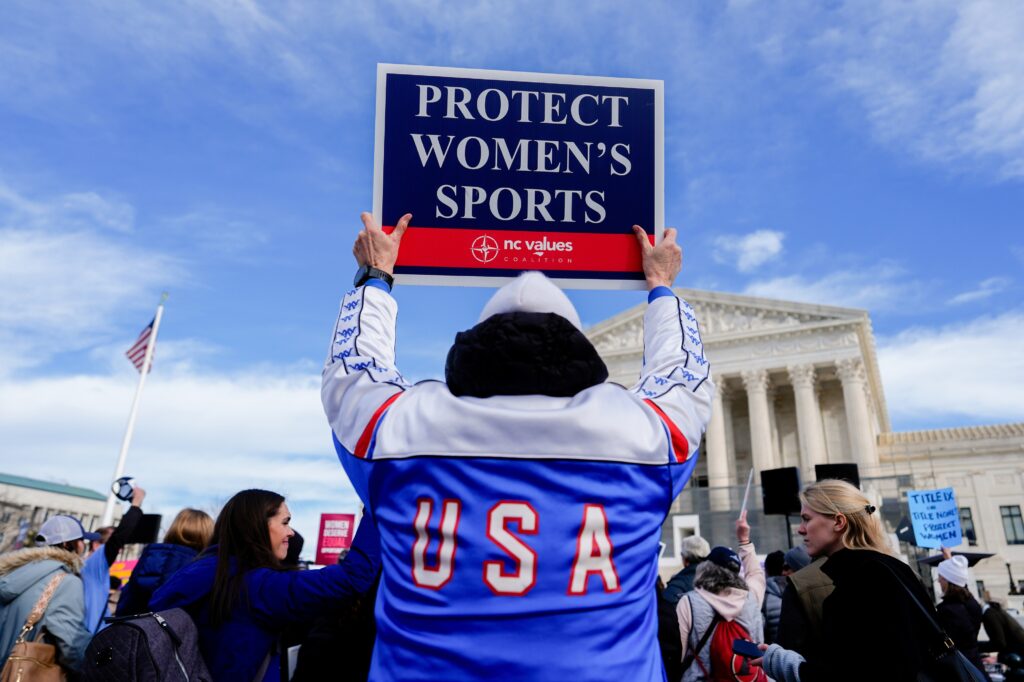
Starting around 2015, an orthodoxy on transgender issues crystallized, seemingly out of nowhere. Transgender women were women, full stop, and it was transphobic to suggest that some spaces — such as locker rooms, prisons or sports — should be reserved for biological females. The prevailing view was that gender-dysphoric kids “knew who they were,” and denying them medical interventions to realize their true selves risked driving them to suicide. Boilerplate assertions that pediatric medical transition was “evidence-based,” “medically necessary” and even “lifesaving” began appearing everywhere, including journalistic style guides.
It is now clear that the evidence for these assertions was weak, and it’s not clear why so many medical associations offered such strong endorsements with so little to back them up. But once issued, they all reinforced each other — questions about one could be quelled by pointing to all the others, and who has any right to question our most eminent medical professionals?
Well, anyone has the right, but that orthodoxy was vigorously protected by freelance thought police who answered even the mildest query with accusations of transphobia. Those accusations could have real costs, like your job or your friends. By the time I went to the Ivy League swimming championships in 2022 to cover the controversy over a trans swimmer, people I talked to evinced a wariness that seemed more appropriate to a Cold War spy novel than to citizens of a free republic.
This manufactured consensus looked invincible, until it wasn’t. A few years ago, it was risky in many professional circles to even hint at doubt. But slowly, journalists began raising more and more concerns. Now, a whopping malpractice verdict and the shifting stance of the medical societies make it increasingly risky for doctors not to question these interventions.
With more of these suits in the offing, malpractice insurers will ask that same question. If they don’t like the answers, that may ultimately mean the end not just of surgeries for minors, but of hormones and puberty blockers, even in states where they are legal. If that happens, opponents of those interventions will no doubt cheer. Though I have questions about whether pediatric medical transition works, I won’t.
For one thing, I’m not opposed to pediatric transition. I simply believe we need better evidence before making it standard medical practice. For another, as I’ve stressed in this column before, a courtroom is the worst place to resolve questions that should have been answered long before. Juries and judges are now handling these questions because so many institutions failed to do their job. And many people will pay a price for that, most of all the ones whose bodies will never be the same.
The post The tide turns on pediatric transition care appeared first on Washington Post.