A suicide bomber detonated explosives outside a mosque on the outskirts of Islamabad, killing 31 people and injuring dozens, according to the police and hospital officials, adding to worries that insurgent violence is increasingly targeting Pakistan’s capital.
The attack occurred during Friday Prayers at a Shiite mosque in Tarlai Kalan, a densely populated area on the southeastern edge of the city. Police officials said the attacker was stopped at the entrance of the mosque compound and detonated his explosives.
The bombing was the second major militant attack in the Pakistani capital in recent months, after a bomber killed at least 12 people and wounded dozens near a courthouse in November.
Shiite Muslims in Pakistan have frequently been targeted by extremist groups over the past several decades, particularly in areas that border Afghanistan, but large-scale sectarian attacks in the capital itself had been comparatively rare.
There was no immediate claim of responsibility for the bombing. But attacks on Shiite Muslims have in the past have been claimed by the Islamic State, or ISIS. Pakistan has long accused militant groups in Afghanistan of being responsible for violence in the country. Afghanistan’s Foreign Ministry condemned the attack in a post on social media.
Tarlai Kalan, once a semirural settlement, has expanded rapidly in recent years as Islamabad’s population has grown. Residents said the mosque served as a focal point for the local Shiite community, particularly during weekly prayers.
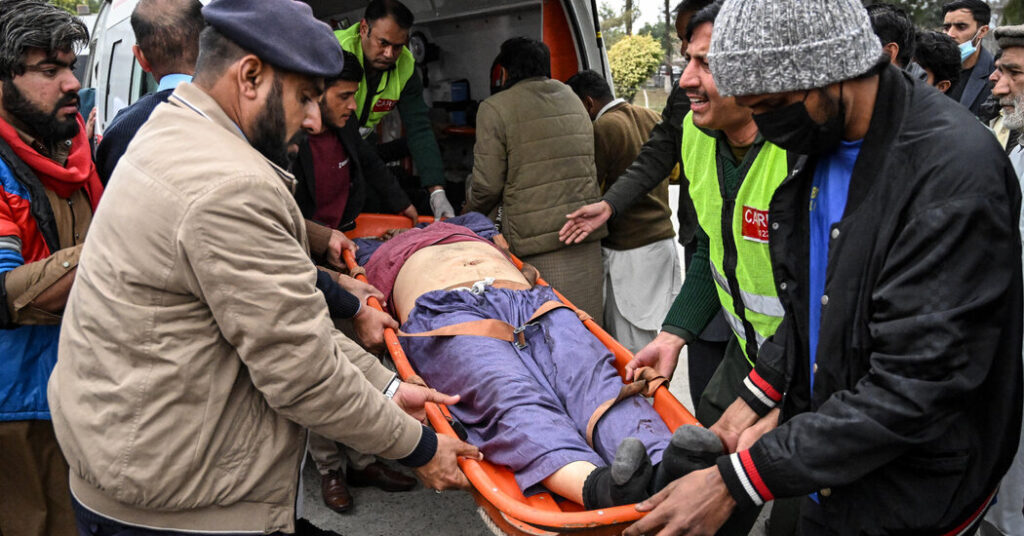
Footage on social media showed a scene of devastation at the mosque compound. Several of the wounded lay on the lawn outside the building as rescue workers arrived to ferry the dead and wounded to nearby hospitals.
Hospitals across Islamabad were placed in a state of emergency and officials appealed for blood donations. Several of the wounded were in critical condition, health officials said.
Prime Minister Shehbaz Sharif condemned the attack in a statement issued by his office, expressing sorrow over the loss of life and offering condolences to the families of the victims. He directed the interior ministry to conduct a full investigation.
In recent months, militant violence has soared in the restive southwestern province of Balochistan bordering Afghanistan, as separatists have attacked military and civil installations in increasingly brazen and coordinated attacks.
Violence has also surged in Khyber Pakhtunkhwa, a northwestern border province, since the Taliban’s return to power in neighboring Afghanistan in 2021. The Pakistani Taliban, also known as Tehreek-e-Taliban Pakistan, has launched deadly assaults on police stations and security convoys from bases in Afghanistan.
The post Suicide Bombing Kills 31 at Mosque in Pakistan’s Capital appeared first on New York Times.