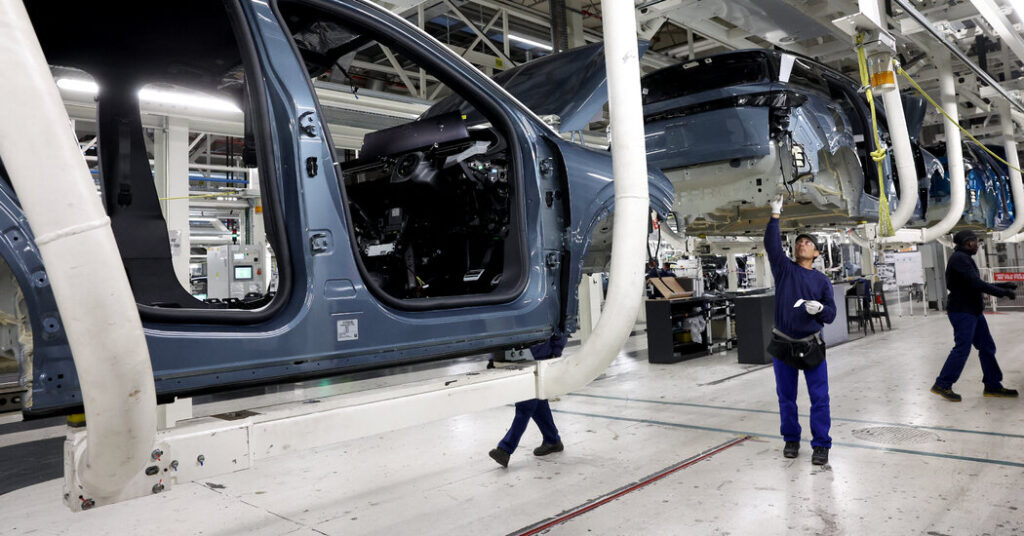
Stellantis said on Friday it would take a hit of 22.2 billion euro (around $26 billion) to its profit to cover the cost of reversing its electric vehicle strategy and changes aimed at turning around slumping sales.
The company also suspended dividend payments because the charges would leave it with a substantial loss for 2025.
“We have gone deep into every corner of our business and are making the necessary changes, mobilizing all the passion and ingenuity we have within Stellantis,” the company’s chief executive, Antonio Filosa, said in a statement.
The news, however, disappointed investors eager to see a more detailed recovery plan. Stellantis’s share price fell about 27 percent in European trading.
“We await further evidence of a turnaround in business fundamentals,” Tom Narayan, an analyst at RBC Capital Markets, said in a note to investors.
Stellantis was formed through the 2021 merger of Fiat Chrysler and Peugeot SA of France. Like other automakers, it had planned to produce many electric vehicles while dropping some large gas-powered engines in North America.
The strategy backfired when sales of electric cars, especially the models Stellantis released, were weaker than expected. That left the company with factories operating far below their capacity. Last year, Stellantis ousted the chief executive who led the company after the merger, Carlos Tavares, replacing him with Mr. Filosa.
The company’s U.S. operation, which includes Chrysler, Dodge, Jeep and Ram, generates most of its profits but is in distress. In 2025, Stellantis sold 1.2 million vehicles in the country, or about one million vehicles fewer than Fiat Chrysler sold in 2019.
Stellantis said the charges include €14.7 billion to cover the cost of dropping the electric vehicles it had been developing for the United States, and the impact of lower sales of the new electric models it has already introduced. It also set aside €2.1 billion to cover the cost of scaling back battery production plans.
The company took further charges of €5.4 billion related to warranties, quality issues and job cuts in Europe.
“The charges announced today largely reflect the cost of overestimating the pace of the energy transition that distanced us from many car buyers’ real-world needs, means and desires,” Mr. Filosa said. “They also reflect the impact of previous poor operational execution, the effects of which are being progressively addressed by our new team.”
Mr. Filosa had previously announced Stellantis would invest $13 billion in the United States over the next four years to introduce new models and update older ones. It is just starting to ship the Jeep Cherokee, a sport-utility vehicle that had been dropped as part of its previous strategy.
Neal E. Boudette, a Michigan-based reporter for The Times, has been covering the auto industry for more than two decades.
The post Stellantis’s Shift Away From Electric Cars Will Cost It $26 Billion appeared first on New York Times.