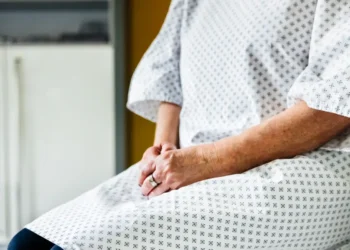
When New York’s paid prenatal-leave law took effect a year ago, Melecia Martinez was eight months pregnant and juggling a flurry of appointments because her daughter was measuring small.
A human resources manager at the nonprofit where Ms. Martinez worked told her about the policy, which requires private employers to provide 20 hours of paid time off for pregnant employees to receive medical care.
“I used all 20 hours,” said Ms. Martinez, 27, who lives in Brooklyn. “It was actually pretty useful.”
New York is the first state to require paid prenatal leave in an effort to improve maternal and infant health, especially for hourly workers or those with employers who do not provide flexibility.
The law was a priority for Gov. Kathy Hochul, who has drawn from her experiences as a mother and grandmother as she has pushed for policies designed to help families, such as expanding access to child care.
Ms. Hochul, a Democrat who is up for re-election this year, said in an interview that she had been worried about low-wage workers who were missing prenatal checkups because they only got paid when they showed up for work.
“I know how important these visits are and how they help the mother end up with the healthiest results,” she said. “It just made sense.”
Studies have shown that good prenatal care leads to better outcomes for mothers and babies. For mothers, it can help improve mental health and screen for issues like pre-eclampsia. For babies, it can reduce the risk of death and low birth weight.
Ms. Martinez, whose daughter, Alondra, was born last February, said she thought the law was a “good start” and urged state leaders to consider providing even more hours.
The governor’s original proposal called for 40 hours of paid prenatal leave per pregnancy, and she said in the interview that she was open to supporting an expansion of the law. Workers in Washington, D.C., receive up to two weeks of paid prenatal leave.
“We’re always looking to improve our programs,” Ms. Hochul said. “The first year gave us a chance to see how it’s working.”
Under the law, private businesses of all sizes must offer paid prenatal leave, and they are prohibited from asking workers seeking to use it to provide medical information. In addition to prenatal appointments, the time off can also be used for fertility treatments or for terminating a pregnancy.
The governor’s office said that about 138,000 pregnant workers, including nearly 72,000 hourly employees, were eligible for the benefit annually.
Though privacy laws make it hard to quantify, interviews suggest that many pregnant women have already used the benefit. But medical professionals and advocates say that plenty of others do not know that it is available to them.
In hopes of spreading the word, the state ran an advertising campaign last year that included videos and posters on the New York City subway. Some companies have publicized the benefit and added it as an option to their timekeeping systems.
Kristina D’Antonio, a psychotherapist at Columbia University Irving Medical Center in Manhattan who works with pregnant women, said she learned about the policy on social media when she was pregnant last year and was disappointed that her employer did not notify her.
“A lot of my patients don’t know about it,” she said. “I just got back from maternity leave, and I’m making sure that patients are aware of it.”
Ms. D’Antonio ended up using all 20 hours of prenatal leave before her child was born in June. She used sick time as well, in part because her pregnancy was considered high risk and she had to schedule extra appointments. With travel time, a single appointment could take her away from work for three hours.
“I’m one of the lucky ones,” she said. “A lot of my patients don’t have sick time or understanding employers — it makes a big difference.”
The United States has seen a troubling rise in maternal and infant mortality rates in recent years that public health officials are trying to address.
In New York City — where the risks are especially stark for Black women, who are significantly more likely to die from pregnancy than their white counterparts — officials have sought to widen the availability of doula care and to reduce the number of cesarean sections that are performed.
New York State has one of the nation’s most generous paid leave laws for new parents, allowing them to take up to 12 weeks off at up to two-thirds of their pay. Separate laws require large employers to offer 56 hours of paid sick leave per year.
Dr. Catherine Monk, chief of the Division of Women’s Mental Health at Columbia University’s Vagelos College of Physicians and Surgeons, said that paid prenatal leave could help reduce stress during pregnancy and make it easier for workers to attend appointments.
“It’s essential to get good prenatal care, from monitoring for things like pre-eclampsia to getting your questions answered, and making sure the baby is healthy and supporting women’s mental health as needed,” she said.
Dr. Monk also said that as a supervisor, she understood how it could be difficult to navigate the logistics of having absent workers.
“Let’s see how it goes at a smaller number of hours, with the idea that it can provide good data to support growing it in the future,” she said.
Ellen Trainham, a mother of three who works at a nonprofit in Buffalo that focuses on prenatal health, used her 20 hours when she was pregnant last year.
She said it was a relief to have a separate bank of leave for her appointments because she needed to save her sick days for when her older children were ill.
“It was super simple — I submitted it through our payroll system, and there was no need for a note,” she said.
The prenatal leave law does not apply to public employees like teachers, who typically negotiate their benefits as part of union contracts.
Alison Gendar, a spokeswoman for the United Federation of Teachers, which represents nearly 90,000 teachers in New York City, said in a statement that members determined what “workplace benefits they want to fight for” and that they would consider pushing for prenatal leave.
“Given that private sector workers now have this benefit, our members will likely want to negotiate for it in the upcoming contract,” she said.
Victoria Mombrun, a special-education teacher in the Bronx who lives on Long Island, said she saw posters about the policy on the train last year when she was pregnant, only to find out that she was not eligible.
“I’ve been a teacher for nearly a decade now and it’s a woman-dominated field,” she said. “To not have the same rights that other professions have — it’s really disheartening.”
Ms. Mombrun scheduled her appointments for after her workday and over the summer when she was off. When her son was born, she only received eight weeks of parental leave before she had to return to the classroom.
“It was really difficult leaving my son,” she said.
Emma G. Fitzsimmons is a public policy correspondent for The Times, covering New York City.
The post New York Grants Pregnant Workers Paid Leave. How Many Know That? appeared first on New York Times.