
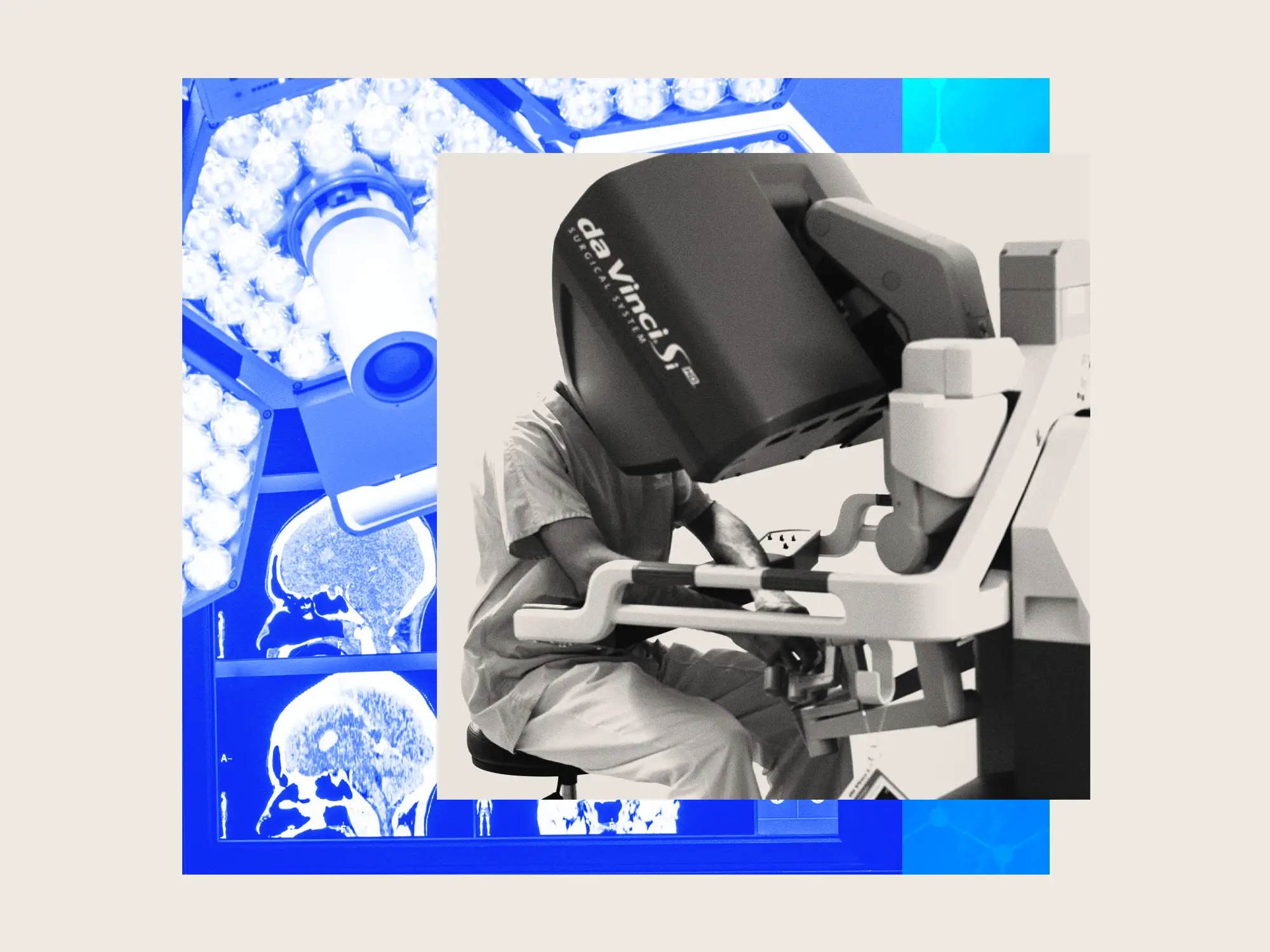
When Dr. Homoud Aldahash started the three-hour process of removing a tumor about the size of a walnut from a patient’s brain, it was an experience unlike any other in his 25 years as a neurosurgeon.
It wasn’t Aldahash’s gloved hands slicing 68-year-old Mohammed Almutrafi’s right frontal lobe, but surgical instruments attached to a set of robotic arms, which Aldahash controlled from a console where he sat three meters away.
Almutrafi was referred to Aldahash by his primary care doctor after experiencing chronic headaches and poor concentration that seemed to be getting worse. The referral culminated in what would become the world’s first remote robotic brain surgery, performed late last year.
While putting a robot in between a patient and their brain surgeon sounds risky (and it is), Aldahash, a consultant neurosurgeon at King Faisal Specialist Hospital and Research Centre in Saudi Arabia, told Business Insider that Almutrafi recovered four times as fast as the average patient.
Why? The robot shock-absorbed any tremors or sudden movements Aldahash may have made, allowing him to make more precise movements and therefore fewer micro-injuries to the surrounding brain tissues, which can prolong the recovery process.
“It’s like an extension of the surgeon’s arms,” Aldahash said, “but they’re much more stable than the surgeon’s arms. It only transmits steady, smooth movements that help you in performing your surgery.”
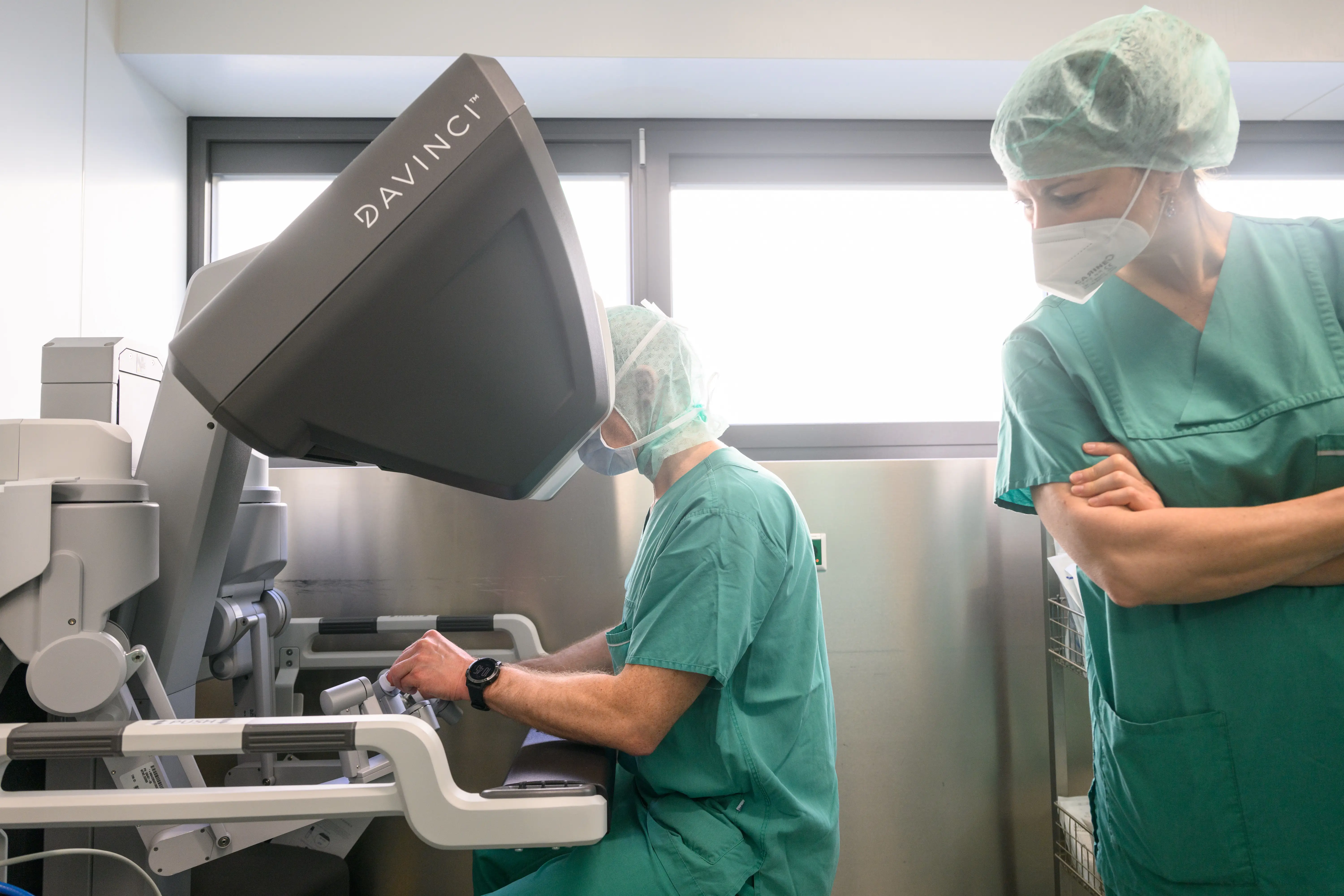
The console consisted of an immersive screen that projected a live feed of the brain via cameras, and a control panel from which Aldahash controlled the robotic arms. The live feed is 3D, and the surgeon can zoom in up to 10x from any direction.
These steady movements, Aldahash believes, enabled Almutrafi to go home less than 24 hours after his surgery, when a typical window is 48 to 72 hours.
The operation needs to be repeated on many more patients before this claim can be validated, but Aldahash is hopeful.
The robot, called Da Vinci, is already used in many hospitals for general, colorectal, urology, and gynecology surgery. This, however, is the first time it has been used for the complex practice of brain surgery.
Widespread use could mean shorter recovery times, less post-op pain for patients, and greater overall access to the procedure, Aldahash said.
“I think this is going to impact patients all over the world, hopefully in the near future. It was a moment of pride,” Aldahash said.
How robots could help create a higher quality of patient care
Although robotic brain surgery is in its infancy, this marks a step toward better access to high-quality neurosurgery, neurosurgeons who were not involved in Almutrafi’s surgery told Business Insider.
The brain is “a highly eloquent organ in a tight box,” said Kevin O’Neill, a consultant neurosurgeon at Charing Cross Hospital, Imperial College, London, and the chairman of the UK-based charity, Brain Tumor Research Campaign. He said that surgeons need to be extremely accurate when navigating the procedure. Still, not all surgeons are equally skilled, meaning patient outcomes can vary.
“There are individual variances. But with robotics, what you’re doing is standardizing that and eliminating some of those variances,” he said, referring to the varying skillsets of neurosurgeons.
Giulio Anichini, a consultant neurosurgeon at Cork University Hospital, Ireland, and an honorary research fellow at Imperial College London, said he felt “cautiously optimistic” about what the procedure could mean for the future of brain surgery.
Read more from the Transforming Treatments series:
- A new laser hair-loss treatment aims to be like going to the dentist twice a year
- Would you pay $2,500 a year to scan your entire body for hidden diseases?
- A Silicon Valley engineer cracked the code to find signs of colon cancer in your blood
The patient’s tumor was located on the surface of the brain, making it relatively simple to remove in comparison to tumors located in deeper and less accessible areas, he said. Provided that there are no complications, Anichini said he has seen patients who were recovering from this type of procedure go home after 24 hours.
“I’m not entirely sure that’s all due to the Da Vinci,” he said of the patient’s short recovery time. He added: “I don’t want to sound overly critical about this. It is really impressive what they did.”
Looking further ahead, the successful remote surgery could signify a step toward a world in which neurosurgeons can operate on patients from different cities, countries, or even continents, Anichini said.
Often, “there is one neurosurgery centre for a big, big population, sometimes very remote,” he said. “If you have surgeons that can perform movements more quickly and more safely, and you can do it even remotely, you have a massive outreach of good quality care.”
Read the original article on Business Insider
The post For brain surgery patients, a robot could be the key to faster recovery appeared first on Business Insider.